Open Space Web-Map builder Codehttps://openspace.ordnancesurvey.co.uk/osmapapi/openspace.js?key=3119F72552FD5C22E0530C6CA40A5A92https://openspace.ordnancesurvey.co.uk/osmapapi/script/mapbuilder/basicmap.jshttps://openspace.ordnancesurvey.co.uk/osmapapi/script/mapbuilder/searchbox.js//variables for routes var linesLayer, points, lineFeature, lineString, routeMarkersLayer, routepos, routesize, routeoffset, routeicon; var style_blue = {strokeColor: “#0000CD”, strokeOpacity: 0.5, strokeWidth: 4.5}; function initmapbuilder() { //initiate the map var options = {resolutions: [2500, 1000, 500, 200, 100, 50, 25, 10, 5, 4, 2.5, 2, 1]}; osMap = new OpenSpace.Map(‘map’, options); //configure map options (basicmap.js) setglobaloptions(); //set the center of the map and the zoom level osMap.setCenter(new OpenSpace.MapPoint(376462.5,471428),7); linesLayer = osMap.getVectorLayer(); // Set up layer for route markers routeMarkersLayer = new OpenLayers.Layer.Markers(“Route Markers”); //make a route points = new Array(); points.push(new OpenLayers.Geometry.Point(376966,468678)); points.push(new OpenLayers.Geometry.Point(376962,468814)); points.push(new OpenLayers.Geometry.Point(376994,468862)); points.push(new OpenLayers.Geometry.Point(376923,469058)); points.push(new OpenLayers.Geometry.Point(376943,469175.5)); points.push(new OpenLayers.Geometry.Point(376945,469193.5)); points.push(new OpenLayers.Geometry.Point(376735,469198.5)); points.push(new OpenLayers.Geometry.Point(376555,469148.5)); points.push(new OpenLayers.Geometry.Point(376080,469148.5)); points.push(new OpenLayers.Geometry.Point(375610,469238.5)); points.push(new OpenLayers.Geometry.Point(375300,469368.5)); points.push(new OpenLayers.Geometry.Point(375105,469438.5)); points.push(new OpenLayers.Geometry.Point(375320,469698.5)); points.push(new OpenLayers.Geometry.Point(375510,470868.5)); points.push(new OpenLayers.Geometry.Point(375760,471443.5)); points.push(new OpenLayers.Geometry.Point(375680,471573.5)); points.push(new OpenLayers.Geometry.Point(375395,471748.5)); points.push(new OpenLayers.Geometry.Point(375270,471853.5)); points.push(new OpenLayers.Geometry.Point(375180,472028.5)); points.push(new OpenLayers.Geometry.Point(375175,472128.5)); points.push(new OpenLayers.Geometry.Point(375165,472213.5)); points.push(new OpenLayers.Geometry.Point(375230,472238.5)); points.push(new OpenLayers.Geometry.Point(375220,472348.5)); points.push(new OpenLayers.Geometry.Point(375120,472438.5)); points.push(new OpenLayers.Geometry.Point(375075,472568.5)); points.push(new OpenLayers.Geometry.Point(374965,472808.5)); points.push(new OpenLayers.Geometry.Point(374710,472948.5)); points.push(new OpenLayers.Geometry.Point(374595,473048.5)); points.push(new OpenLayers.Geometry.Point(374345,473303.5)); points.push(new OpenLayers.Geometry.Point(374315,473433.5)); points.push(new OpenLayers.Geometry.Point(374295,473543.5)); points.push(new OpenLayers.Geometry.Point(374320,473958.5)); points.push(new OpenLayers.Geometry.Point(374365,474238.5)); points.push(new OpenLayers.Geometry.Point(374385,474468.5)); points.push(new OpenLayers.Geometry.Point(374390,474643.5)); points.push(new OpenLayers.Geometry.Point(374125,474538.5)); points.push(new OpenLayers.Geometry.Point(374425,474633.5)); points.push(new OpenLayers.Geometry.Point(374685,474653.5)); points.push(new OpenLayers.Geometry.Point(375150,474618.5)); points.push(new OpenLayers.Geometry.Point(375485,474433.5)); points.push(new OpenLayers.Geometry.Point(375745,474203.5)); points.push(new OpenLayers.Geometry.Point(376150,474158.5)); points.push(new OpenLayers.Geometry.Point(376360,473983.5)); points.push(new OpenLayers.Geometry.Point(376635,473938.5)); points.push(new OpenLayers.Geometry.Point(376755,473873.5)); points.push(new OpenLayers.Geometry.Point(376870,473678.5)); points.push(new OpenLayers.Geometry.Point(377300,473668.5)); points.push(new OpenLayers.Geometry.Point(377795,473468.5)); points.push(new OpenLayers.Geometry.Point(377680,473223.5)); points.push(new OpenLayers.Geometry.Point(377450,472978.5)); points.push(new OpenLayers.Geometry.Point(377415,472898.5)); points.push(new OpenLayers.Geometry.Point(377520,472838.5)); points.push(new OpenLayers.Geometry.Point(377590,472888.5)); points.push(new OpenLayers.Geometry.Point(377715,472658.5)); points.push(new OpenLayers.Geometry.Point(377850,472518.5)); points.push(new OpenLayers.Geometry.Point(378095,472278.5)); points.push(new OpenLayers.Geometry.Point(378175,472153.5)); points.push(new OpenLayers.Geometry.Point(378310,472063.5)); points.push(new OpenLayers.Geometry.Point(378470,472098.5)); points.push(new OpenLayers.Geometry.Point(378635,472103.5)); points.push(new OpenLayers.Geometry.Point(378745,472083.5)); points.push(new OpenLayers.Geometry.Point(378745,472013.5)); points.push(new OpenLayers.Geometry.Point(378675,471828.5)); points.push(new OpenLayers.Geometry.Point(378540,471693.5)); points.push(new OpenLayers.Geometry.Point(378510,471583.5)); points.push(new OpenLayers.Geometry.Point(378465,471353.5)); points.push(new OpenLayers.Geometry.Point(378710,471173.5)); points.push(new OpenLayers.Geometry.Point(378525,471118.5)); points.push(new OpenLayers.Geometry.Point(378375,471058.5)); points.push(new OpenLayers.Geometry.Point(378275,471273.5)); points.push(new OpenLayers.Geometry.Point(378080,471348.5)); points.push(new OpenLayers.Geometry.Point(377875,471308.5)); points.push(new OpenLayers.Geometry.Point(377895,471148.5)); points.push(new OpenLayers.Geometry.Point(377815,470778.5)); points.push(new OpenLayers.Geometry.Point(377755,470638.5)); points.push(new OpenLayers.Geometry.Point(377675,470668.5)); points.push(new OpenLayers.Geometry.Point(377645,470628.5)); points.push(new OpenLayers.Geometry.Point(377620,470508.5)); points.push(new OpenLayers.Geometry.Point(377540,470478.5)); points.push(new OpenLayers.Geometry.Point(377350,470393.5)); points.push(new OpenLayers.Geometry.Point(377365,470298.5)); points.push(new OpenLayers.Geometry.Point(377380,470233.5)); points.push(new OpenLayers.Geometry.Point(377320,469908.5)); points.push(new OpenLayers.Geometry.Point(377320,469878.5)); points.push(new OpenLayers.Geometry.Point(377245,469858.5)); points.push(new OpenLayers.Geometry.Point(377240,469688.5)); points.push(new OpenLayers.Geometry.Point(376977.5,469563.5)); points.push(new OpenLayers.Geometry.Point(376950,469411)); points.push(new OpenLayers.Geometry.Point(376945,469126)); points.push(new OpenLayers.Geometry.Point(376920,469033.5)); points.push(new OpenLayers.Geometry.Point(376985,468881)); points.push(new OpenLayers.Geometry.Point(376952.5,468781)); points.push(new OpenLayers.Geometry.Point(376966,468678)); // create a polyline feature from the array of points lineString = new OpenLayers.Geometry.LineString(points); lineFeature = new OpenLayers.Feature.Vector(lineString, null, style_blue); linesLayer.addFeatures([lineFeature]); //crate a route start/end marker routepos = new OpenSpace.MapPoint(376966,468678); routesize = new OpenLayers.Size(33,45); routeoffset = new OpenLayers.Pixel(-5,-37); routeicon = new OpenSpace.Icon(‘https://openspace.ordnancesurvey.co.uk/osmapapi/img_versions/img_1.1/mapbuilder/routemarker-startend.png’, routesize, routeoffset, null, null); routeMarkersLayer.addMarker(new OpenLayers.Marker(routepos, routeicon)); osMap.addLayer(routeMarkersLayer);}
Route: Austwick, Town Head, Thwaite Lane, Long Lane, Trow Gill, Gaping Gill, Little Ingleborough, Ingleborough, Swine Trail, Dales High Way, Nick Pot, Sulver, Sulver Gate, Thieves Moss, Beggar’s Stile, Moughton Scars, Capple Bank, Moughton, Hunterstye, Wash Dub, Crummack Lane, Austwick
Date: 30/07/2018
From: Austwick
Parking: Raodside parking in Austwick
Start Point: Austwick
Region: Yorkshire Dale – Southern Fells
Route length: 12.8 miles (20.6km)
Time taken: 05:11
Average speed: 2.5 mph
Ascent: 811m
Descent: 815m
Summits: Ingleborough (723m), Moughton (427m)
Other points of interest: Trow Gill, Gaping Gill, Thieves Moss, Moughton Scars
Ingleborough was once thought to be the highest mountain in England, which it is far from. It is, however, one of the more impressive, thanks to its distinct profile. You could consider it my ‘local’ mountain – it’s only a short drive from Leeds and ideal if the weather looks a bit ‘iffy’, as today was looking.
Ingleborough can be climbed for a number of locations, Clapham or Ribblehead are the two most popular ones. My choice this time was the quiet village of Austwick which allows you to incorporate the vast limestone pavements of Moughton Scars into a long, interesting circular walk.
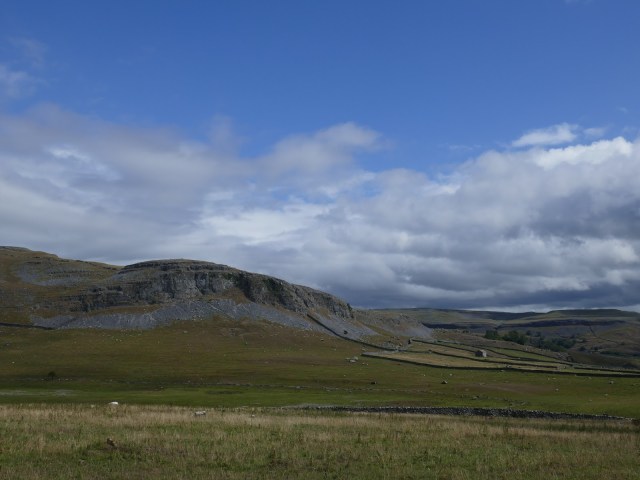
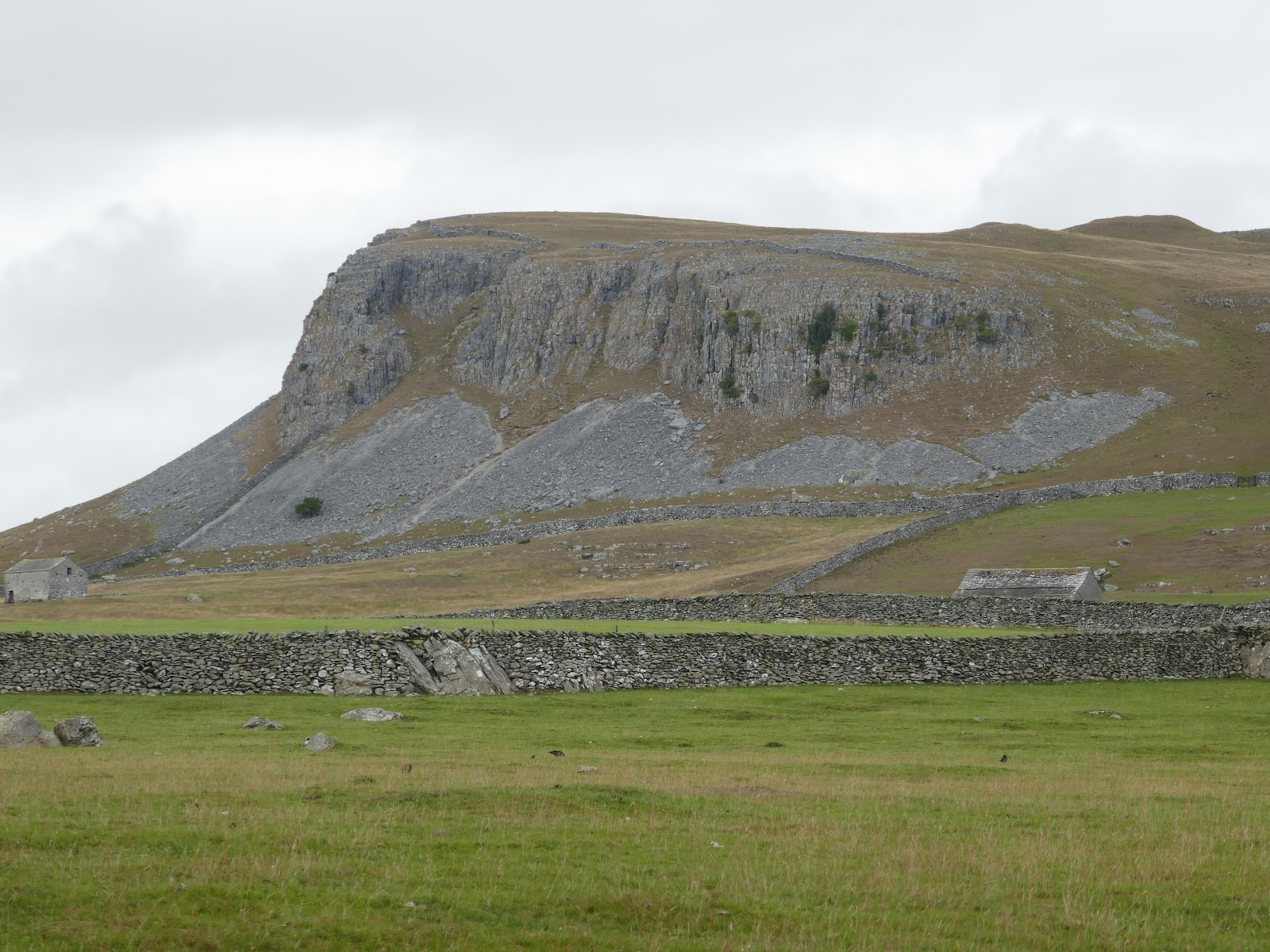
Heading north out of Austwick, I followed Crummack Lane to a crossroad with Thwaite Lane, taking a left along the Pennine Bridleway. Robin Proctor’s Scar painted a magnificent scene as the sun made an appearance. Behind the scar are the famed Norber Erratics, a place I visited not too long ago though you could say the weather was slightly different on that occasion.
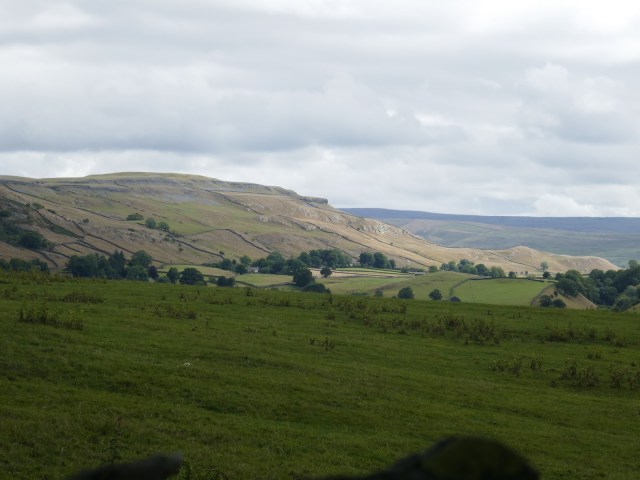 |
| Studrigg Scar |
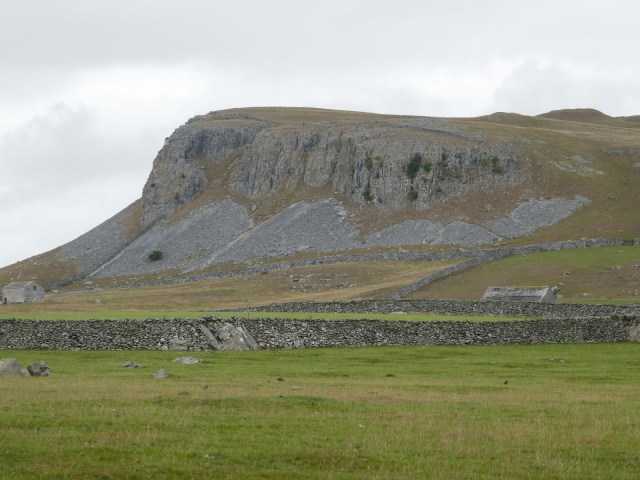 |
| Robin Proctor’s Scar |
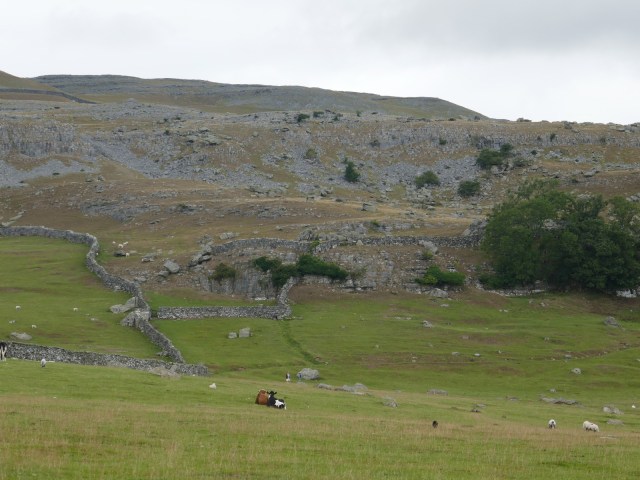 |
| Robin Proctor’s Scar |
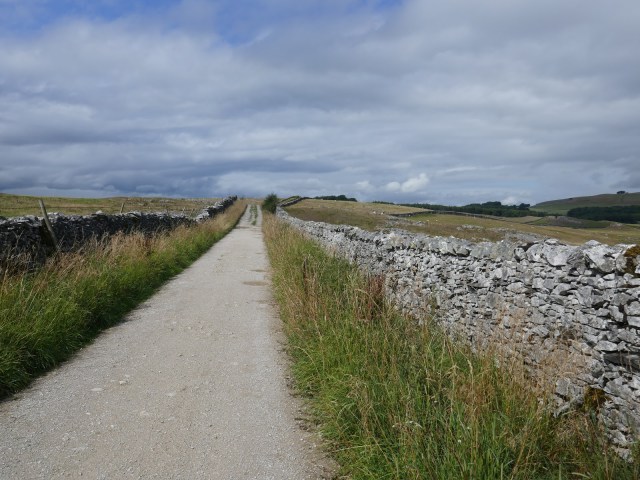 |
| Thwaite Lane |
 |
| Robin Proctor’s Scar |
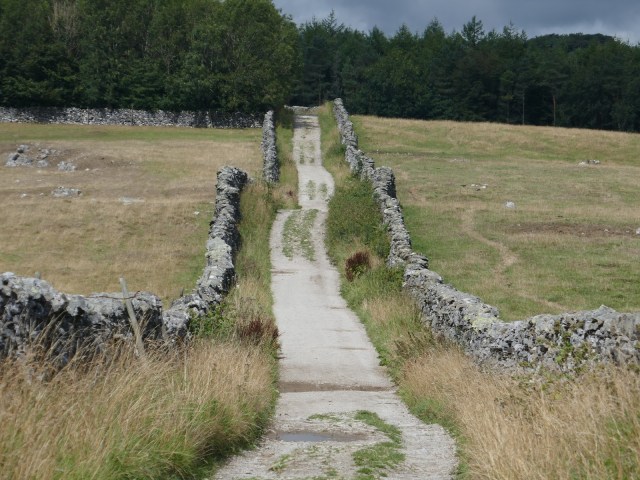 |
| Thwaite Lane |
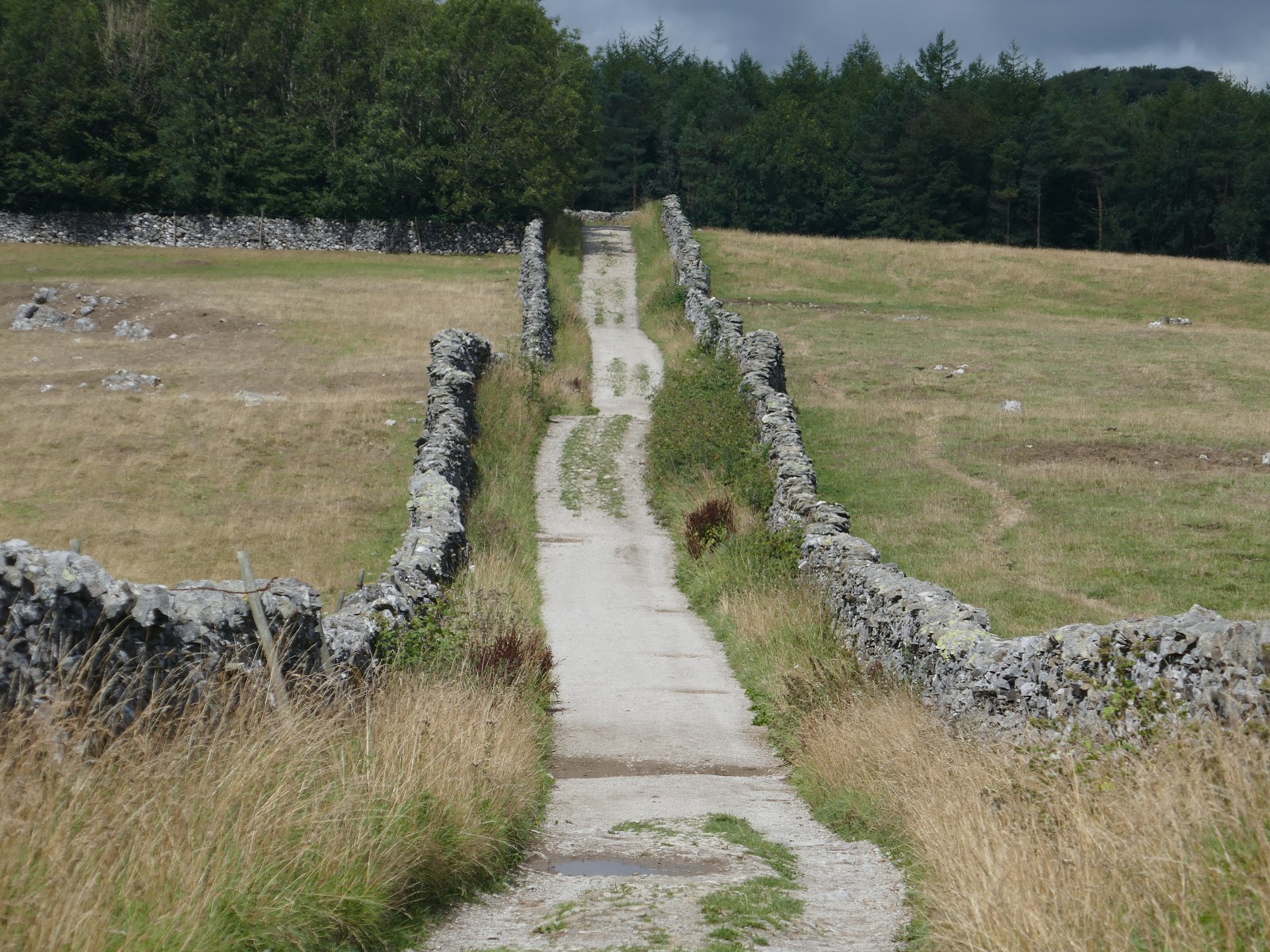
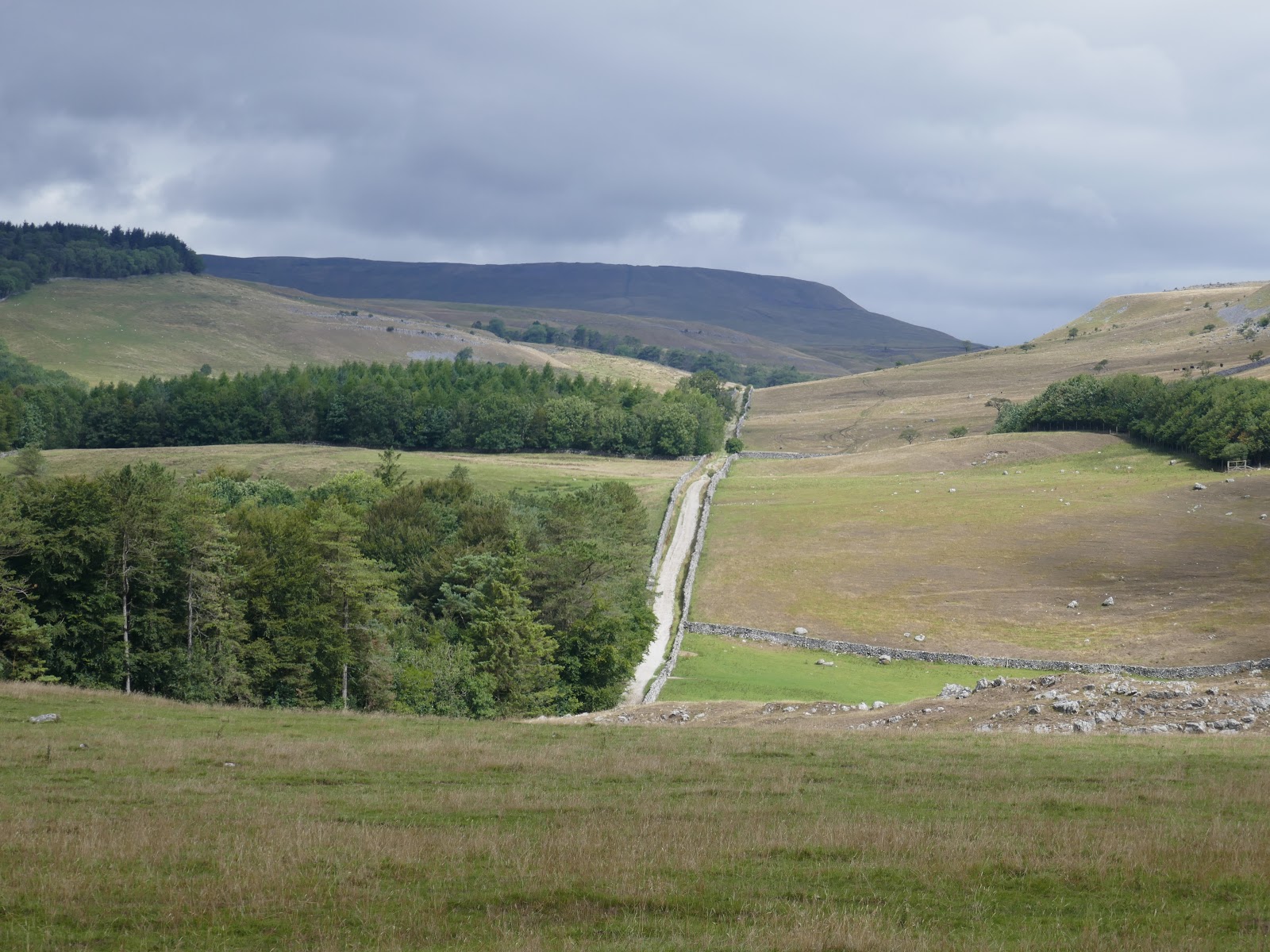
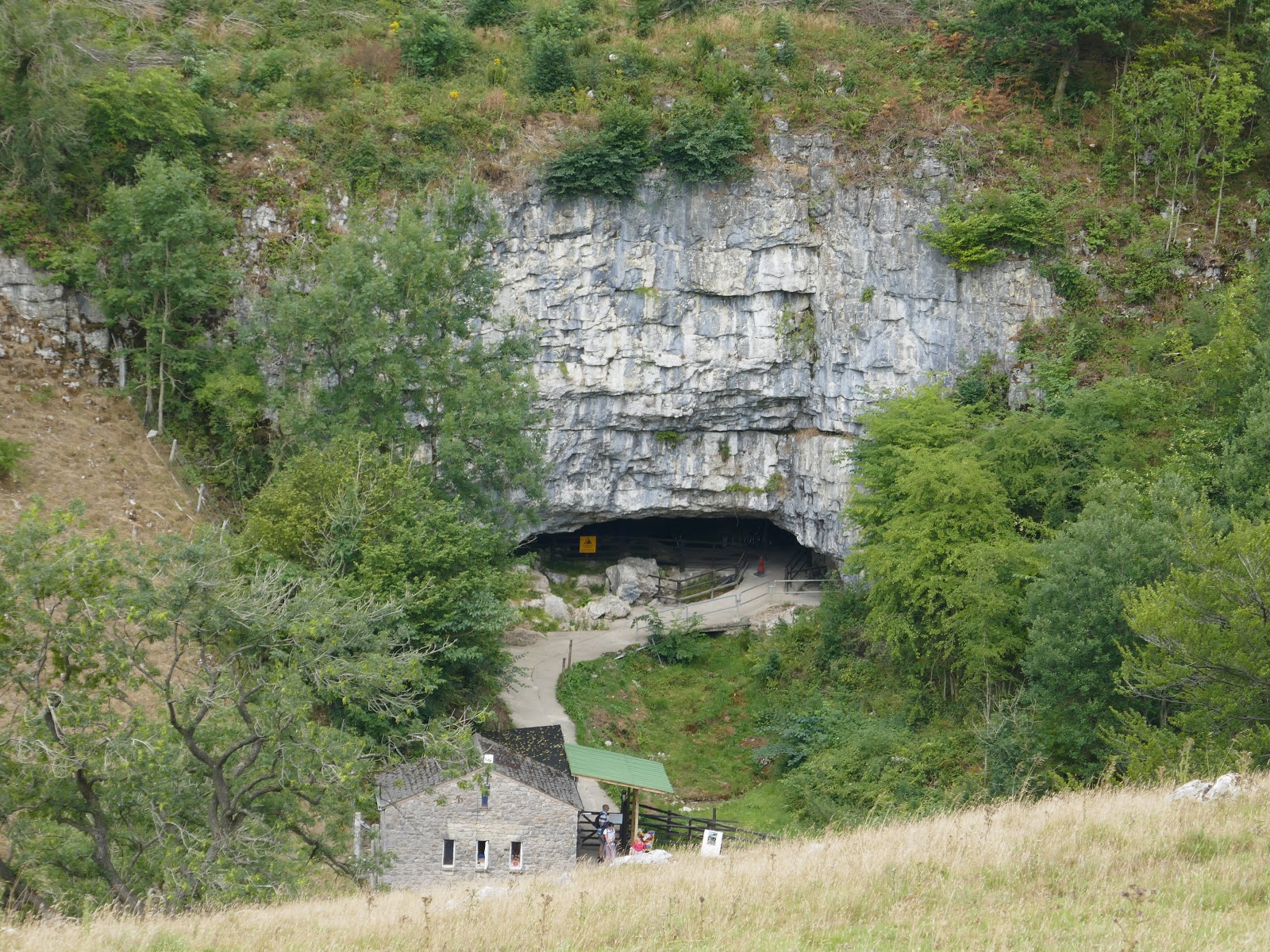
The bridleway leads to Clapham but, before reaching the village, I took to a right onto Long Lane which climbs high up alongside Clapham Beck. The track looks across at the entrance to the Ingleborough Cave, a show cave made accessible in the 1800s.
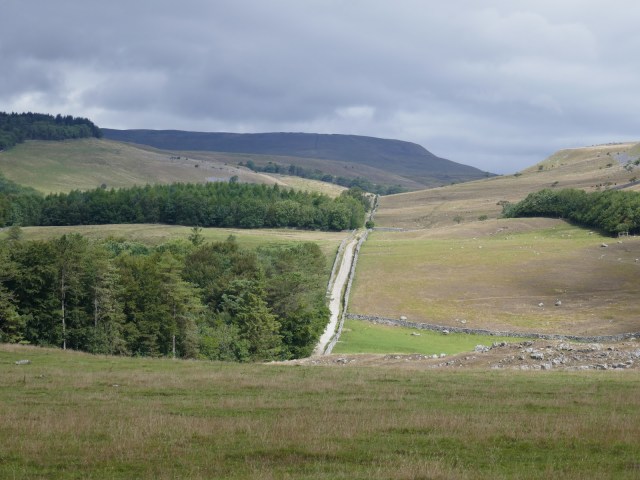 |
| Long Lane with Simon Fell in the distance |
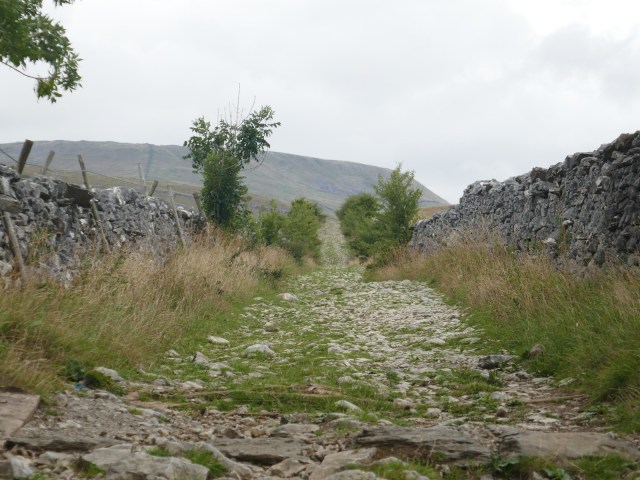 |
| Long Lane |
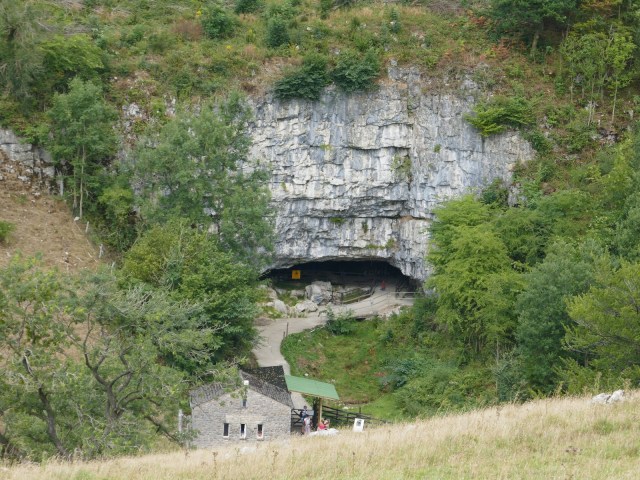 |
| The Ingleborough Cave |
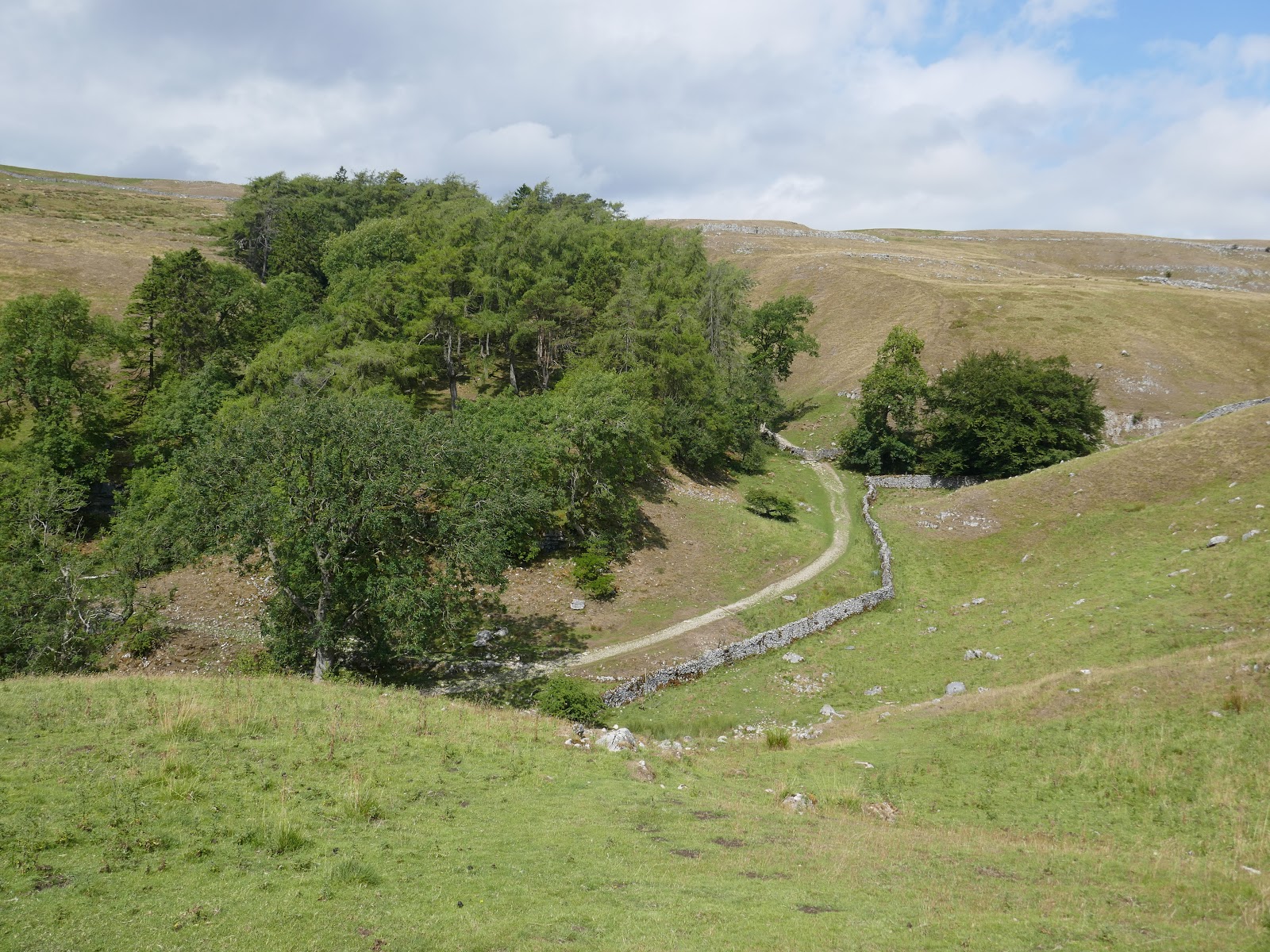
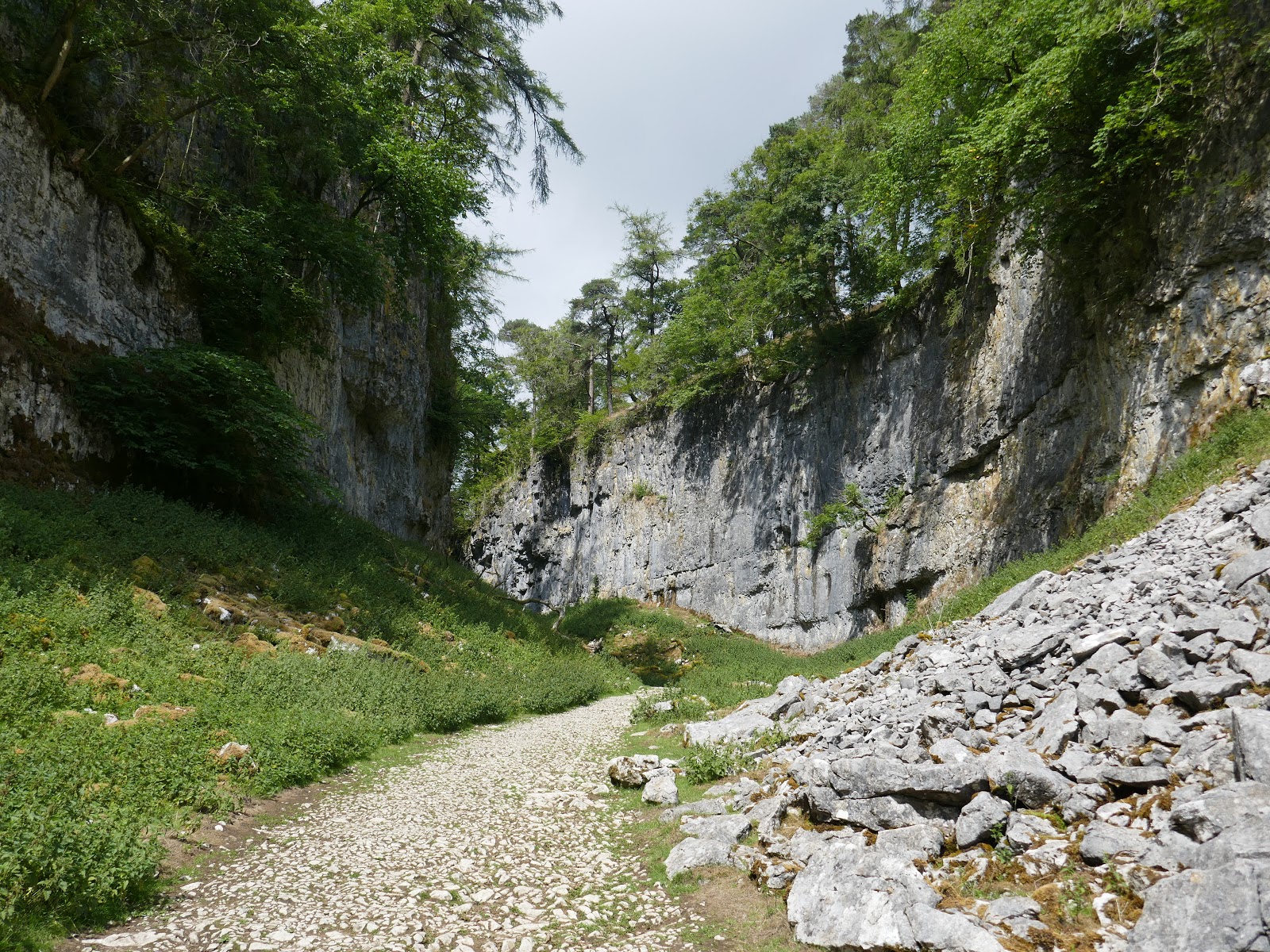
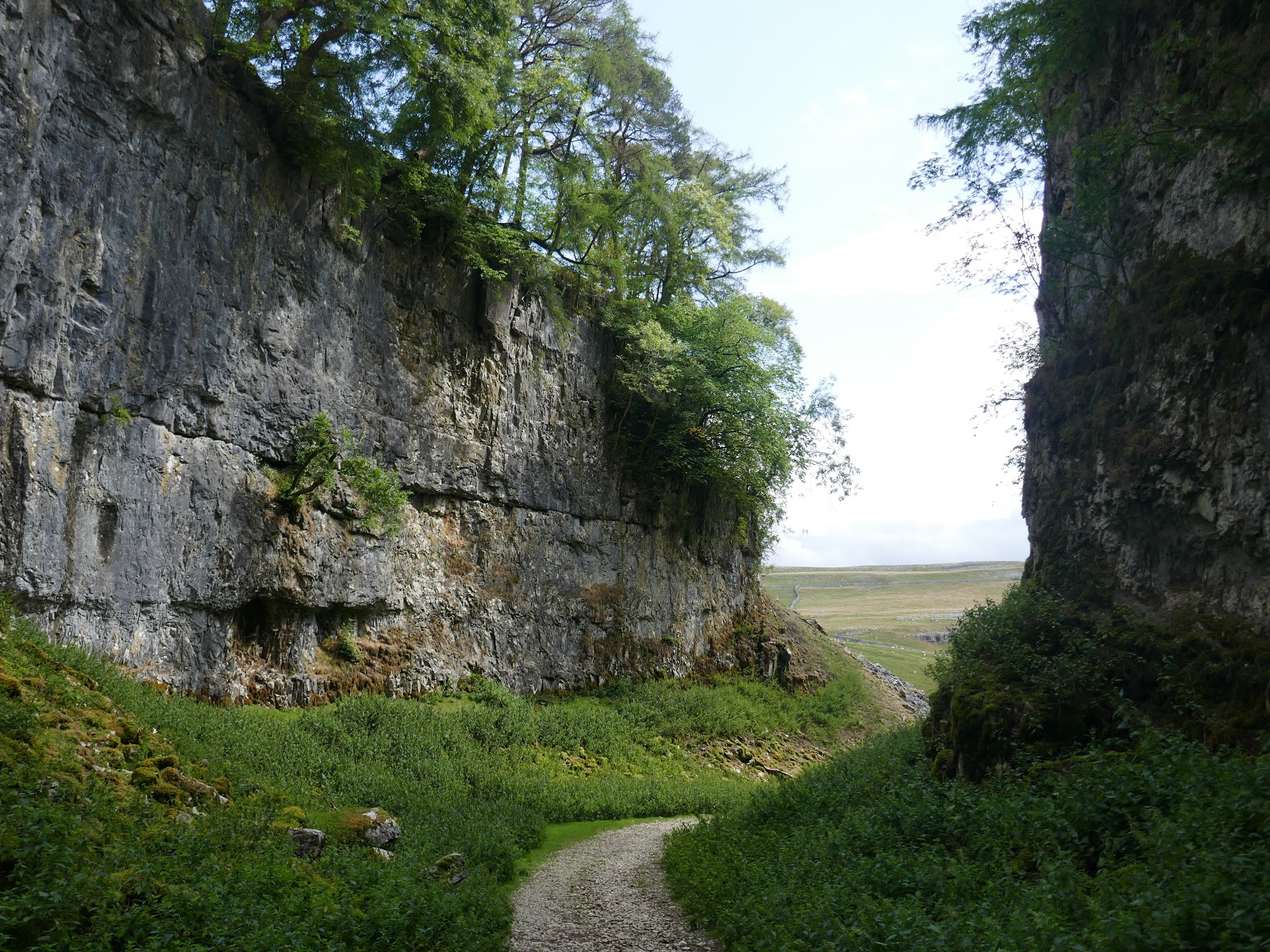
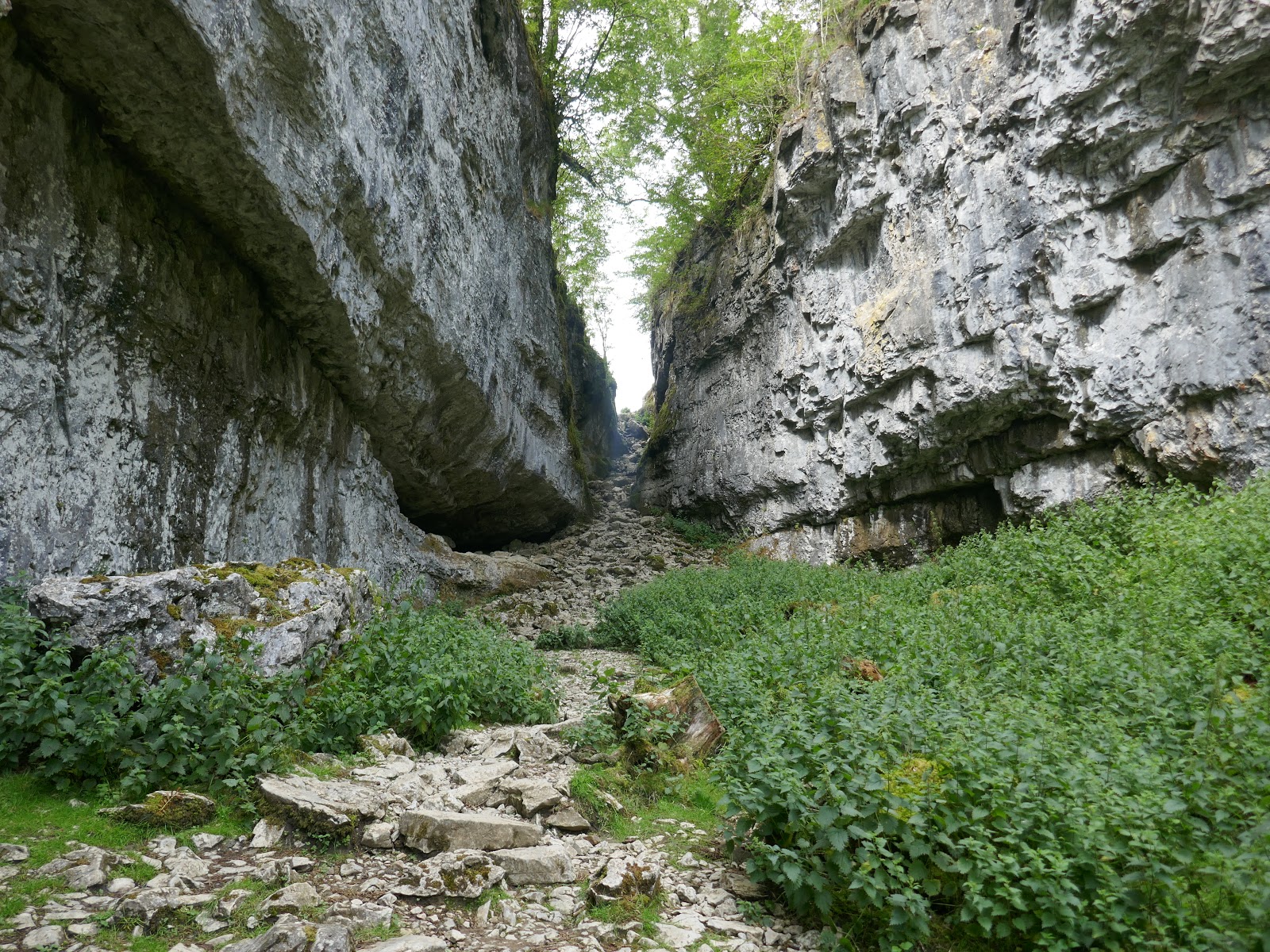
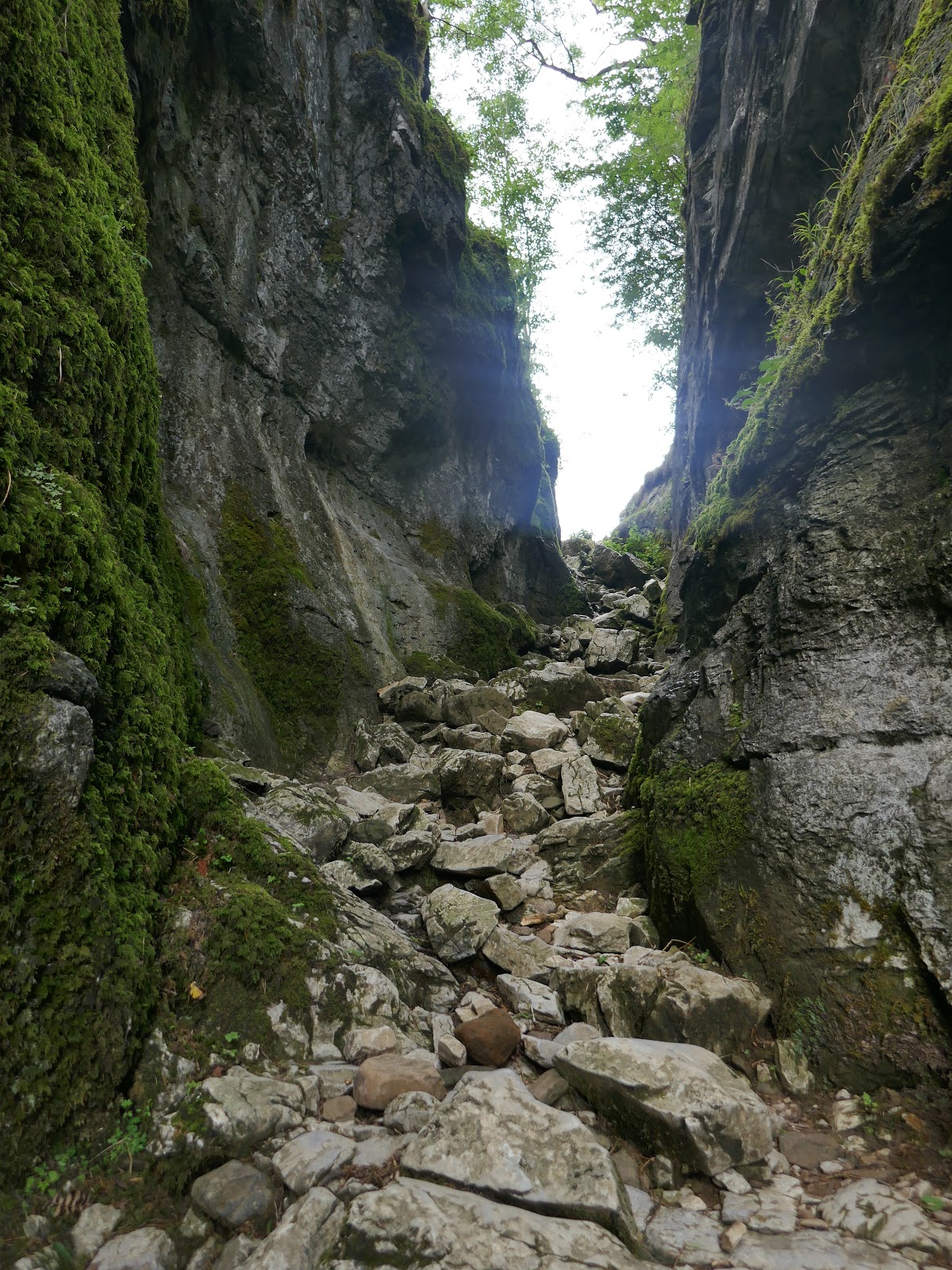
A short distance beyond the cave are the jaws of Trow Gill, an impressive limestone ravine. Trow Gill was possibly once an underground cavern formed by waters which now take an alternative route through the Ingleborough Cave / Gaping Gill system. At some point in time, the roof of this cavern is believed to have collapsed – Trow Gill being the suggested result (though other theories have the ravine as a glacial meltwater channel, such as Watlowes).
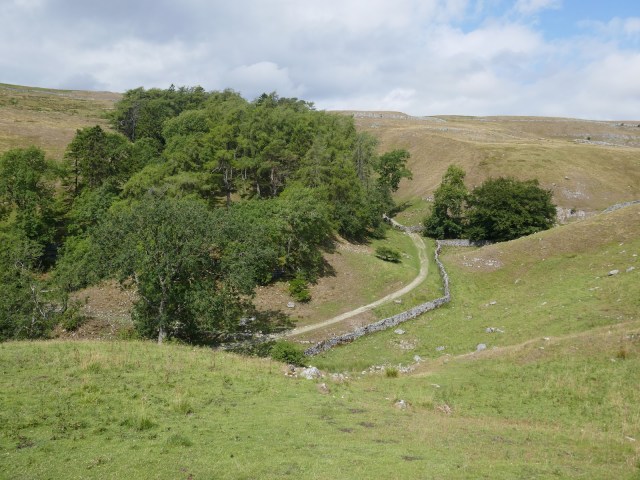 |
| Trow Gill hides behind the trees |
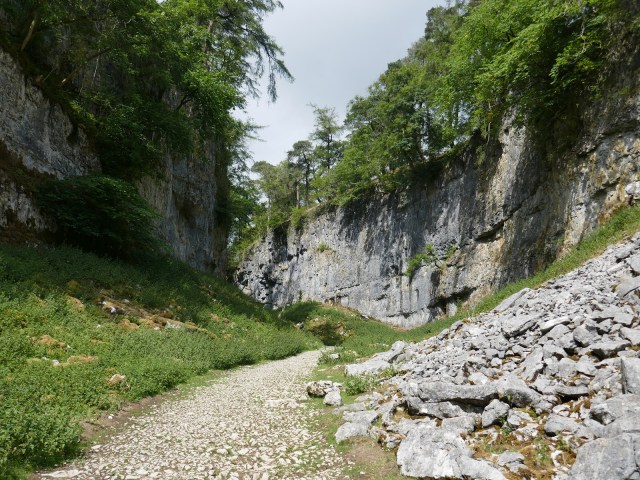 |
| Trow Gill |
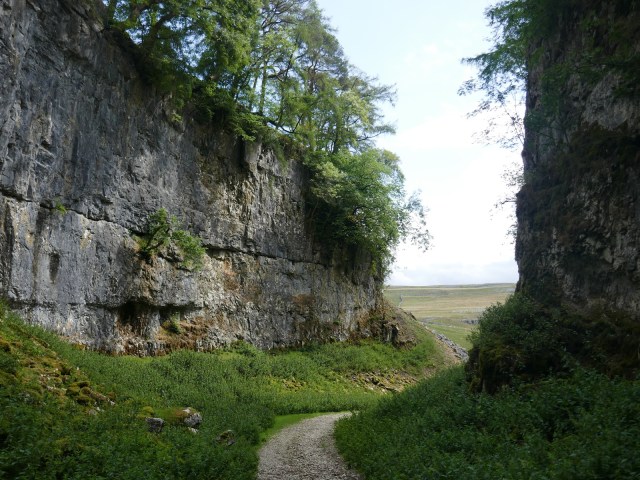 |
| Trow Gill |
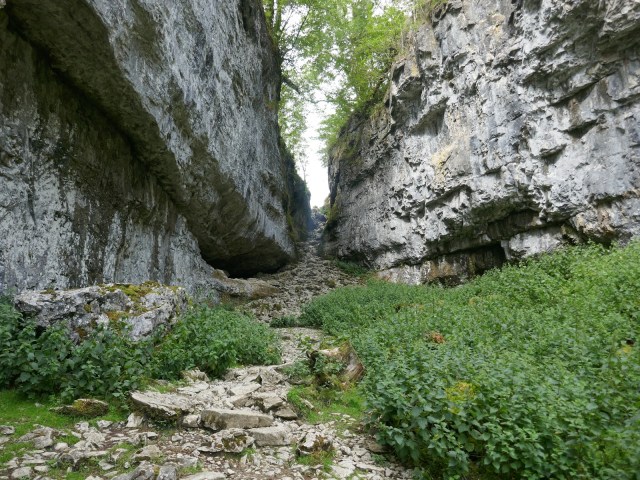 |
| Trow Gill |
Another mystery surrounds the ravine, that of a skeleton discovered in 1947. The remains, reported to be those of a young man, was found to have been wearing a blue shirt and tie and a grey-blue suit with red and white stripes. He was also found with a bottle of Sodium cyanide, a lethal poison, which lead to speculation that he was a German spy though German intelligence documents discovered after the war dispute this.
The ravine narrows towards the end and a few stepped rocks allow you to climb out the other side. The next port of call would be Gaping Gill.
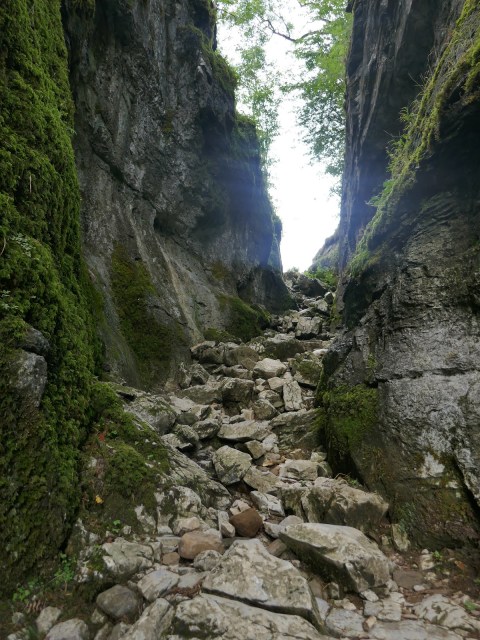 |
| Exiting Trow Gill |
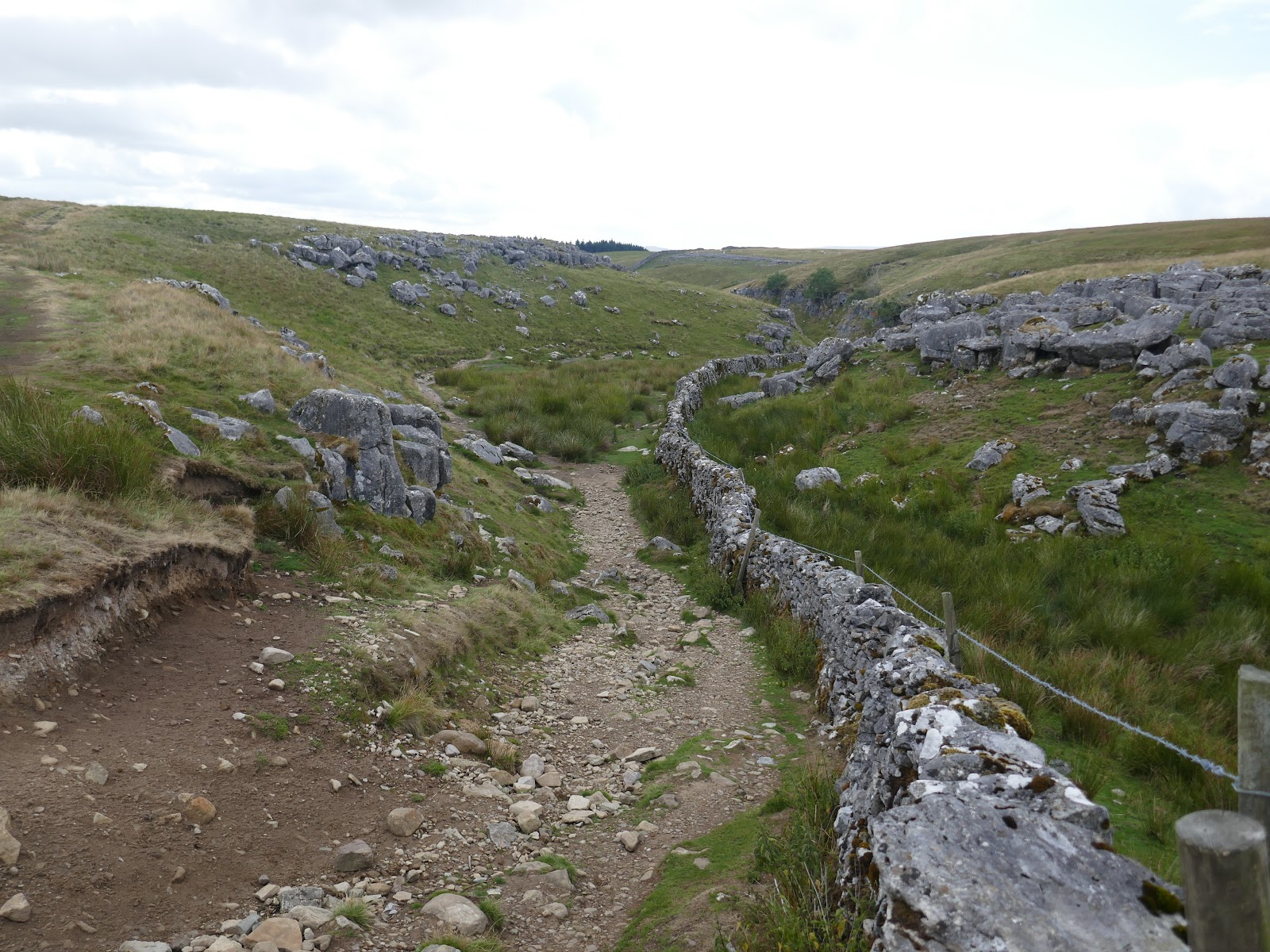
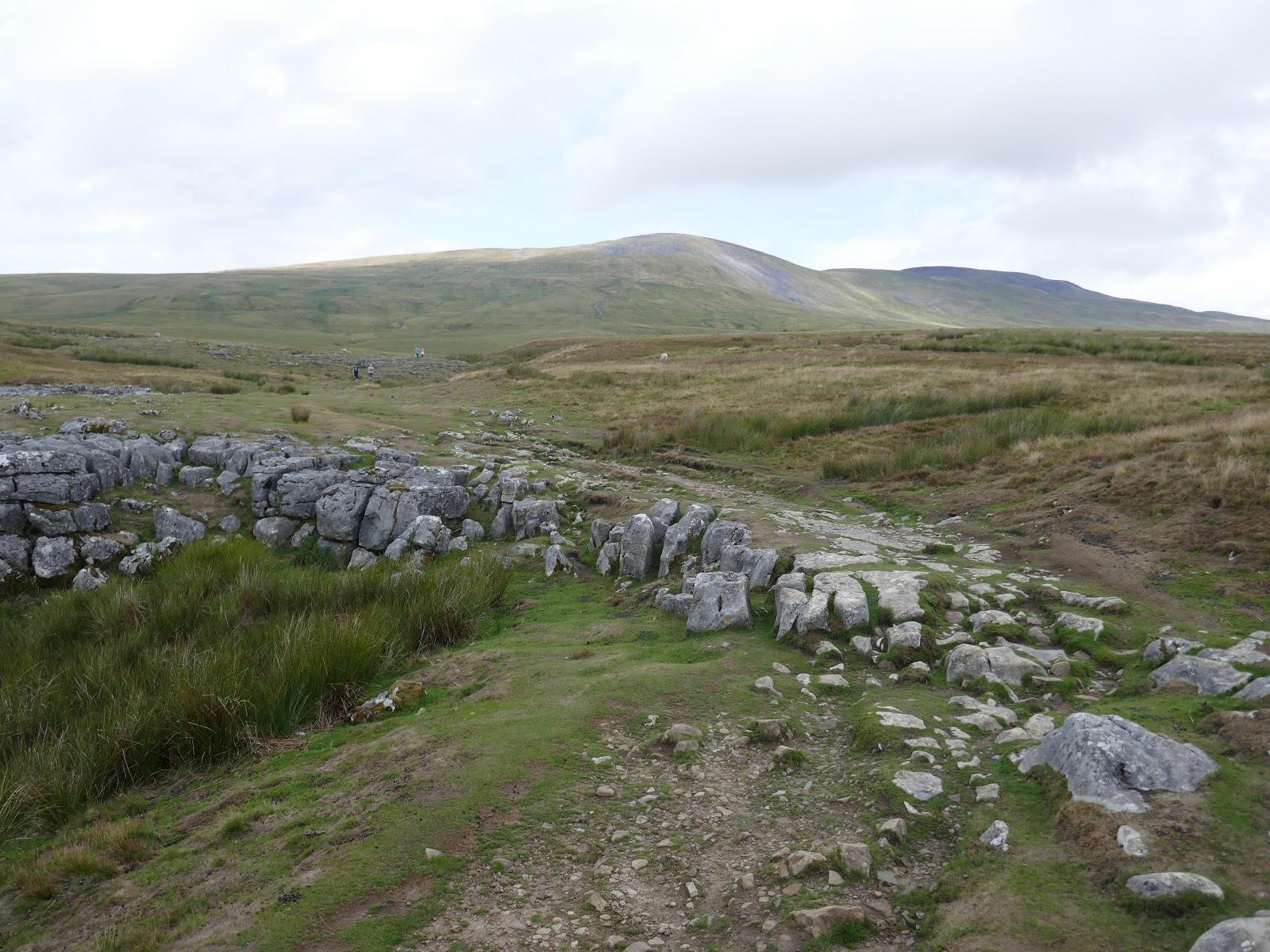
Following the footpath along the valley, it climbs briefly until a ladder stile allows you to cross onto the open countryside of Hurnell Moss. For the first time in the day, Ingleborough finally appears on the horizon and, perhaps more importantly, it was free from cloud. A short distance still, a branch off the main path leads to an area guarded by a small wooden fence. This is the realm of Gaping Gill.
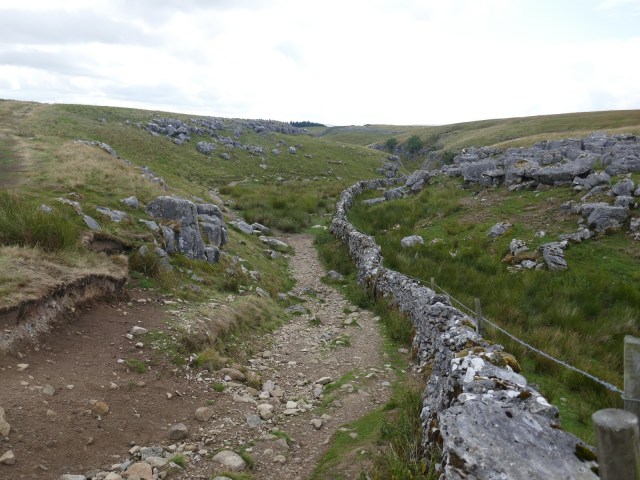 |
| The bridleway at Clapham Bottoms |
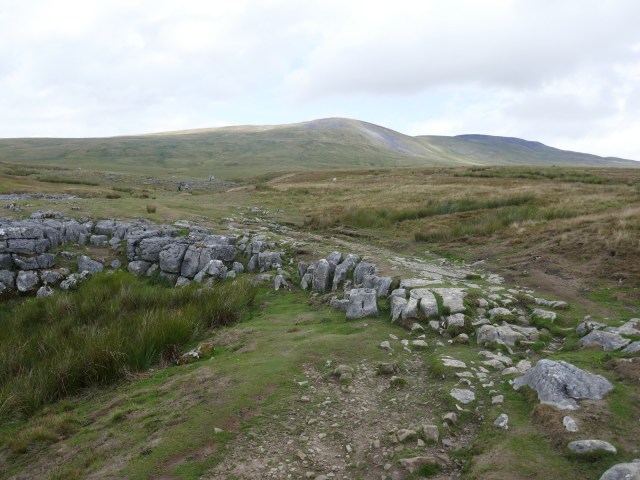 |
| Ingleborough |
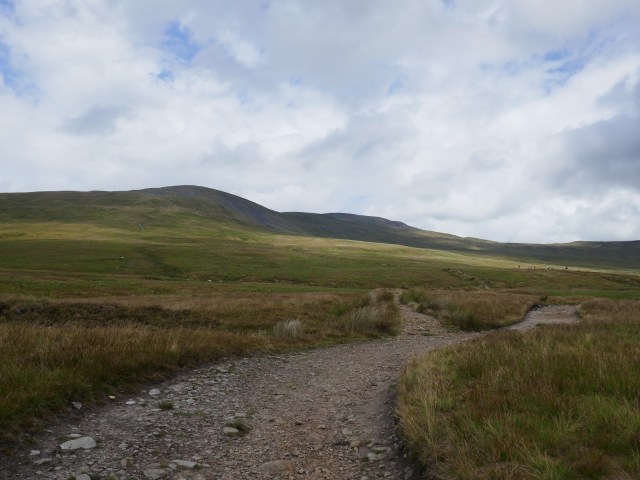 |
| The path deviates towards Gaping Gill |
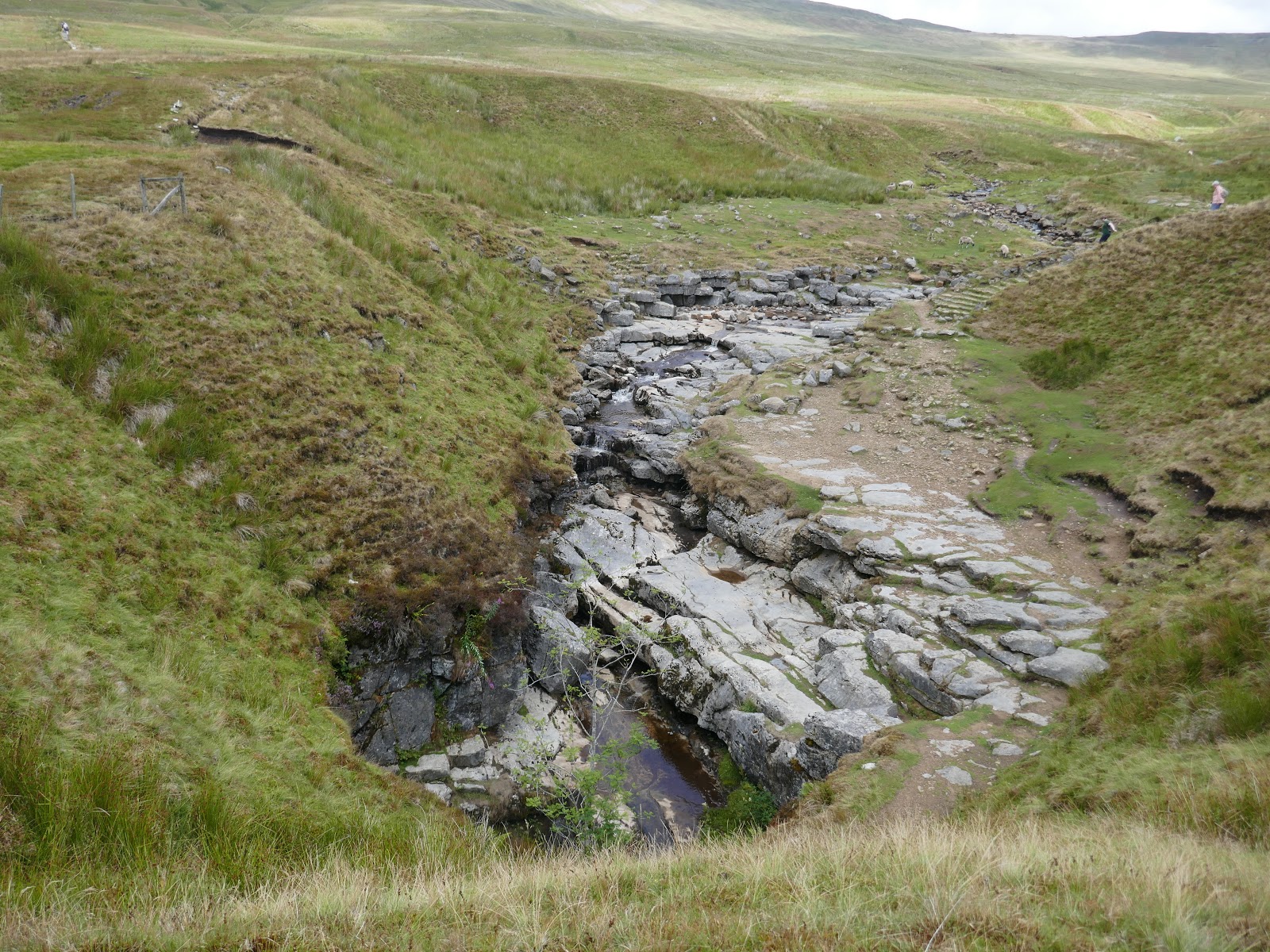
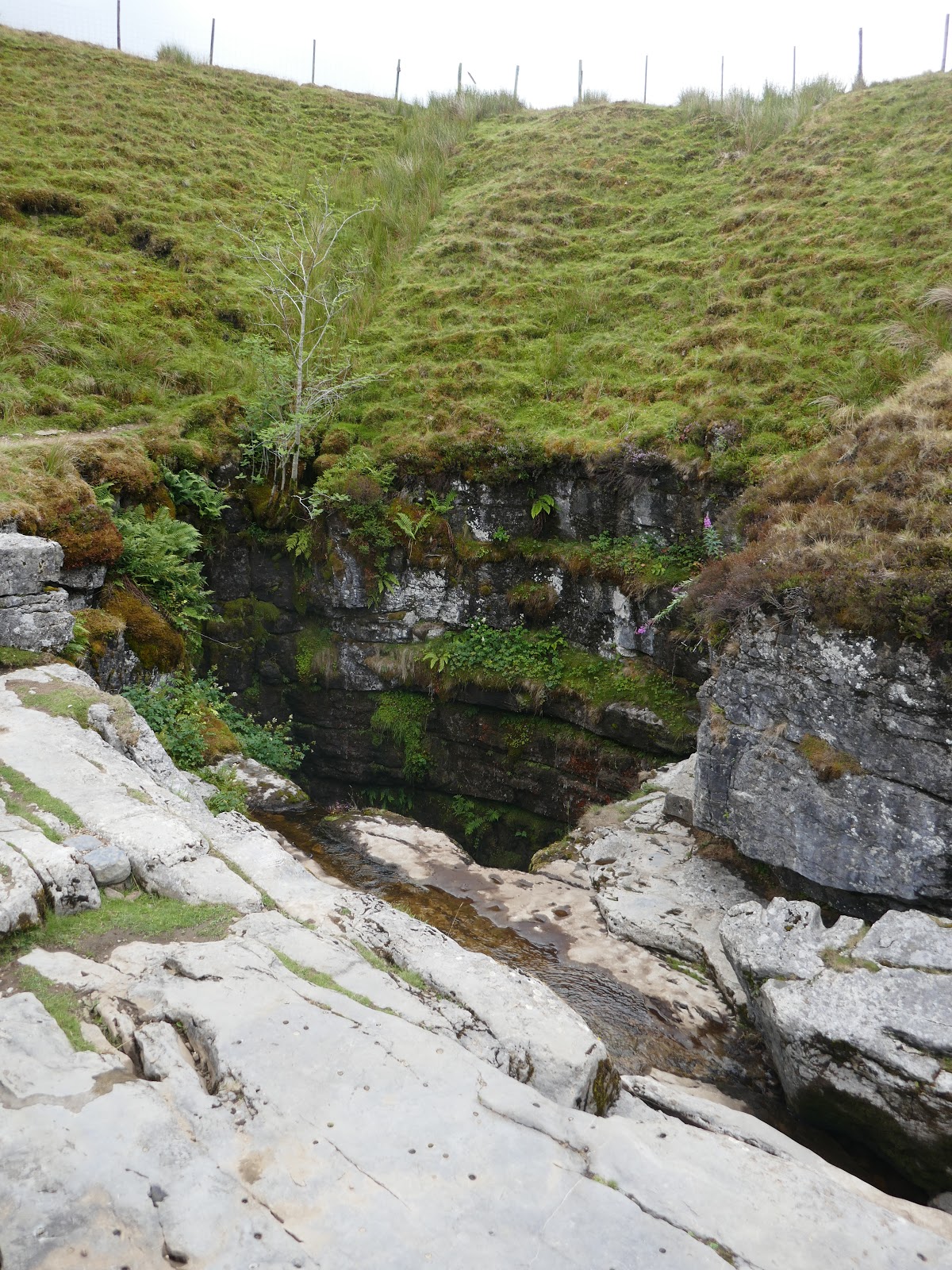
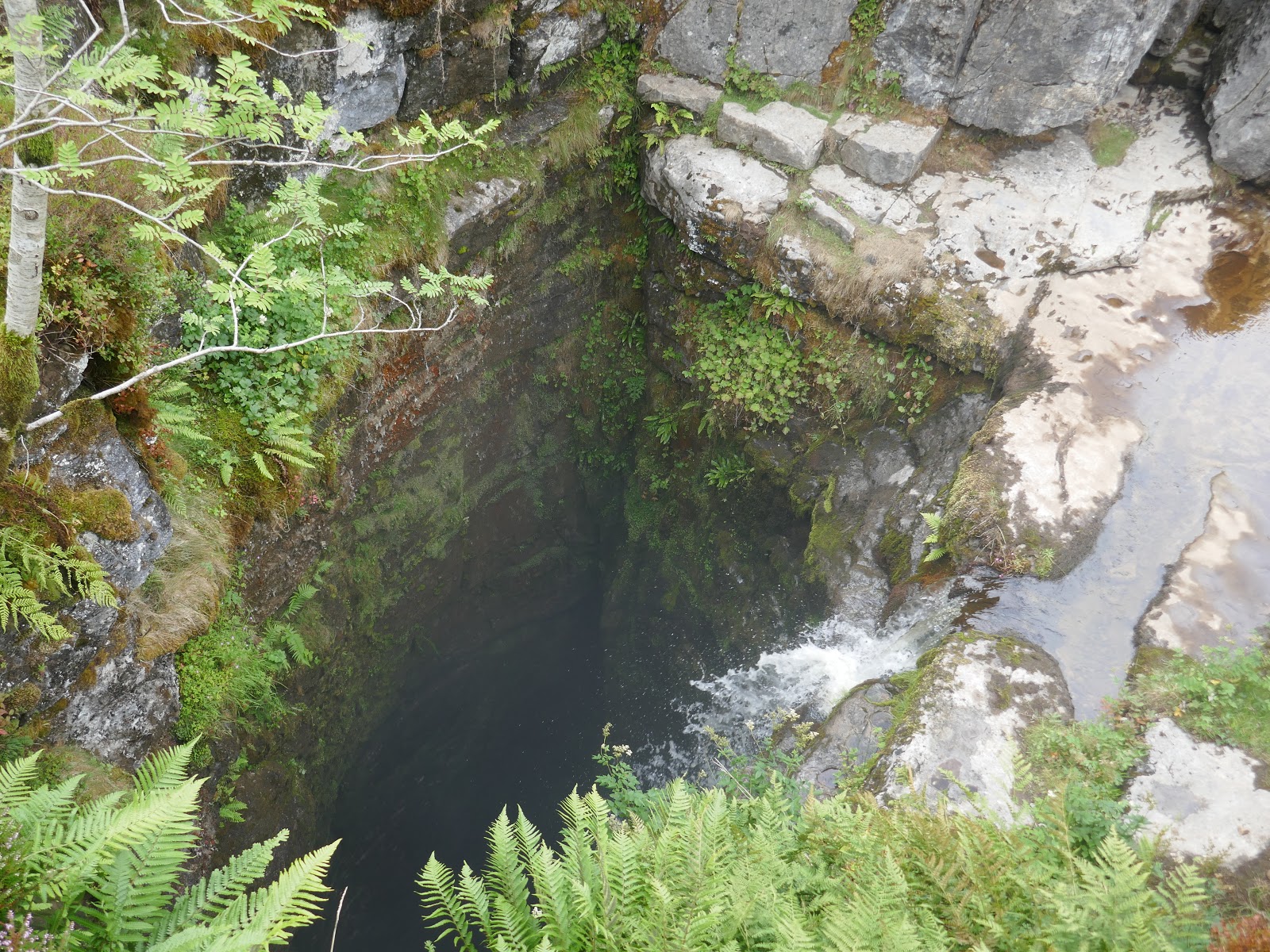
Gaping Gill is a monstrous hole in the ground, swallowing Fell Back as it minds its own business. In fact, the chamber of Gaping Gill is approximately the size of York Minster, a fact confirmed by a laser scanned 3D model of the cave. The falling waters of Fell Beck form the highest unbroken waterfall in the country as they cascade some 98m to the floor below before disappearing into the bouldery mass only to reappear at the Ingleborough Show Cave. For the more adventurous among you, local potholing clubs set up a winch above the shaft to provide a ride to the bottom and back out again for any member of the public who pays a fee.
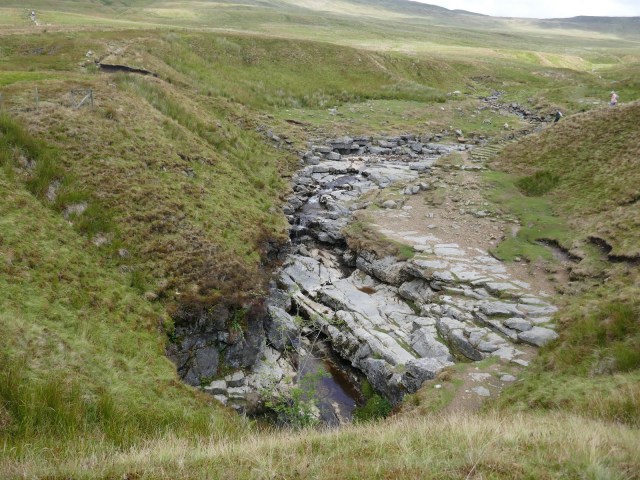 |
| Fell Beck |
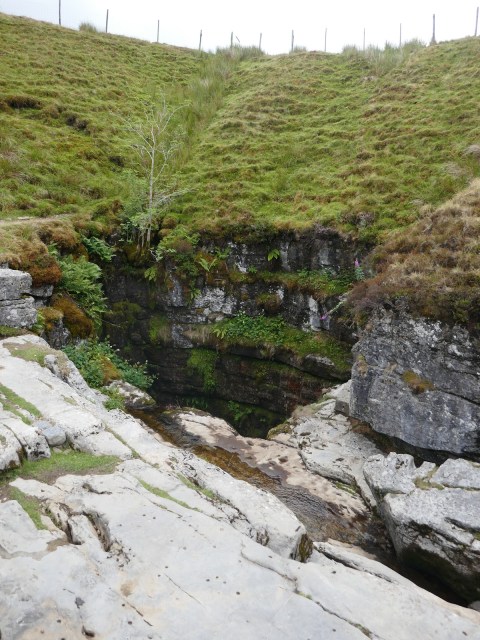 |
| Gaping Gill |
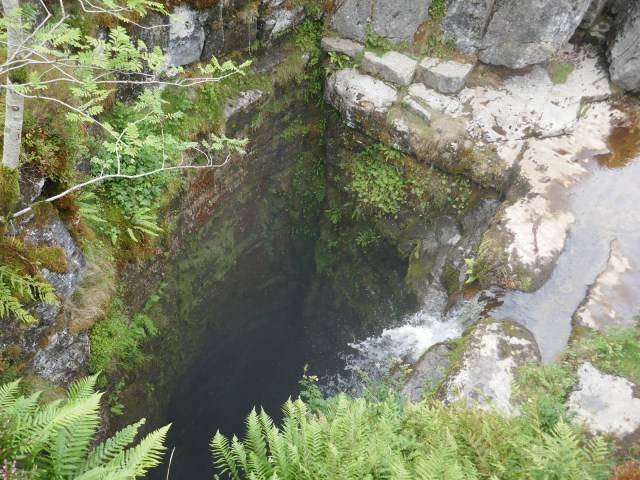 |
| Fell Beck disappears into the hole…. |
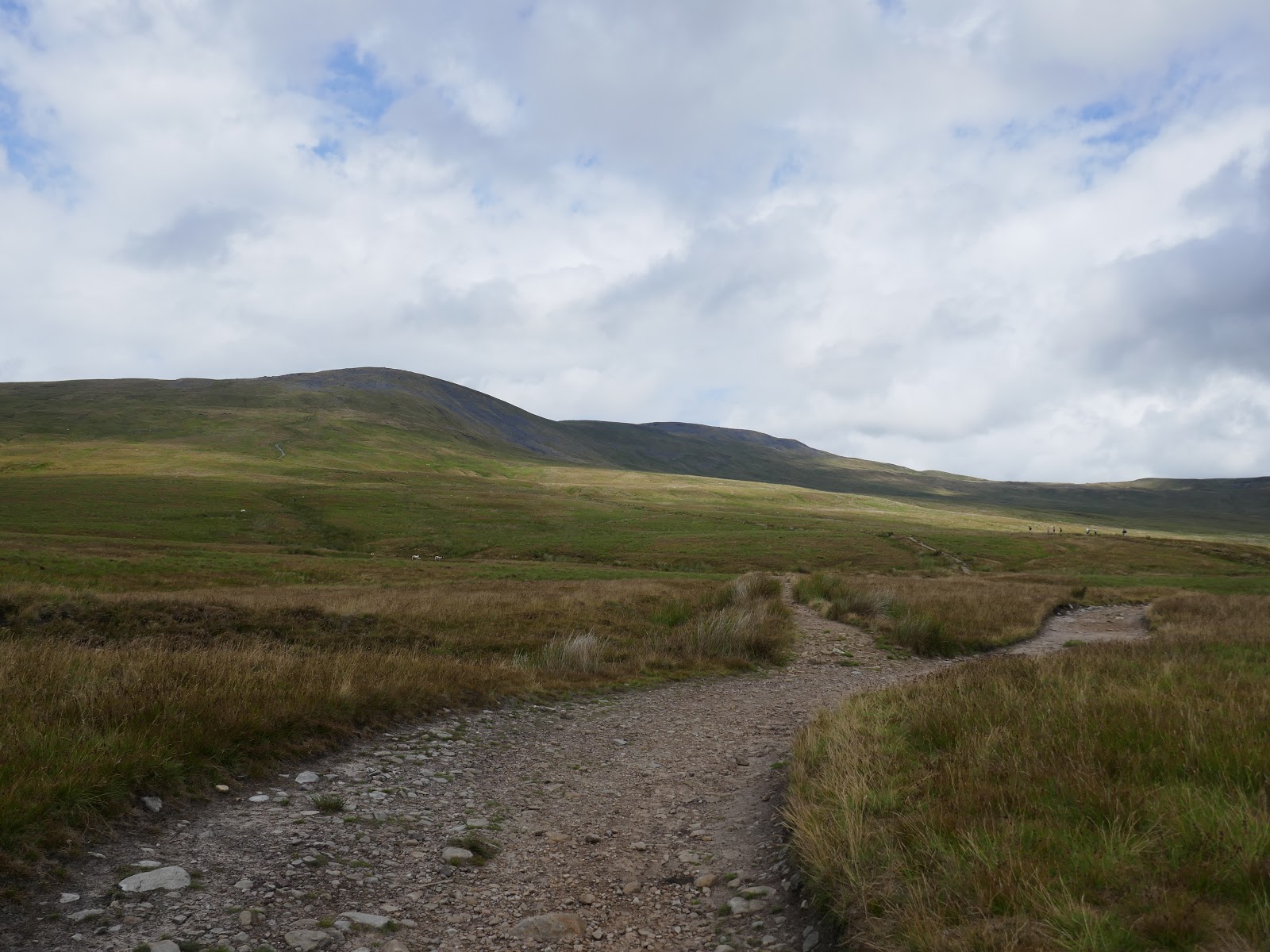
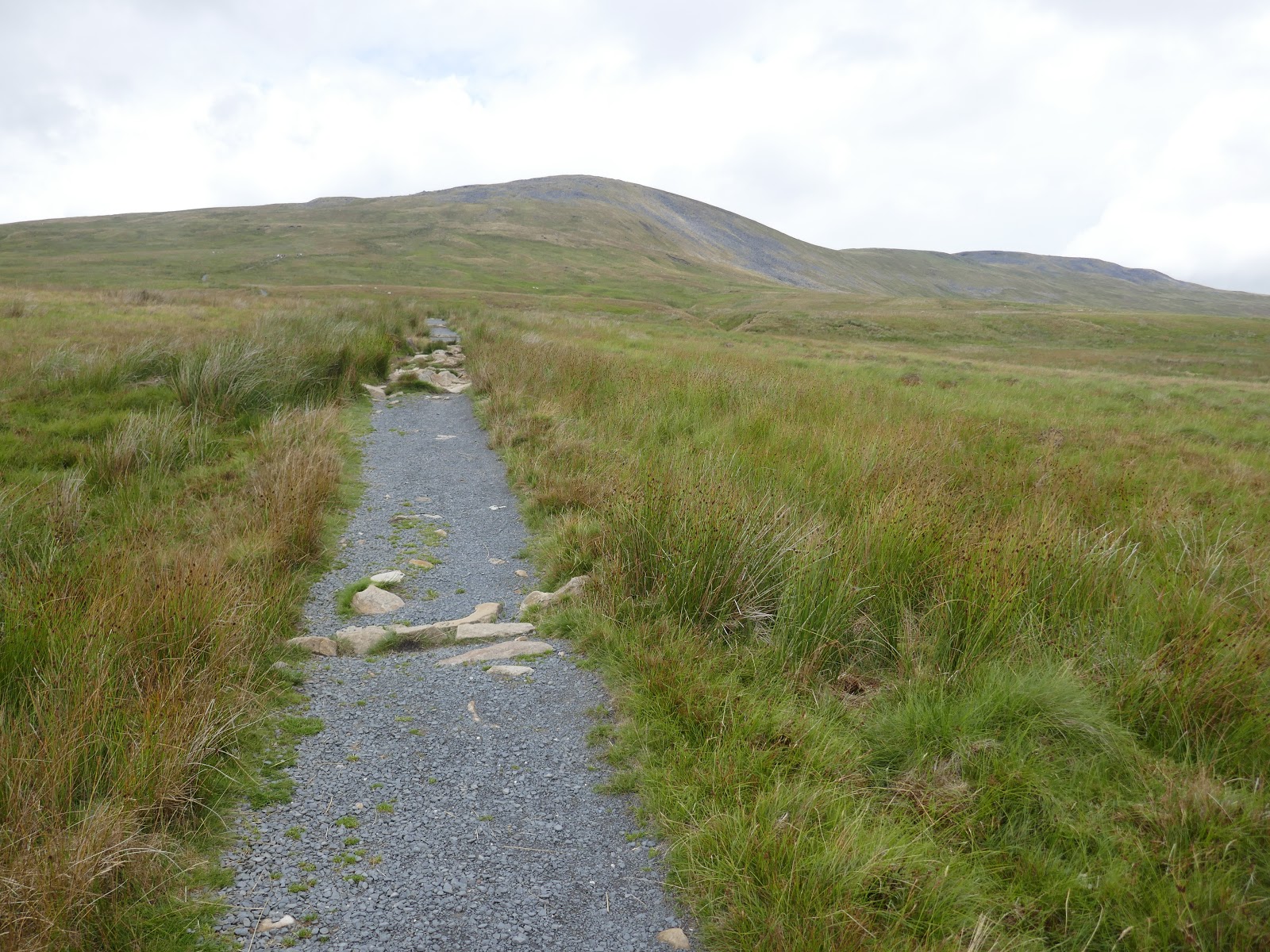
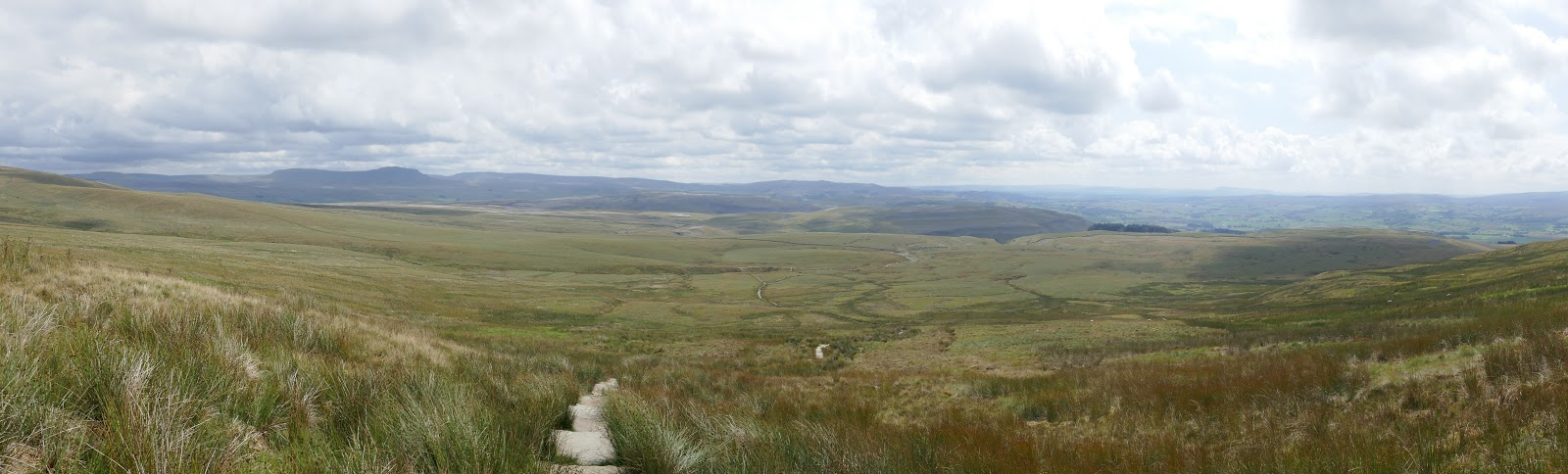
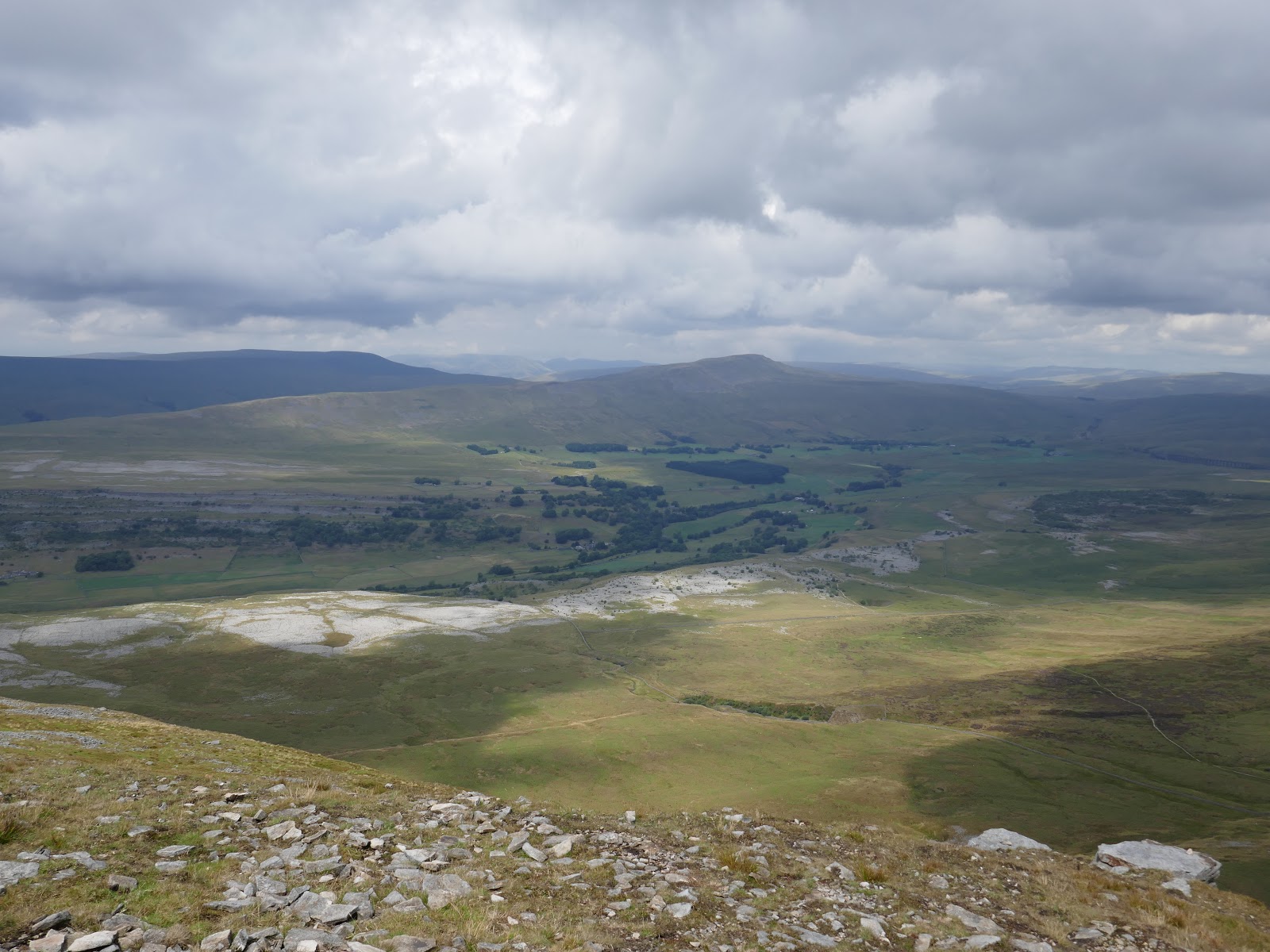
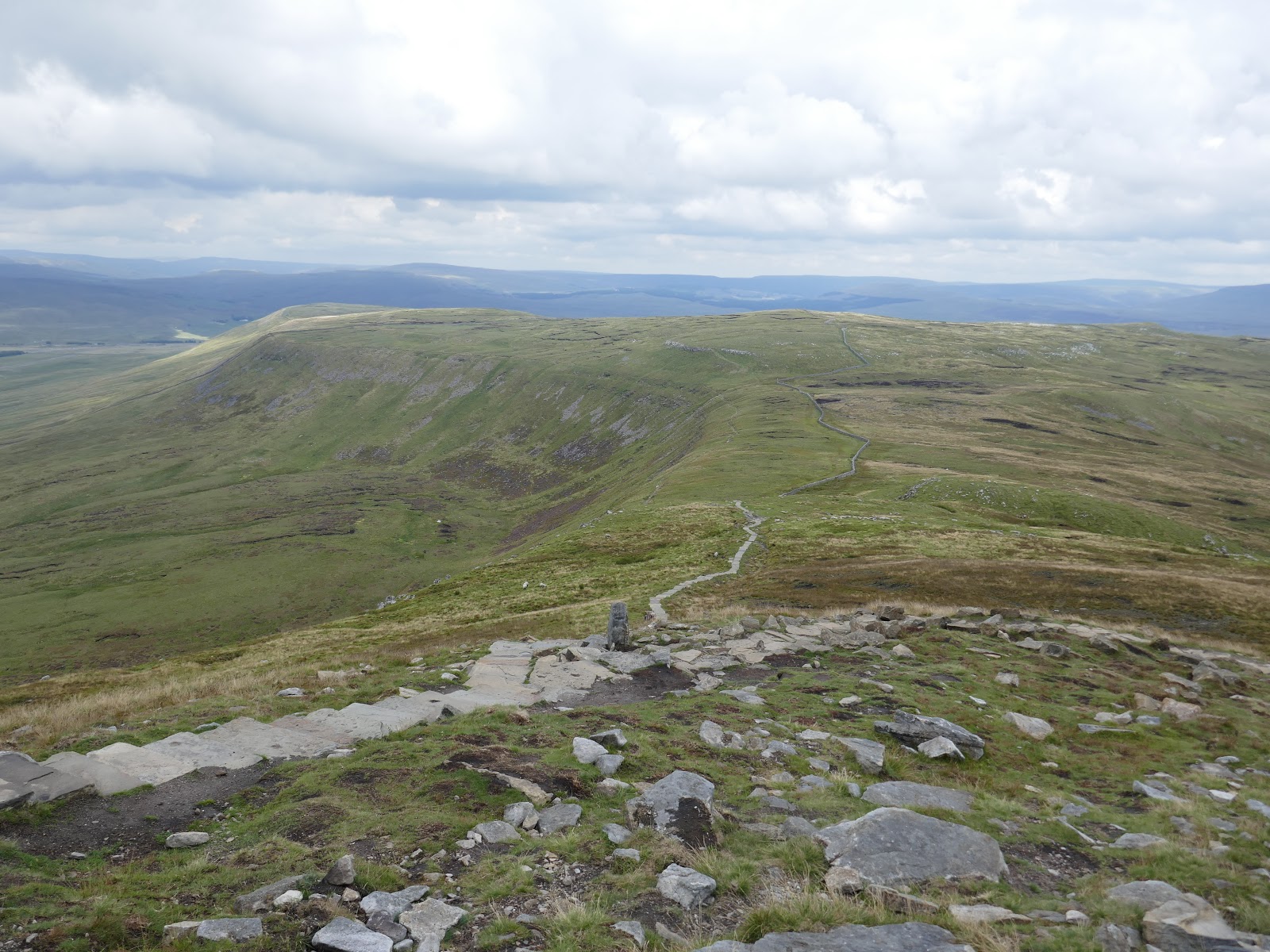
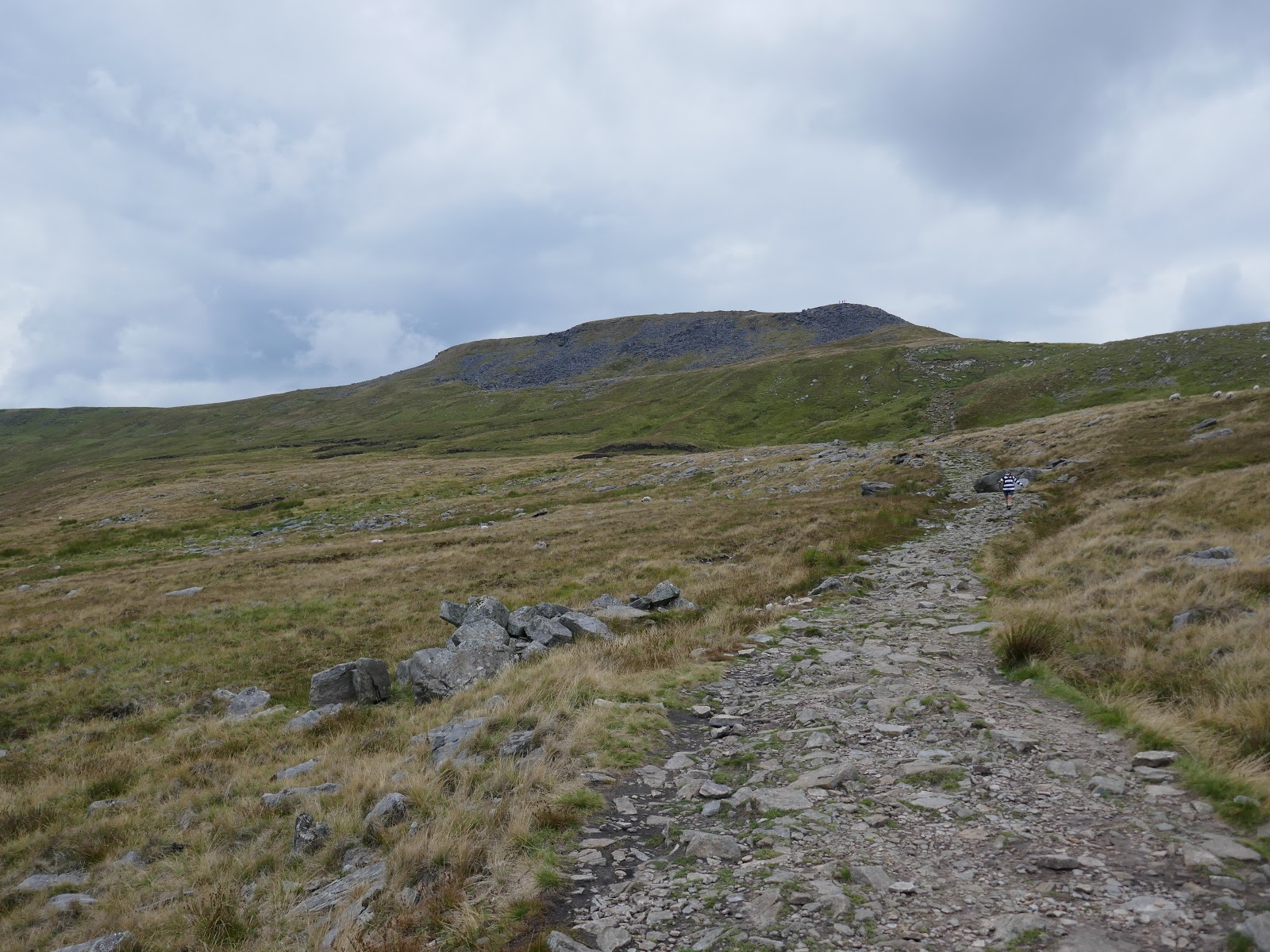
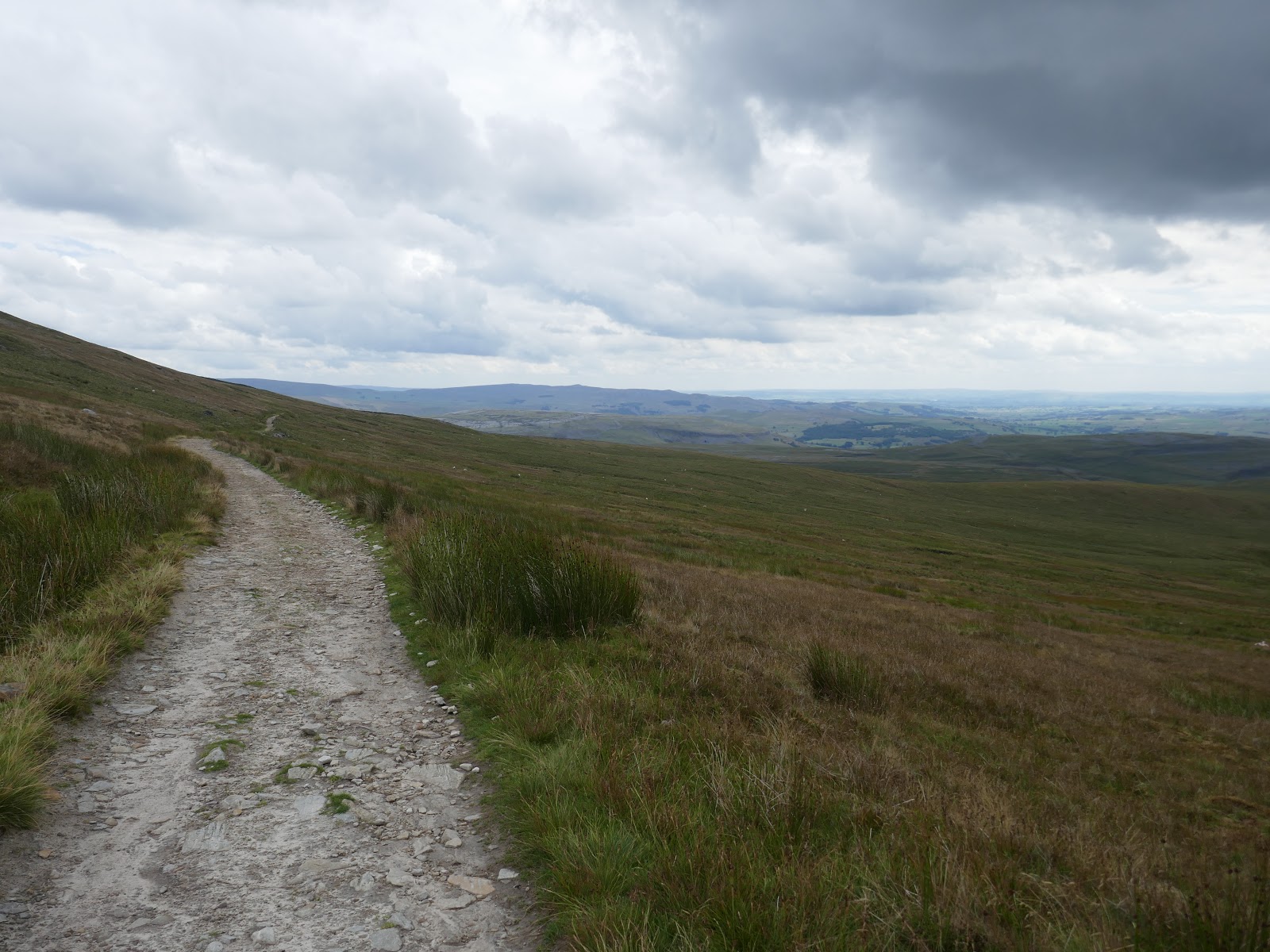
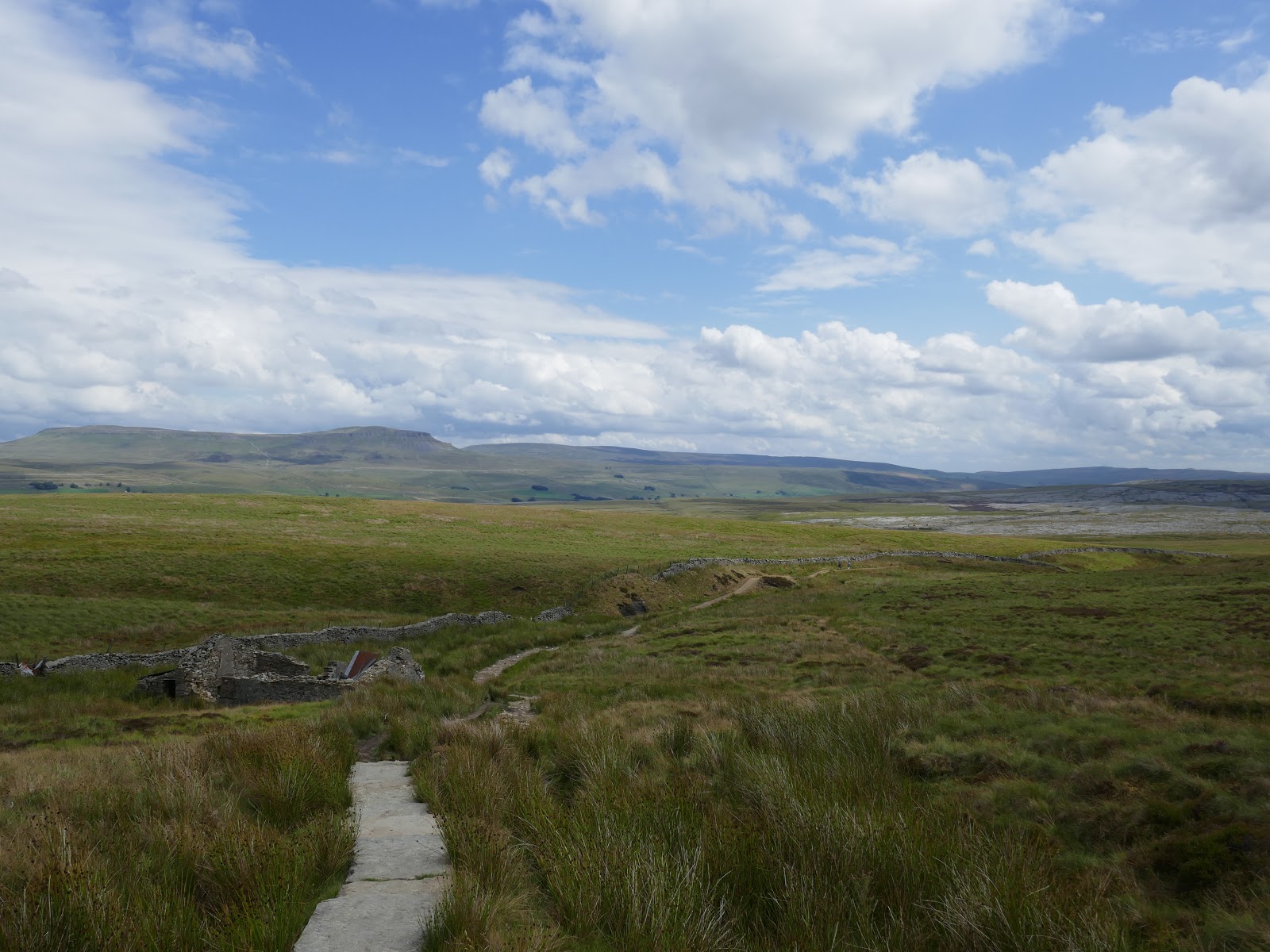
Now, on to the main event, Ingleborough itself. An approach from Gaping Gill takes you up the gentle southern slopes, a fairly easy route by most standards. The path, often flagged with large slabs to prevent it disappearing into the mire, guides you all the way up the hillside until you reach Little Ingleborough, a southern prominence and a fine vantage point overlooking Clapham and the River Wenning.
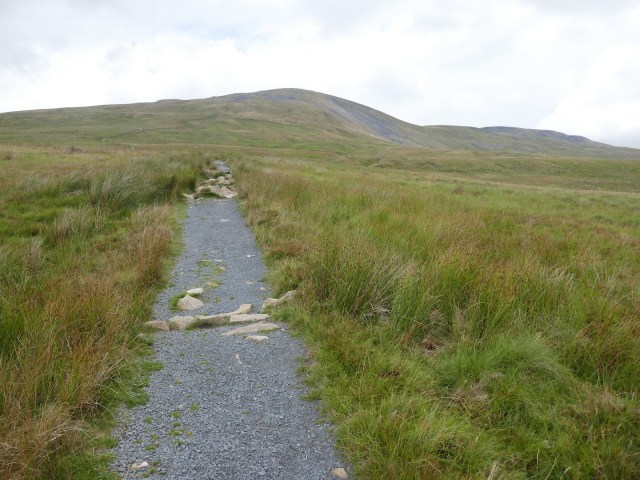 |
| Path to Little Ingleborough |
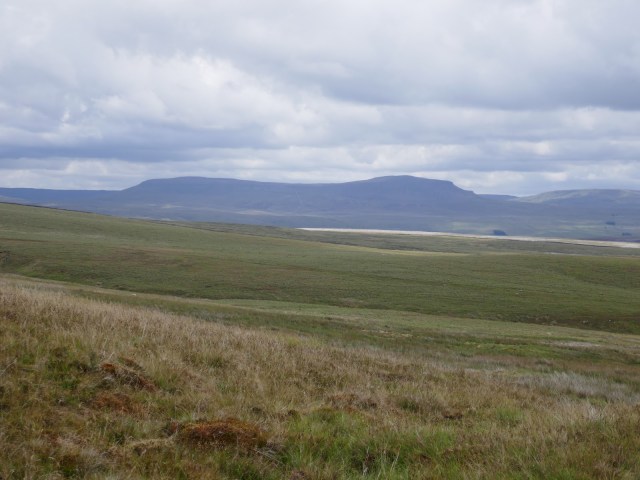 |
| Pen-y-Ghent |
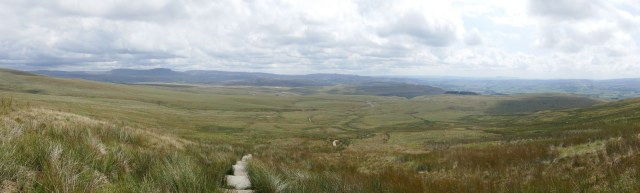 |
| Clapham Bottoms panorama |
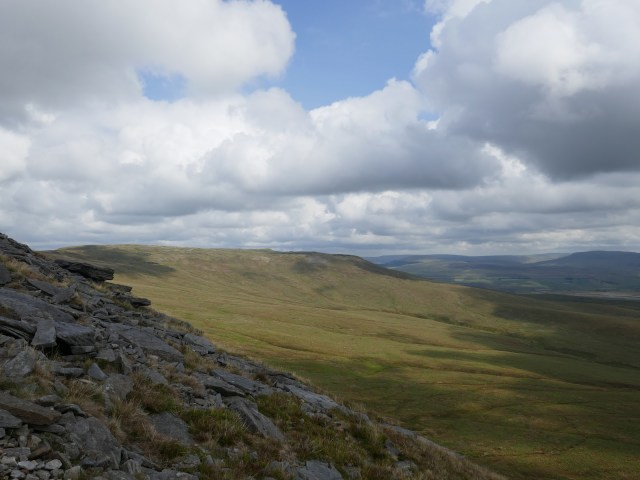 |
| Simon Fell |
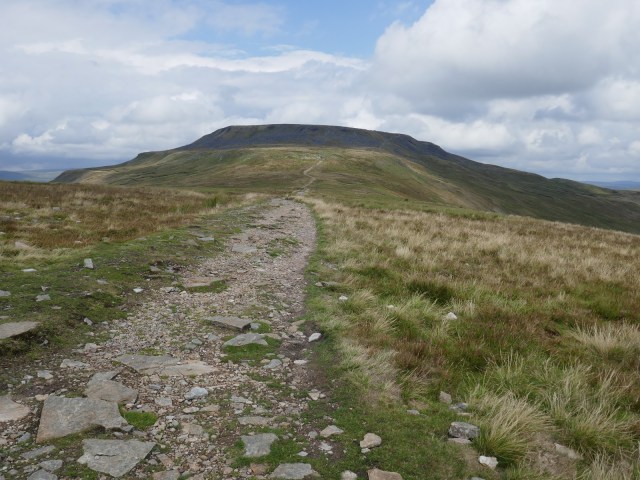 |
| Ingleborough from Little Ingleborough |
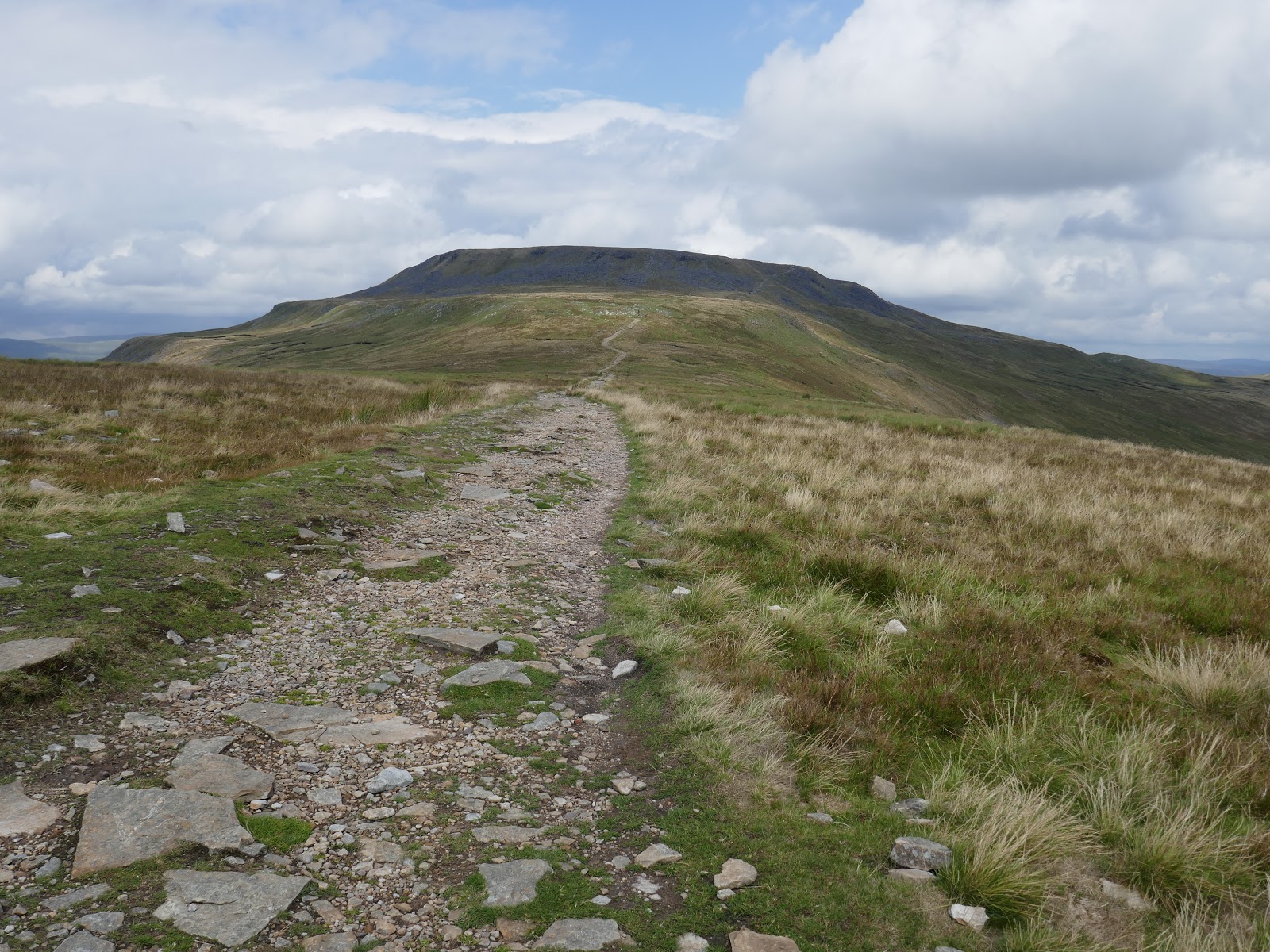
The final climb up Ingleborough stretches out ahead of you, preceded by a flat ridge leading from Little Ingleborough – an easy walk if ever there was one. As you approach the flanks of the final climb, the path skirts around the edge of Swire Gill Head before starting up the slopes. A short moment or two later and you’re on top of the flat plateau that characterises the mountain.
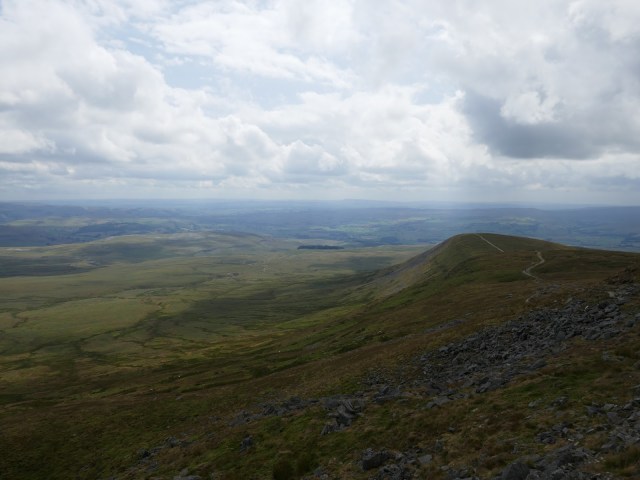 |
| Little Ingleborough |
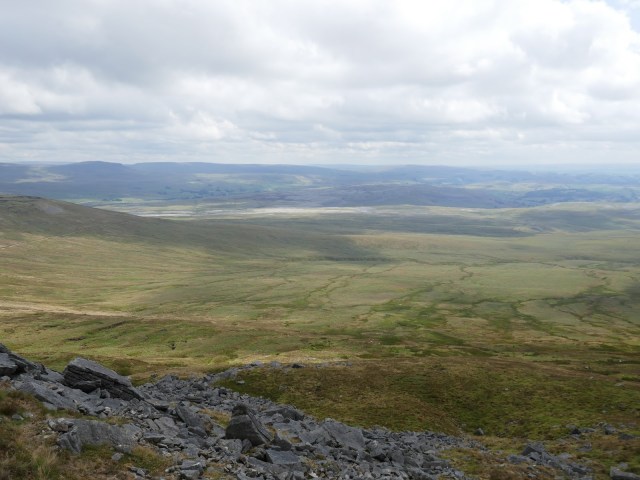 |
| Clapham Bents |
On the top of Ingleborough, the remains of an old walled enclosure have been discovered inside which foundations of Iron Age huts have been found, giving rise to the second part of Ingleborough’s name – ‘burh‘, meaning ‘a fortified place’. Oddly, Ingleborough was also once thought to be the highest mountain in the country, despite actually being lower than the neighbouring Whernside.
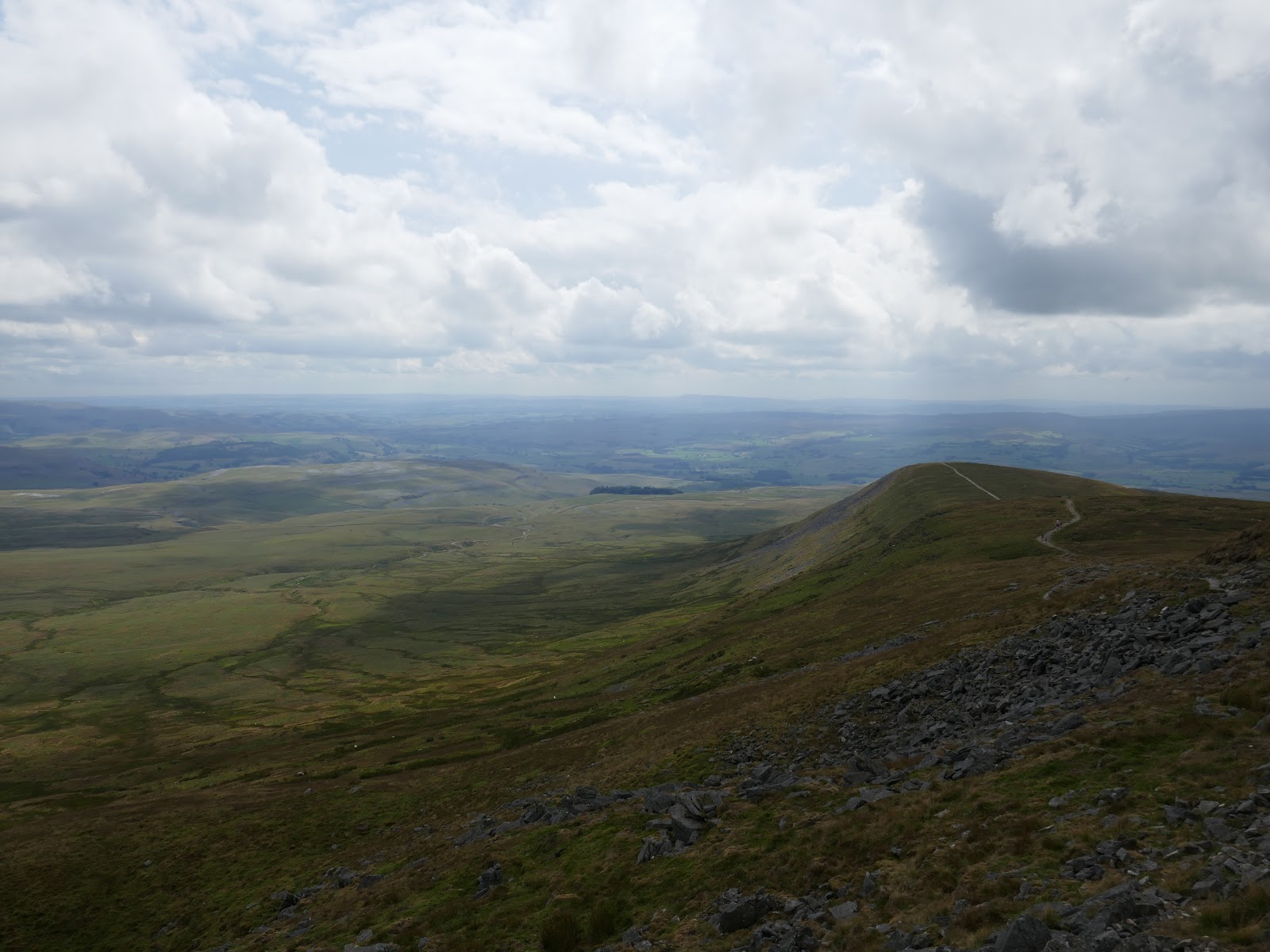
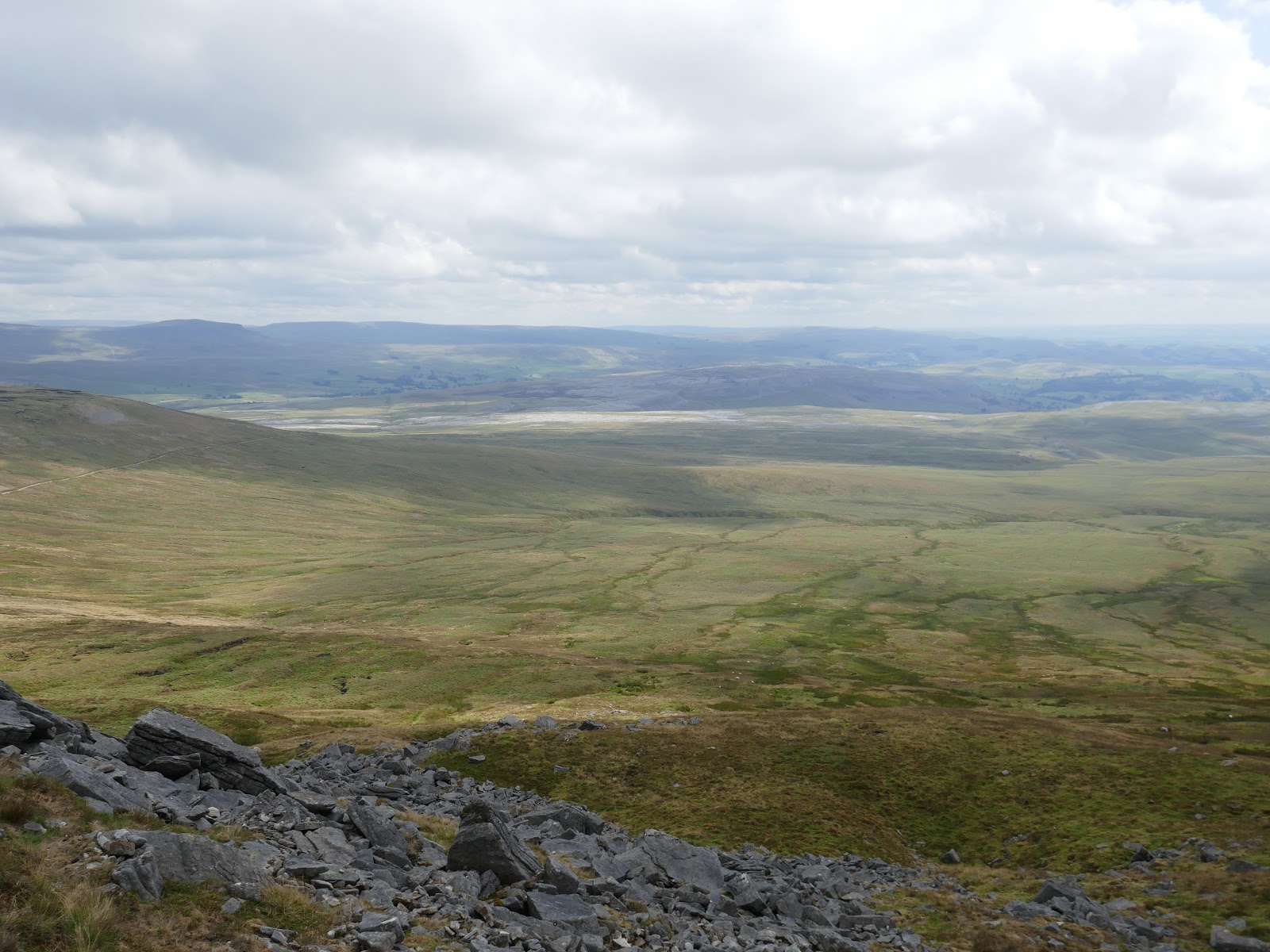
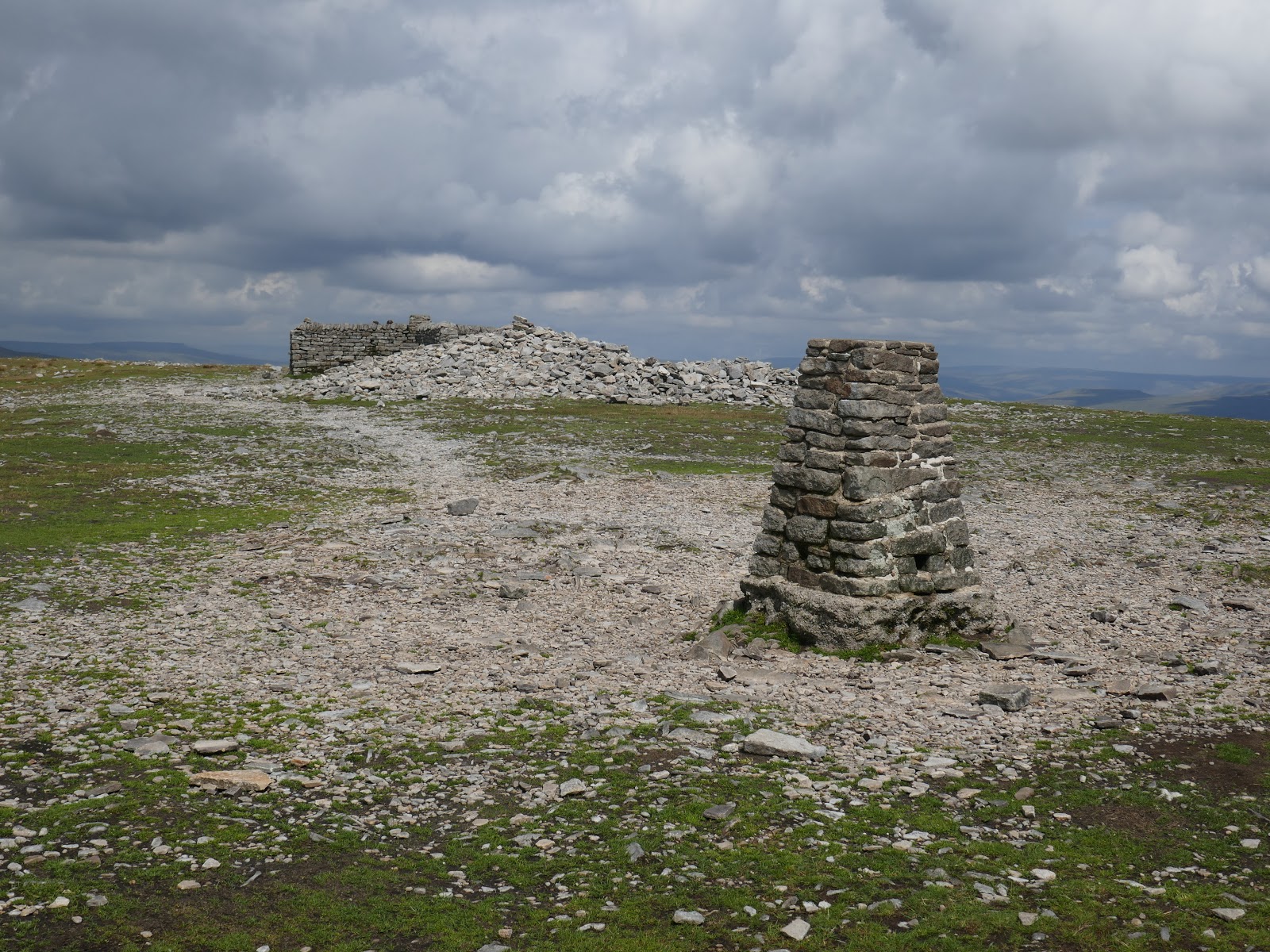
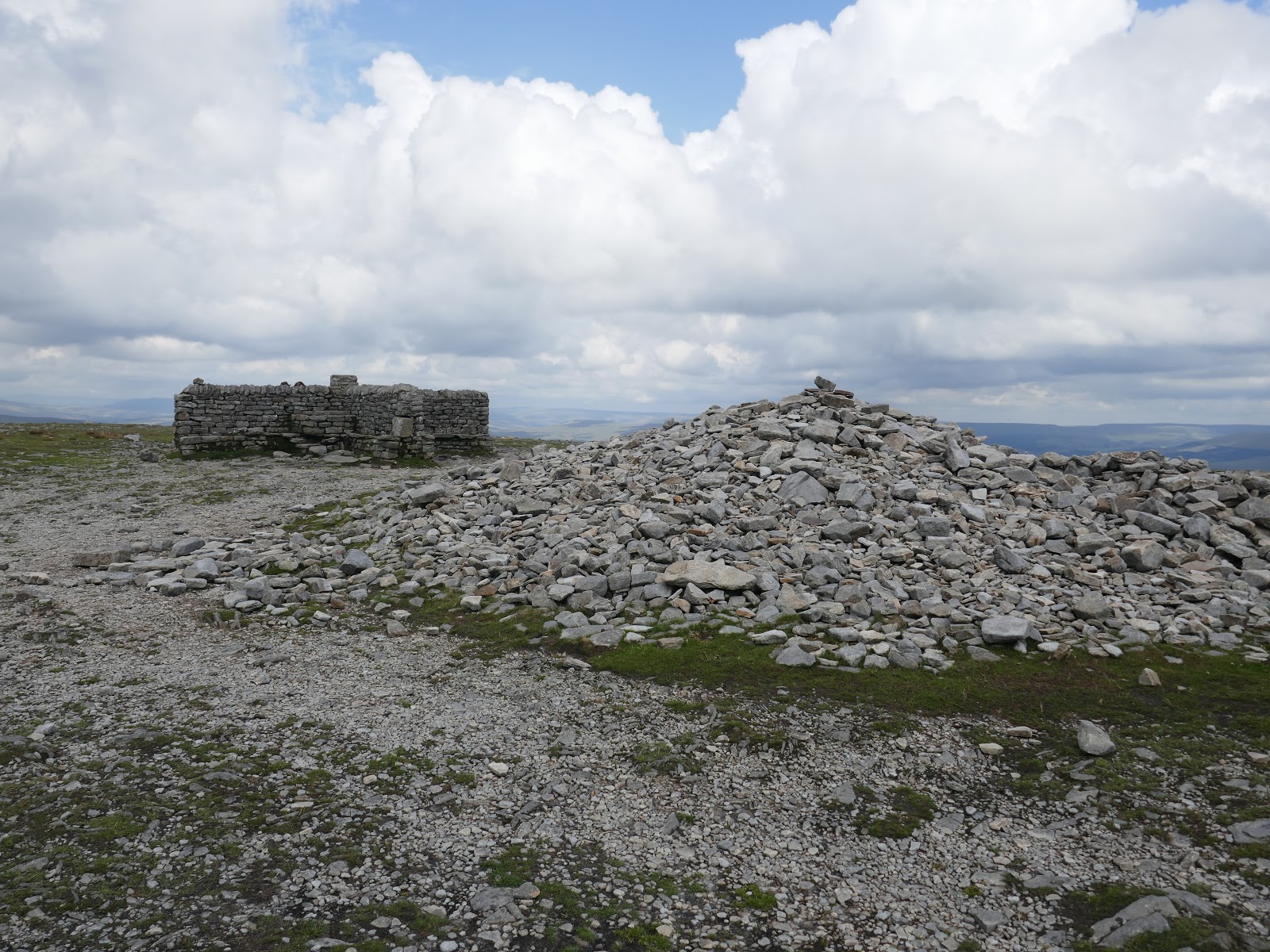
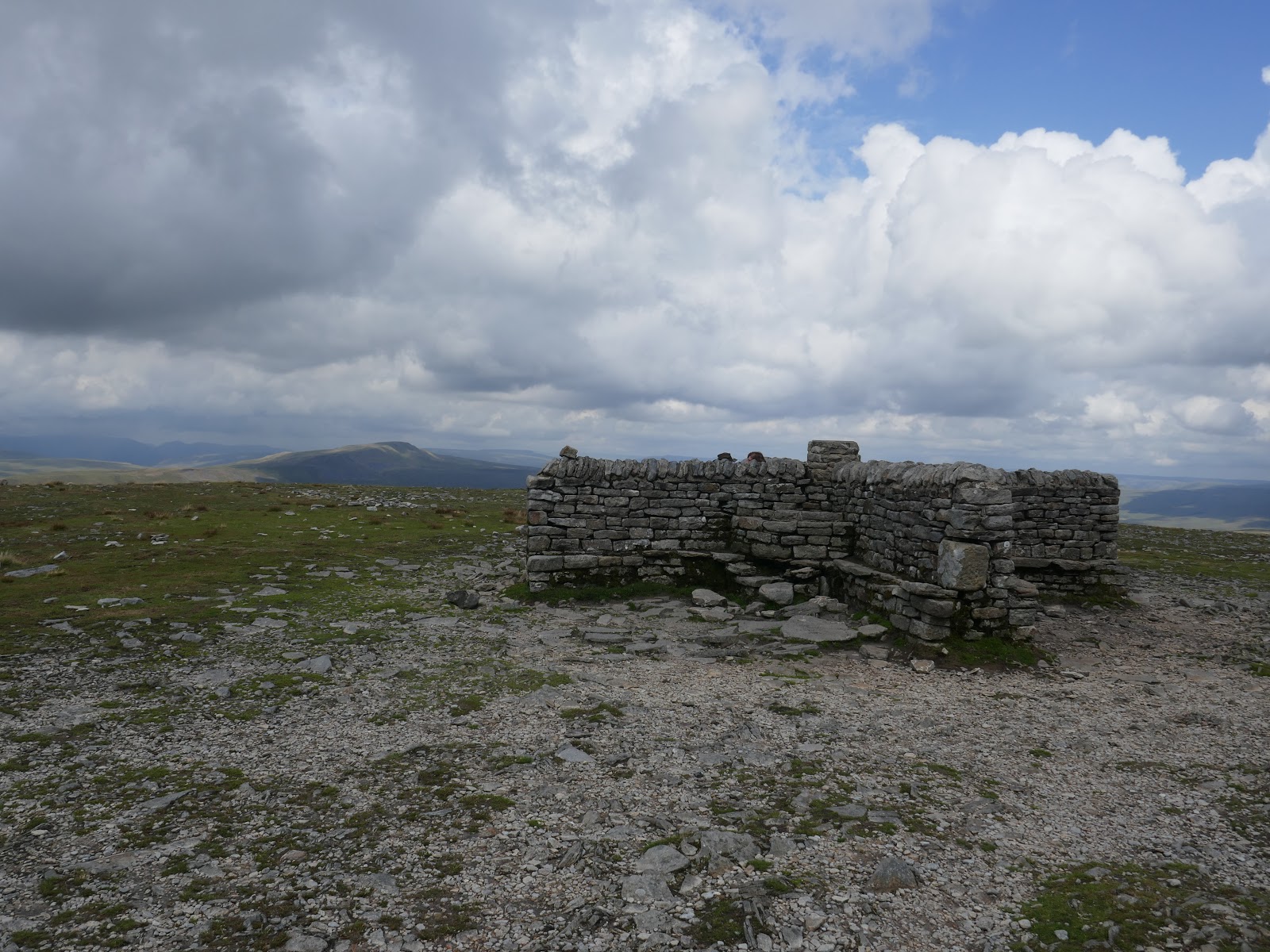
The summit is adorned with that most characteristic of objects, the OS trig pillar, along with a substantial cross shelter and a few large piles of stones. The views from around the summit are spectacular. On a clear day, they stretch away in all directions and are especially good viewed to the north and the west.
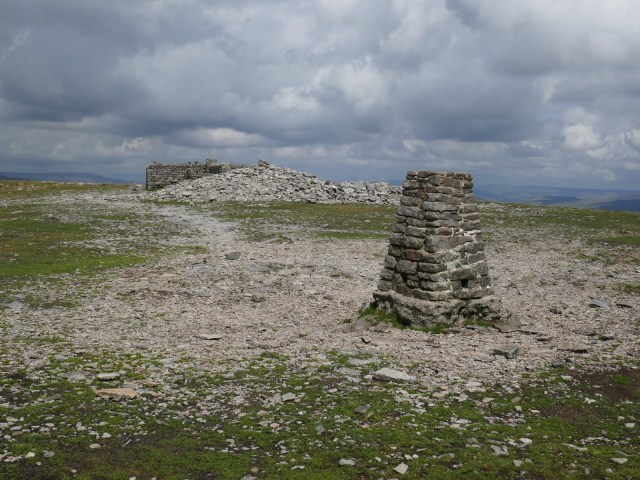 |
| Ingleborough’s summit |
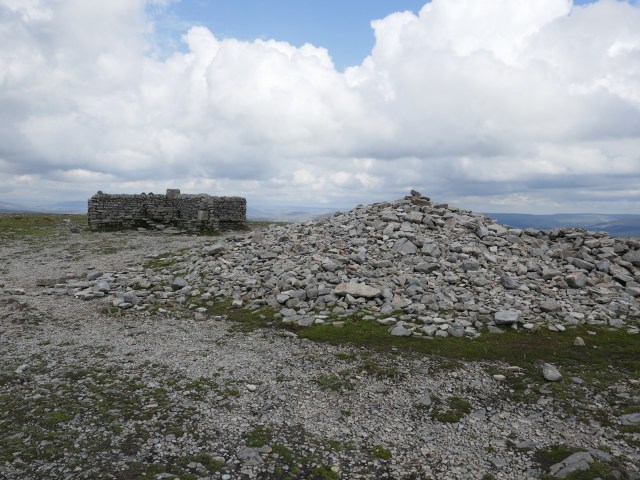 |
| Cairn and windshelter |
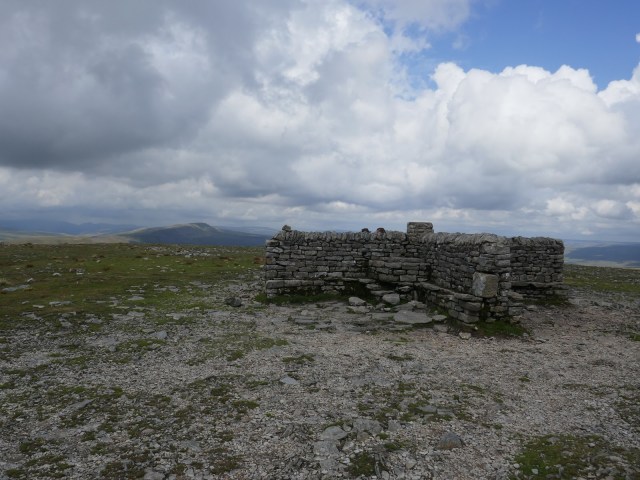 |
| Ingleborough’s shelter |
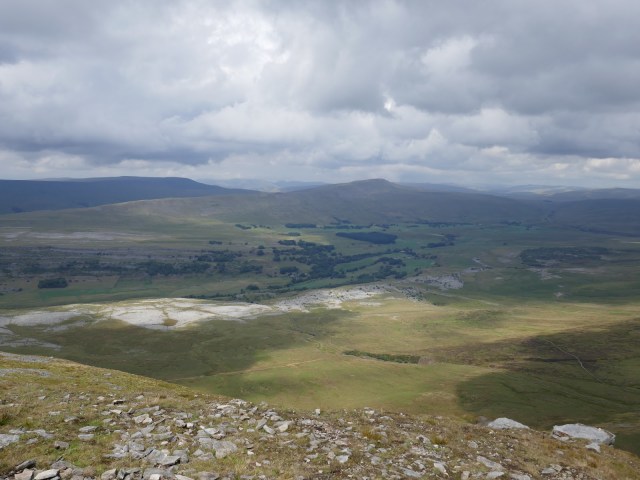 |
| Whernside |
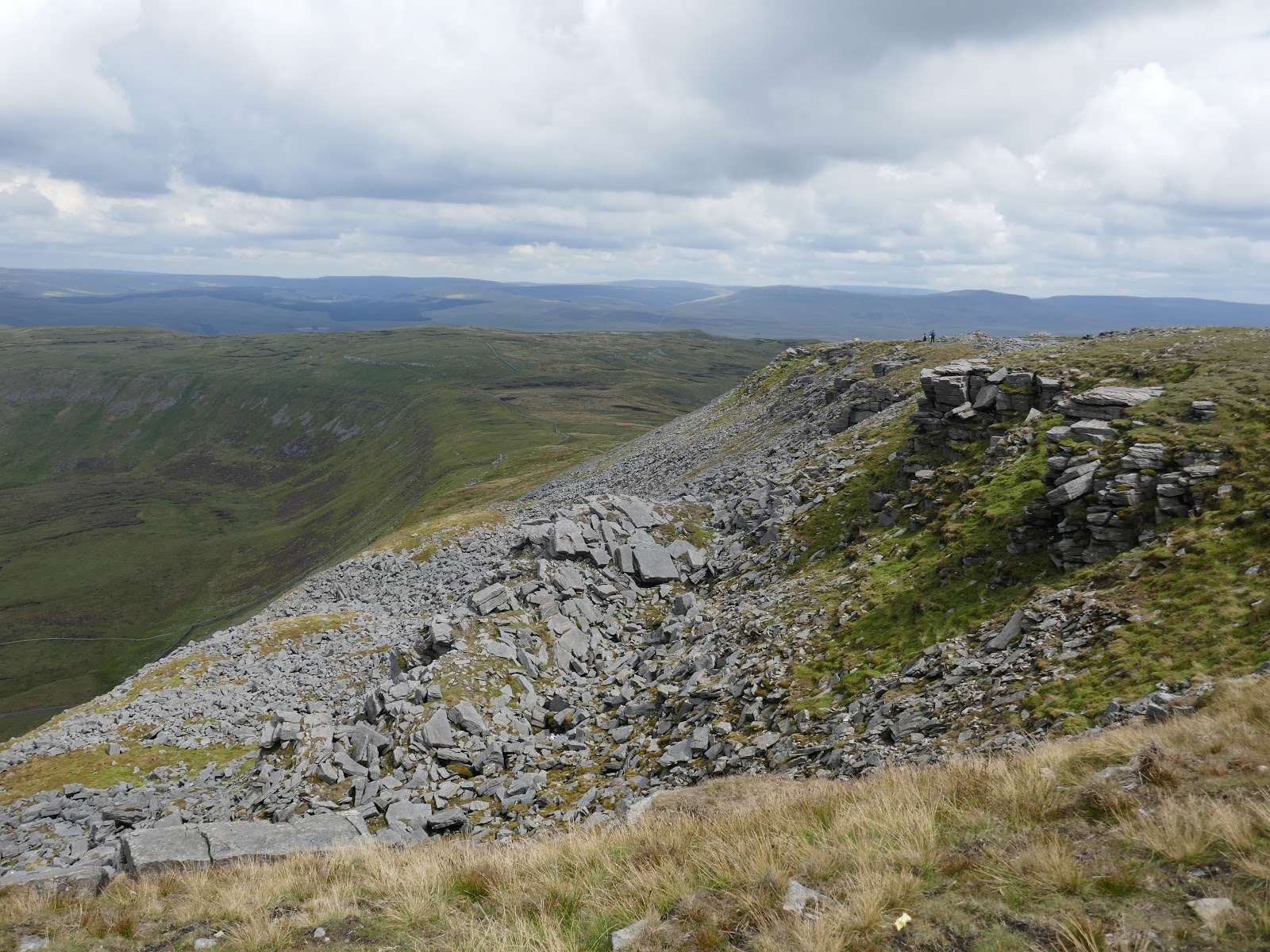
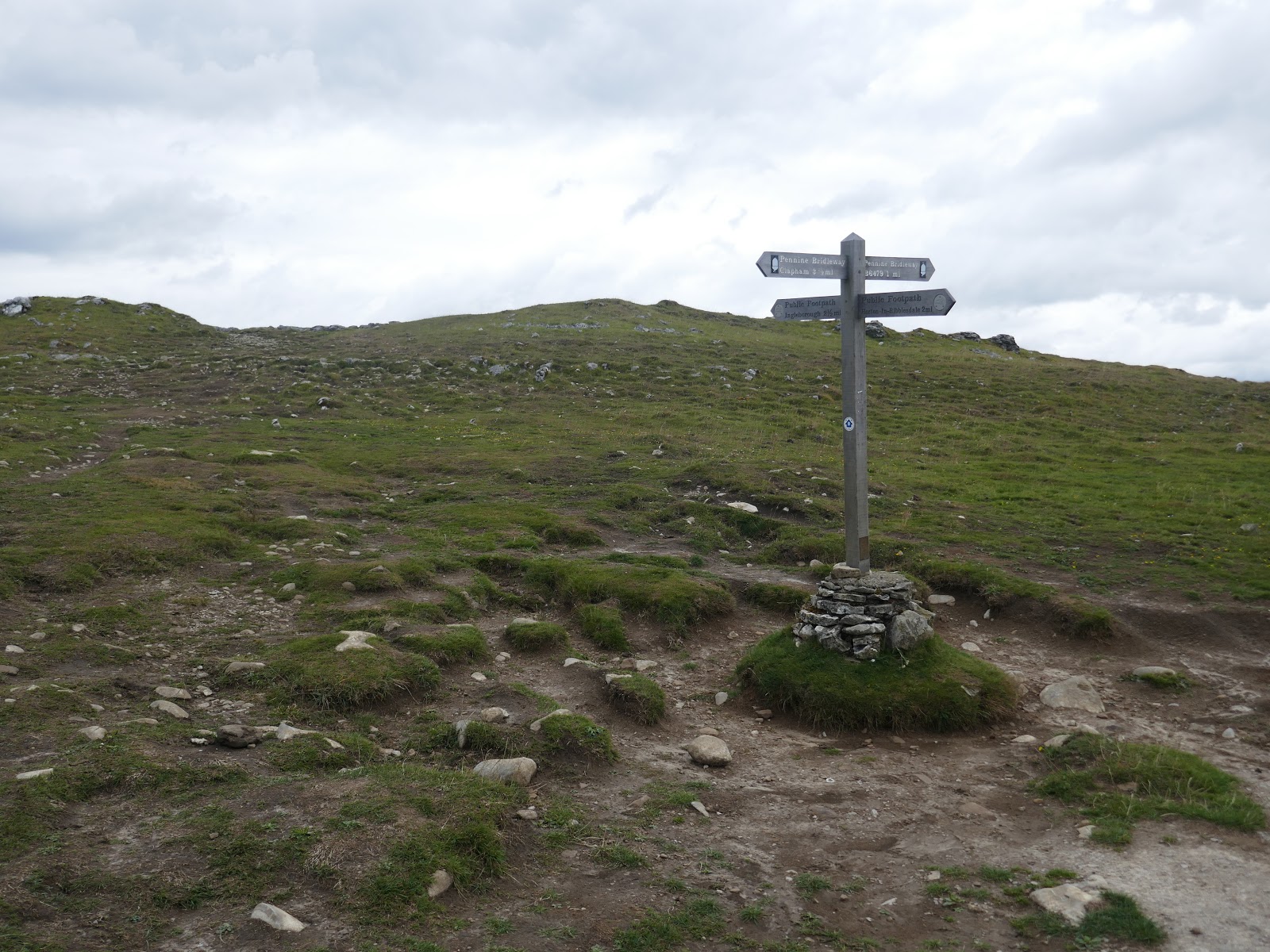
A number of paths lead from the summit and the one I would be following is the most trodden as it is the typical Yorkshire Three Peaks route between Ingleborough and Horton-in-Ribblesdale. It descends easily around the top of Swire Head Gill and across The Allotment. The slopes here are riddled with potholes, some more dramatic than others such as Juniper Gulf, Nick Pot and Sulber Pot though you have to venture off-piste to find them.
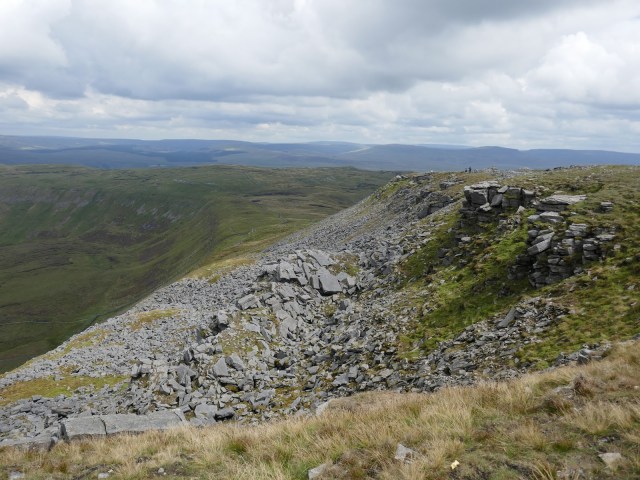 |
| The Arks |
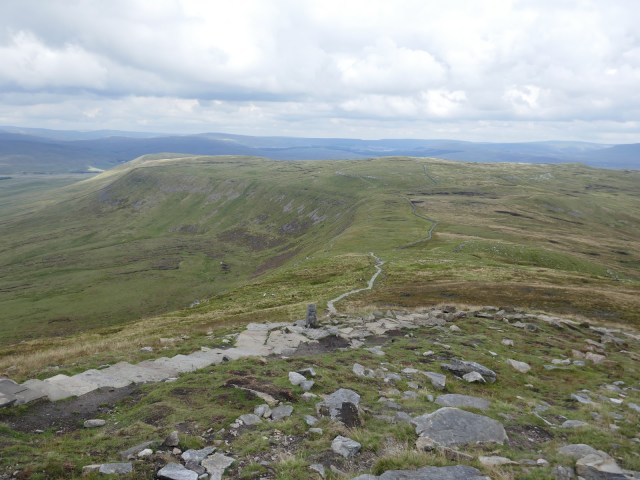 |
| Simon Fell |
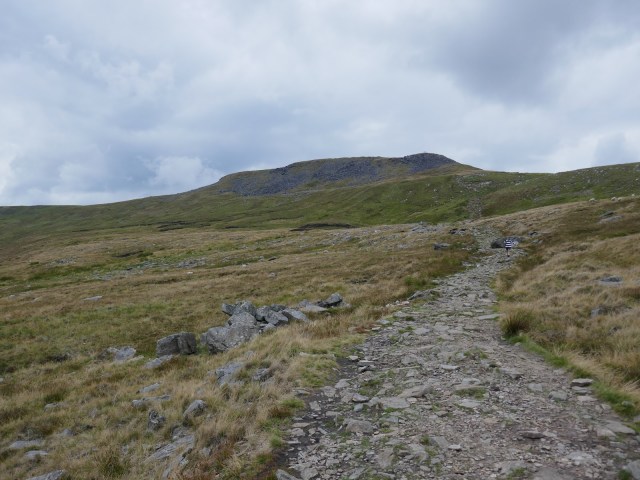 |
| Looking back to Ingleborough |
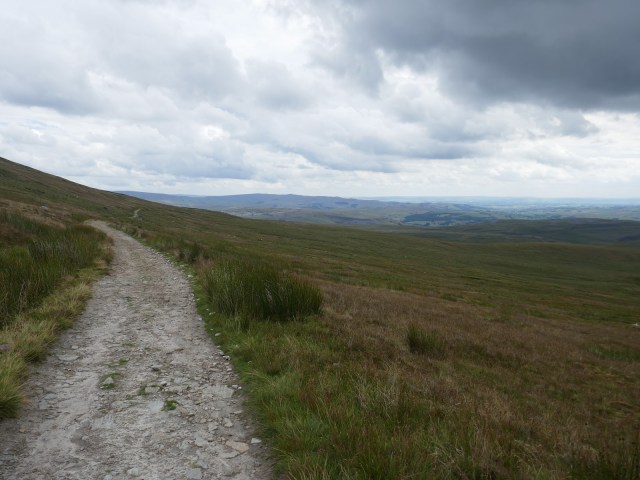 |
| The path at Fell Beck Head |
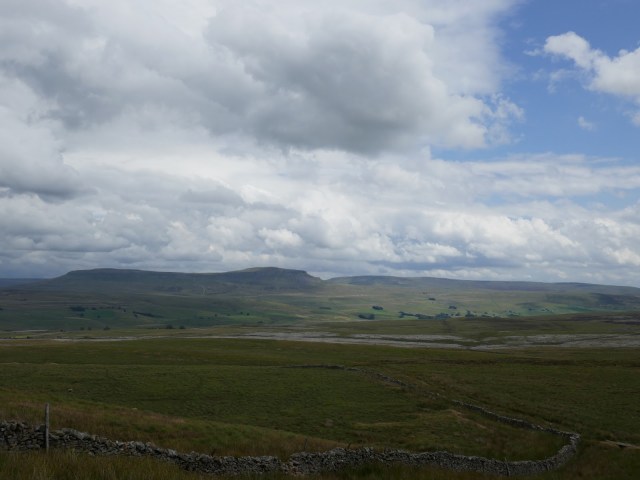 |
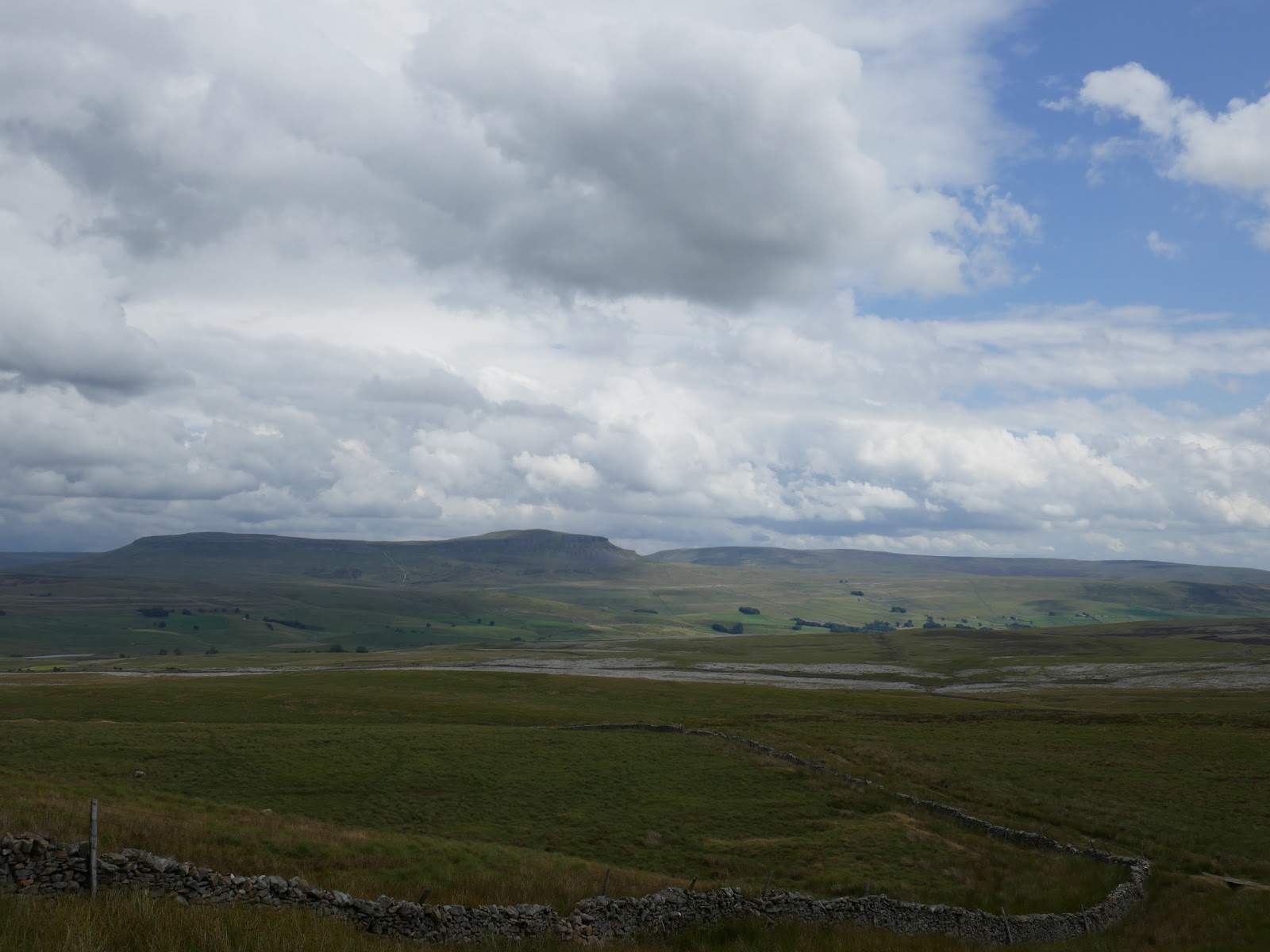
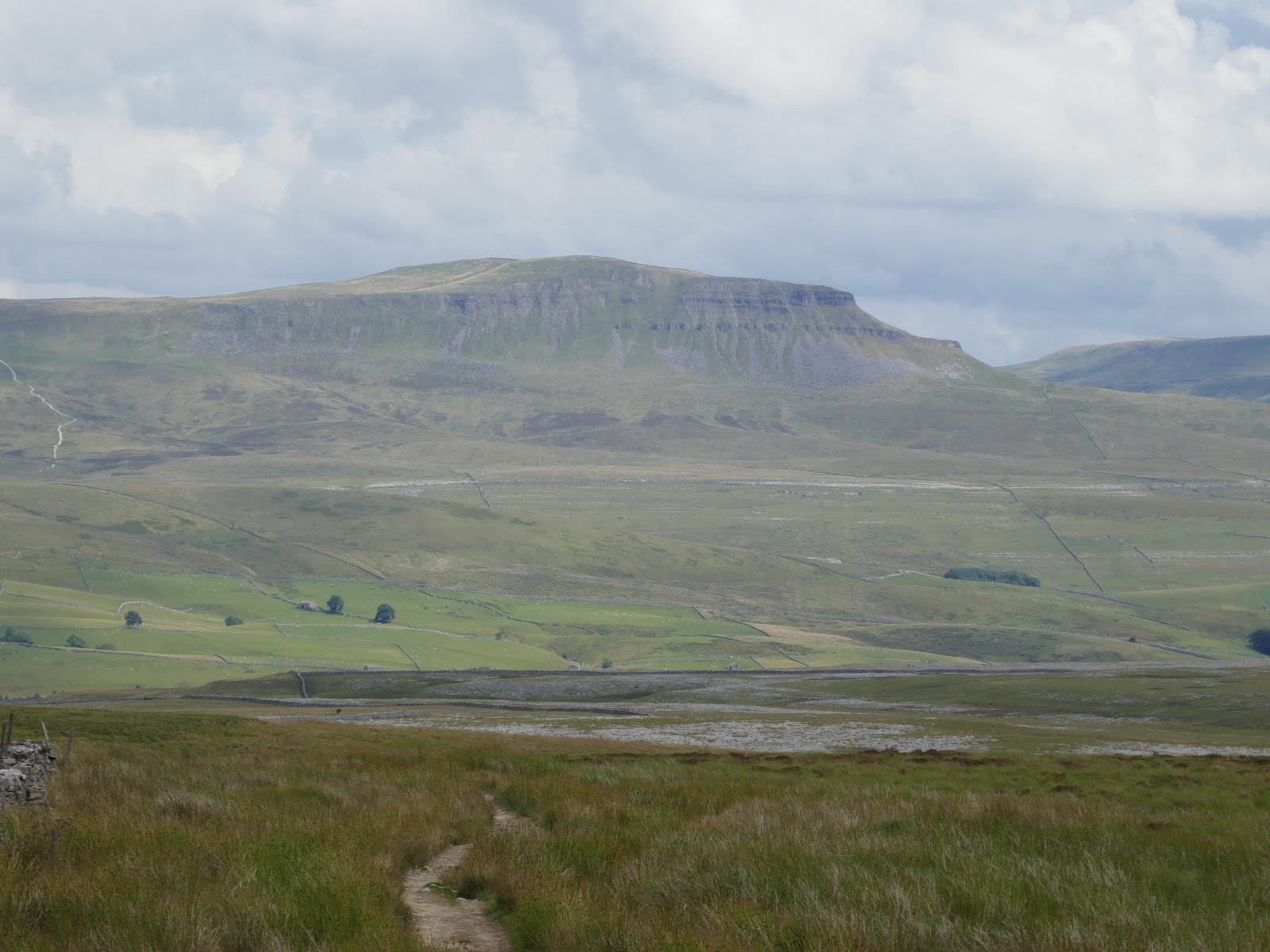
| Looking across to Pen-y-Ghent |
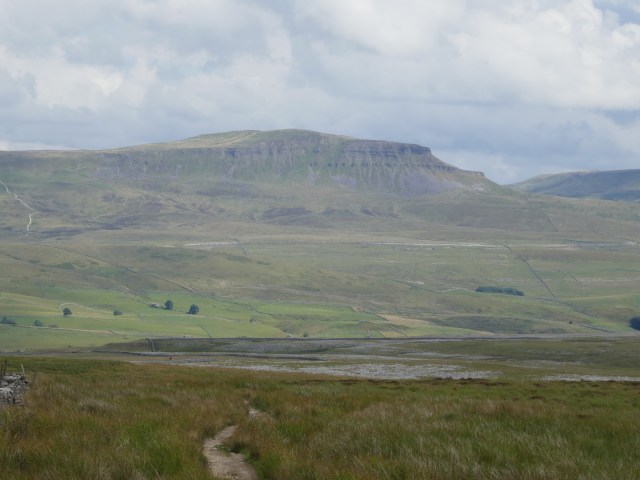 |
| Pen-y-Ghent |
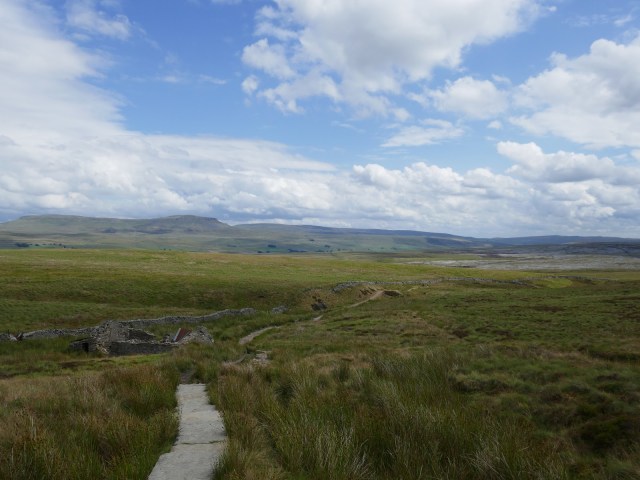 |
| The area known as The Allotment |
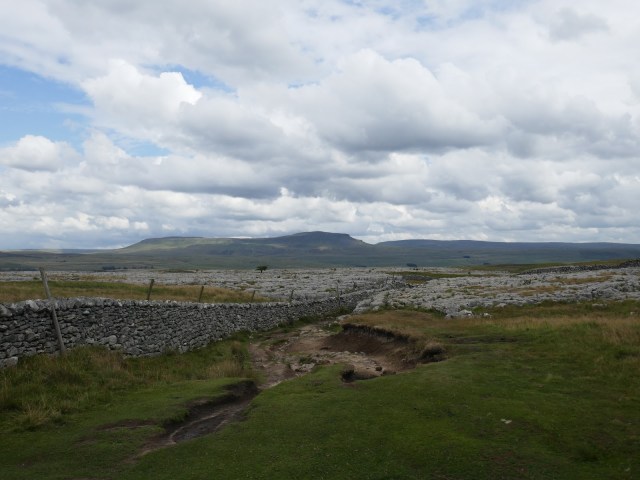 |
| Sulber Nick |
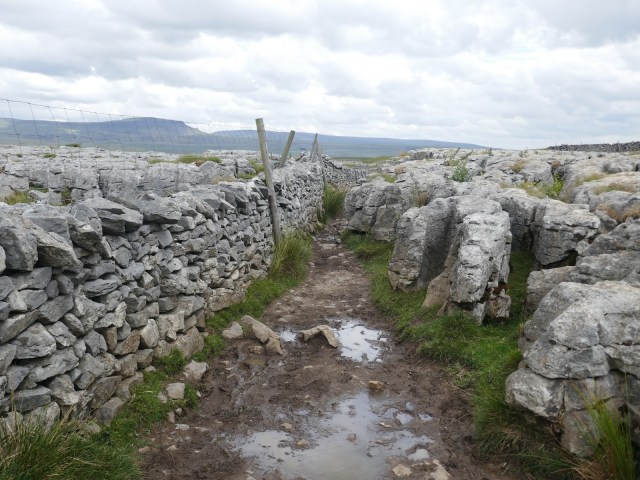 |
| The limestone pavement at Sulber |
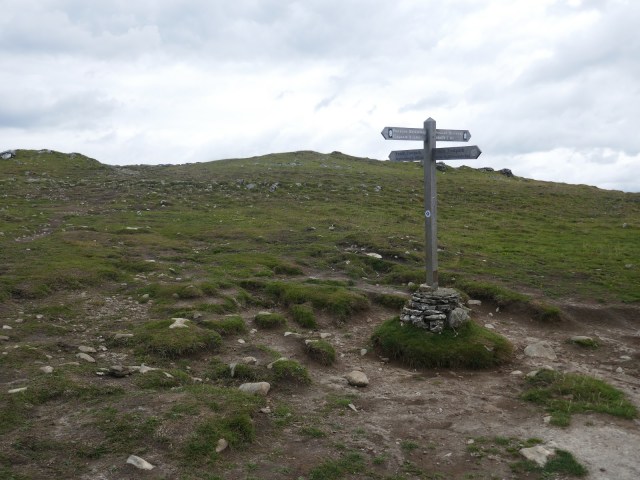
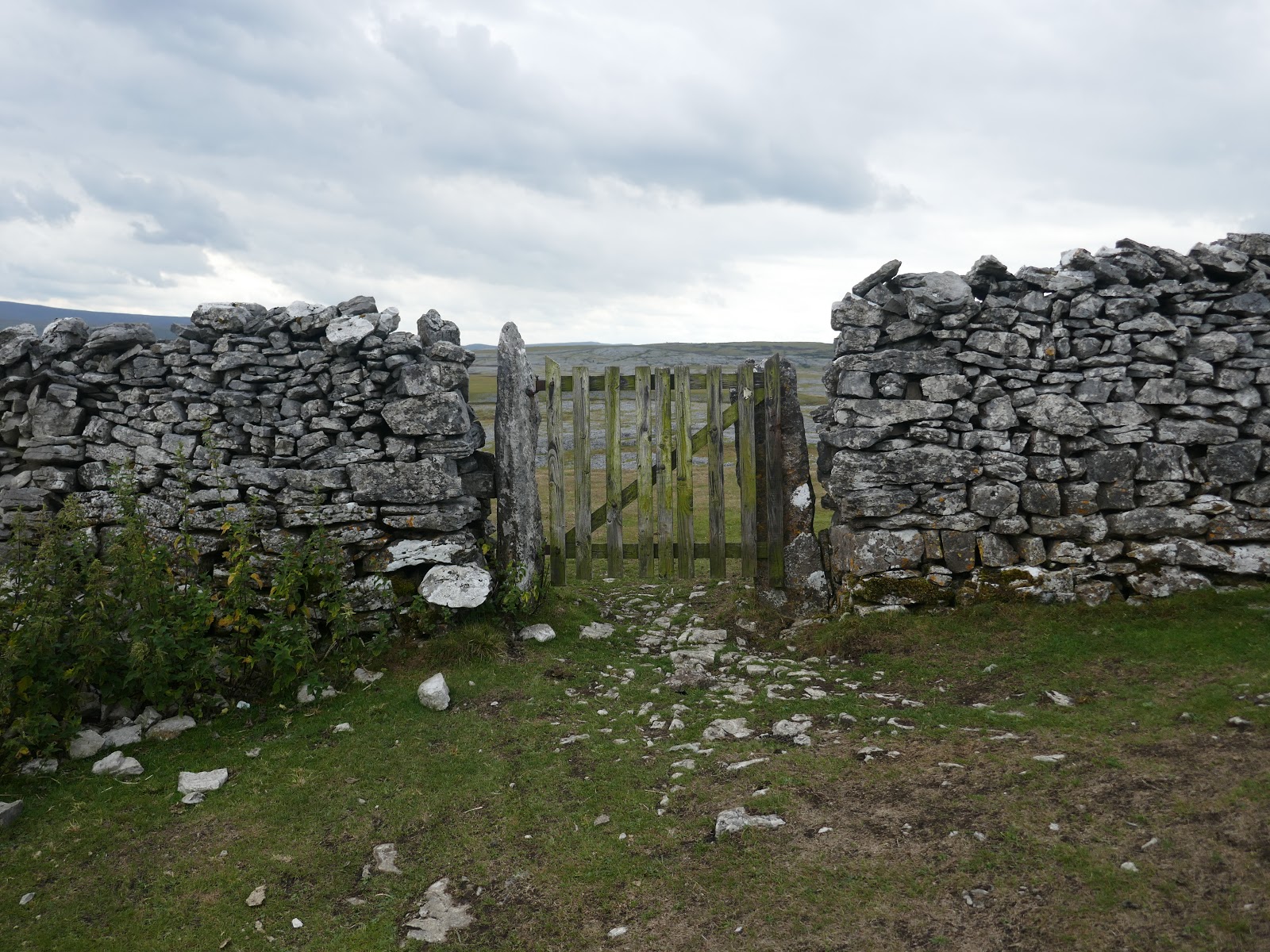
The path enters Sulber, the beginnings of the large area of limestone pavement between Ingleborough and Pen y Ghent. At a crossing of paths, I left the main Three Peaks route and made my way to Sulber Gate, an old gate nestled in amongst the drystone walls. Passing through the gate leads down to Thieves Moss and Moughton Scars.
 |
| Add caption |
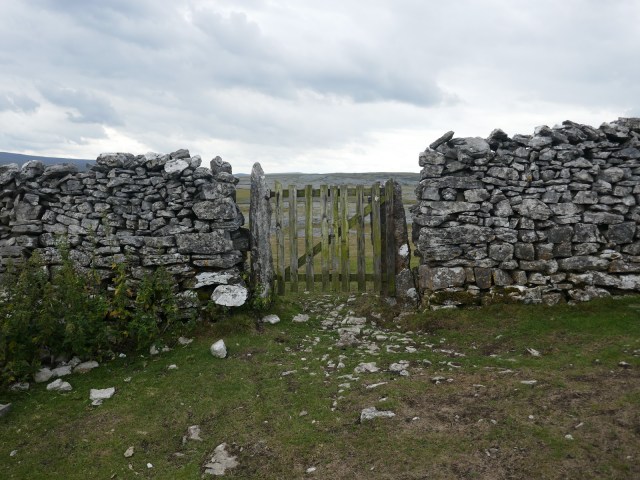 |
| Sulber gate |
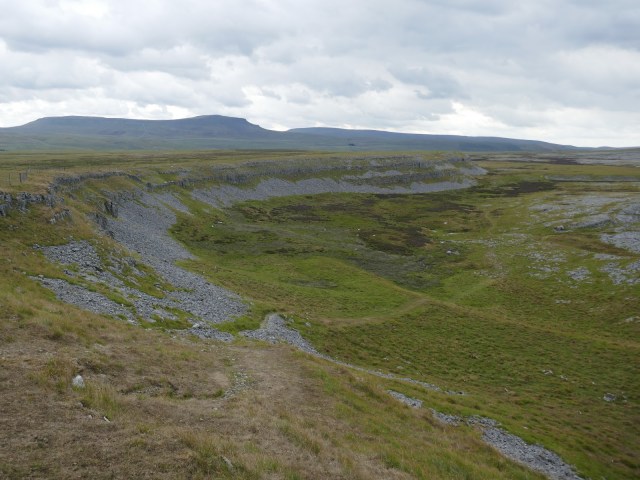 |
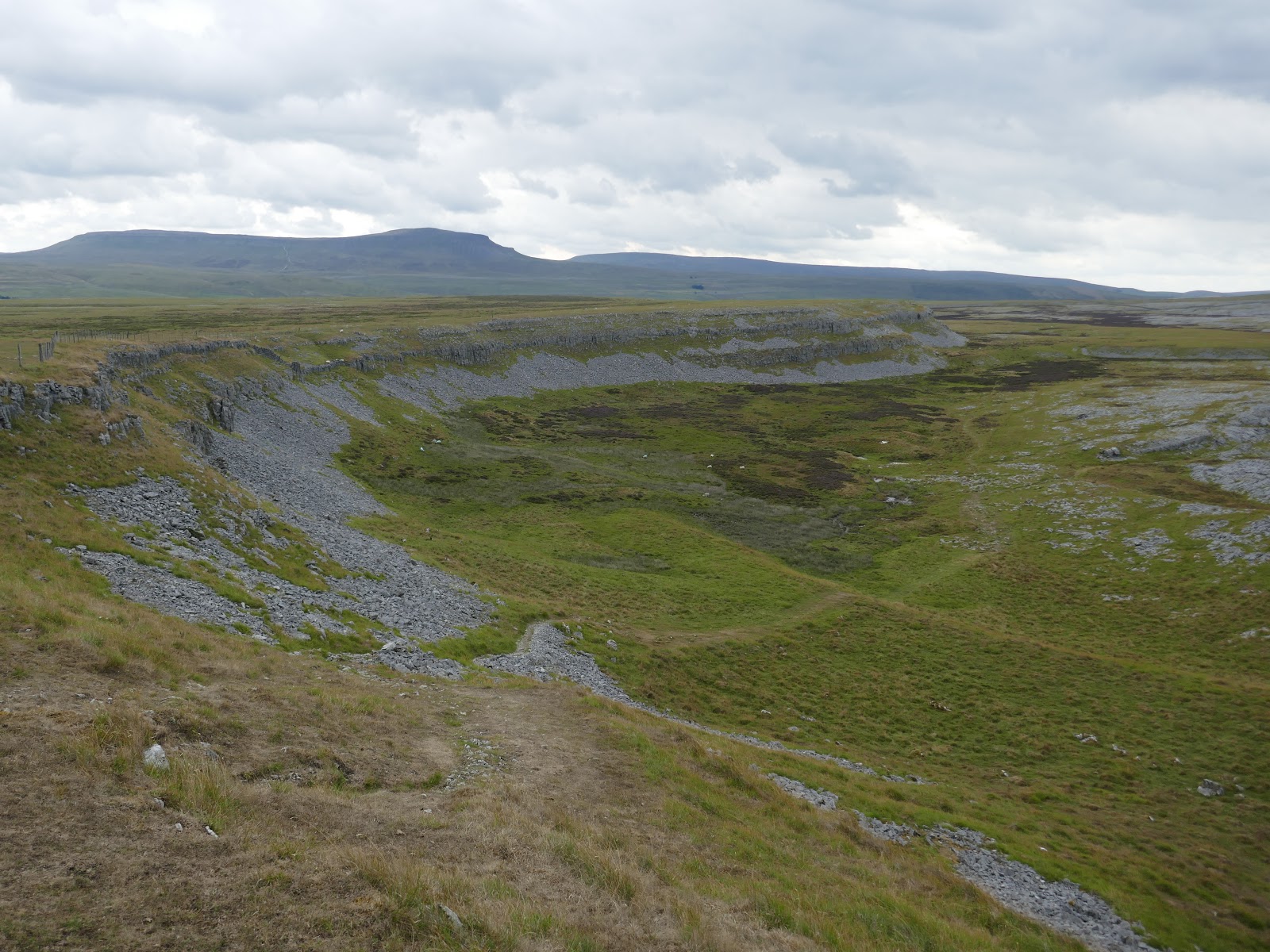
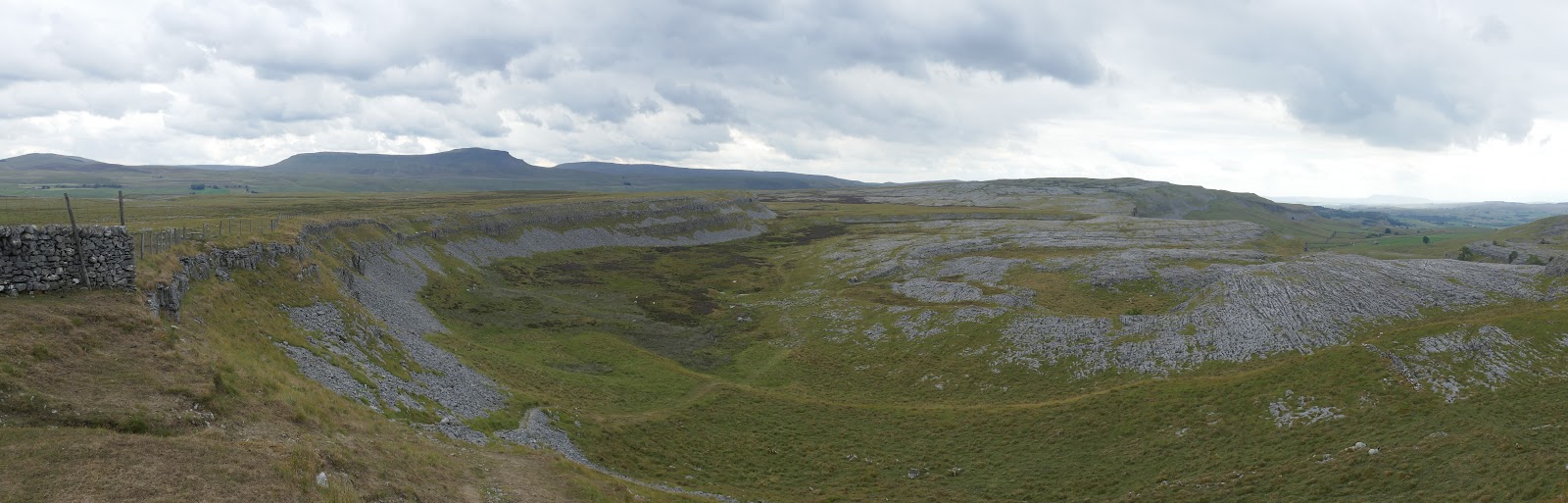
| Thieves Moss |
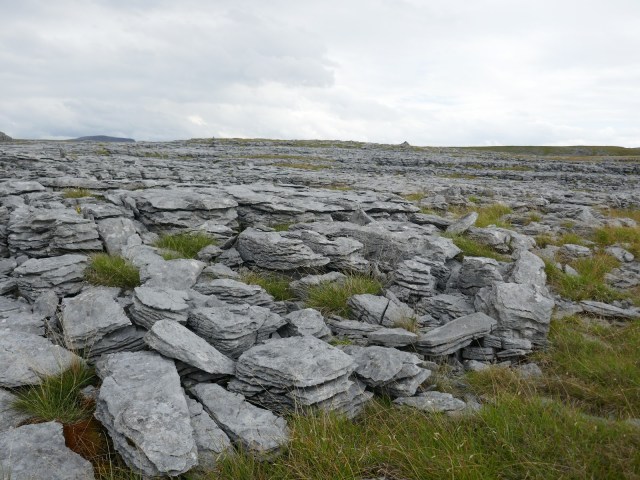
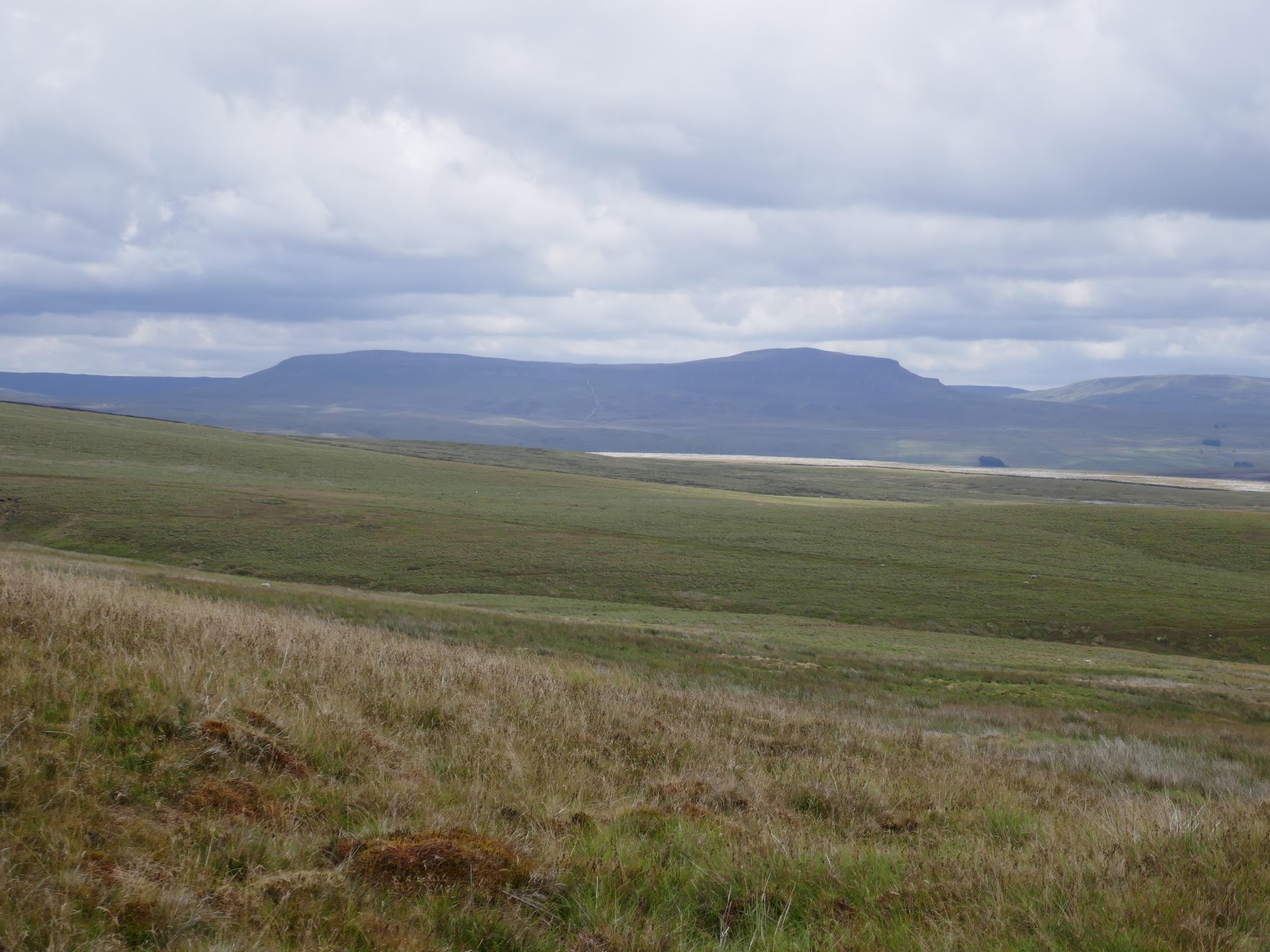
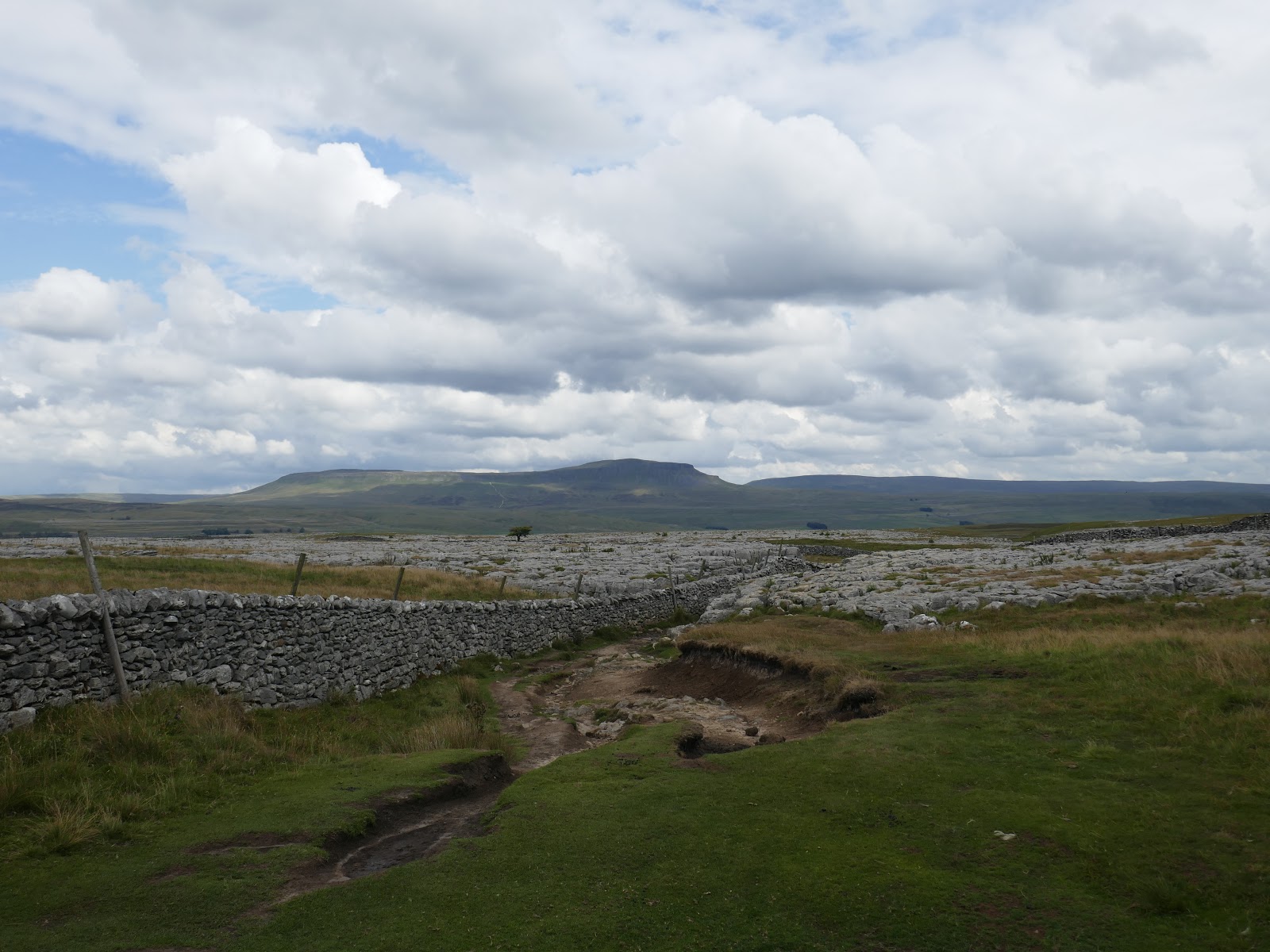
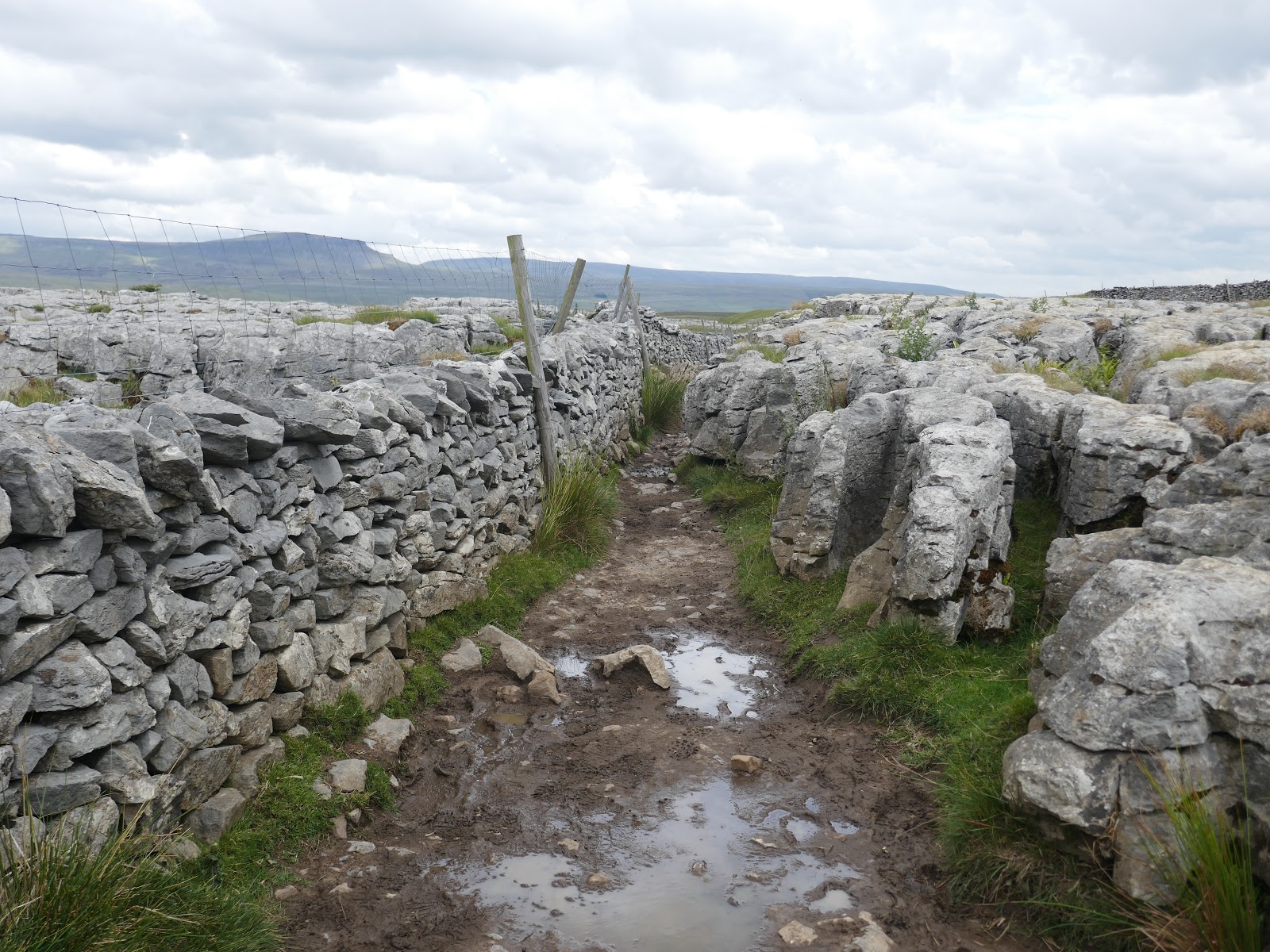
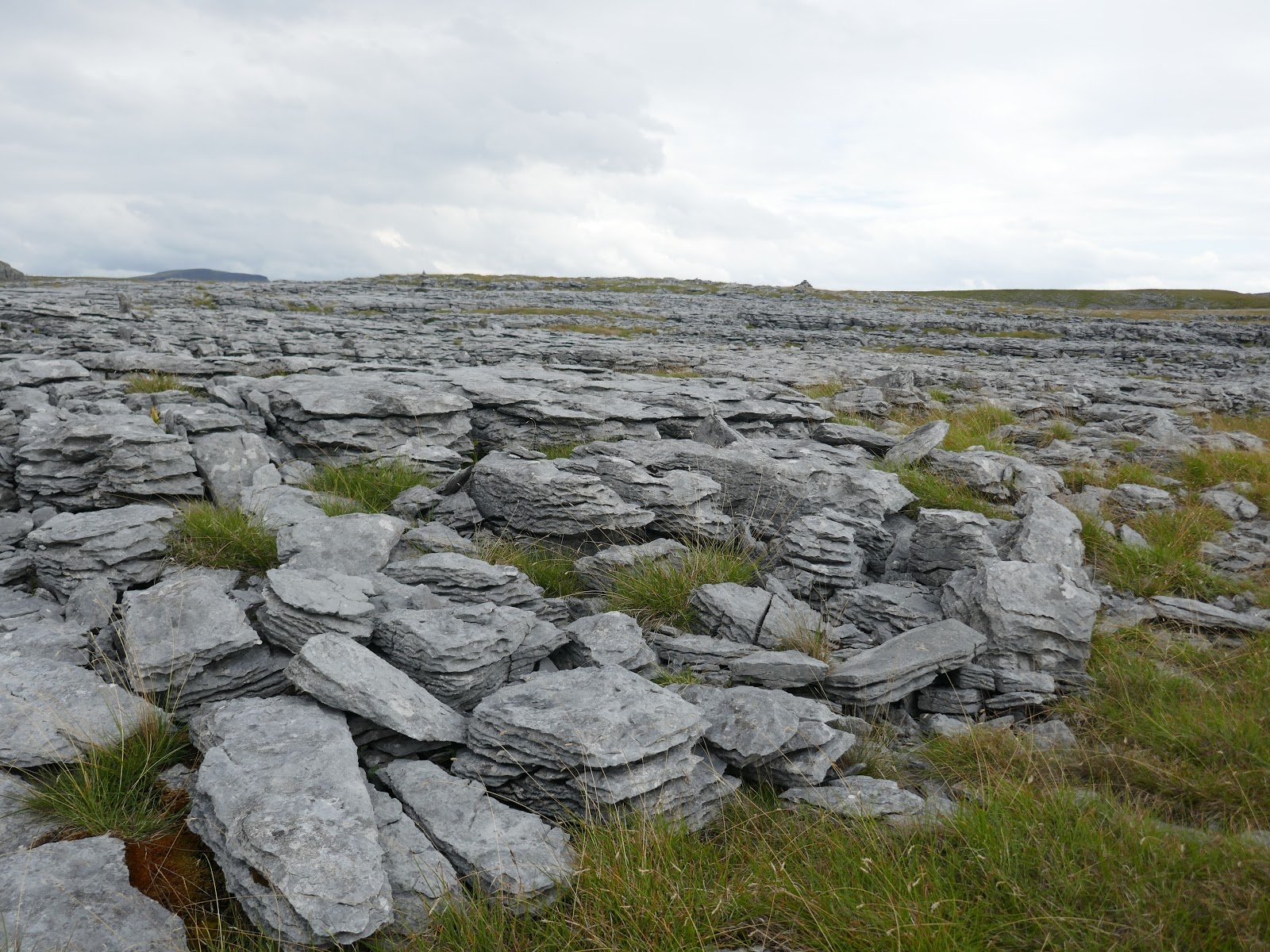
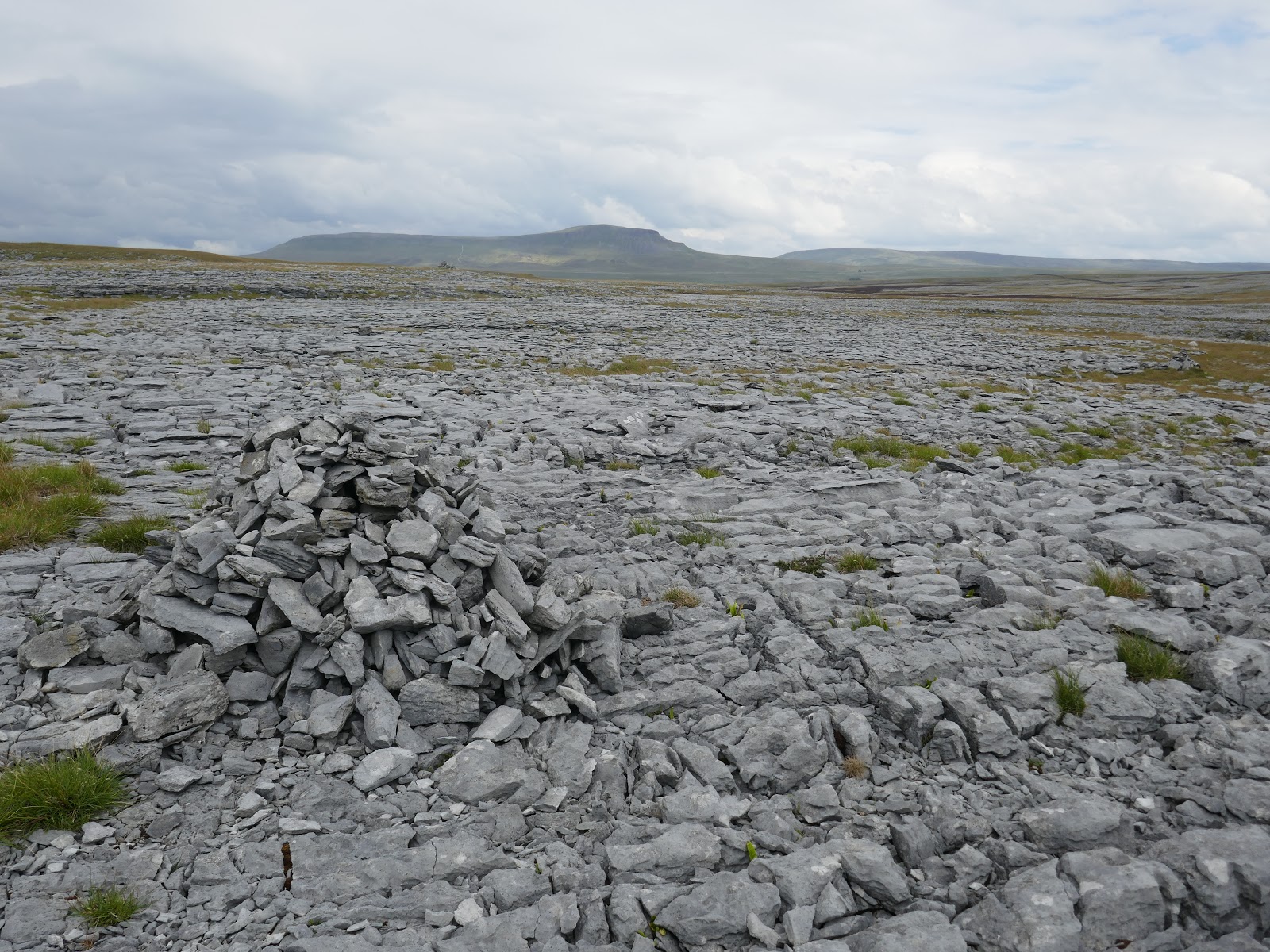
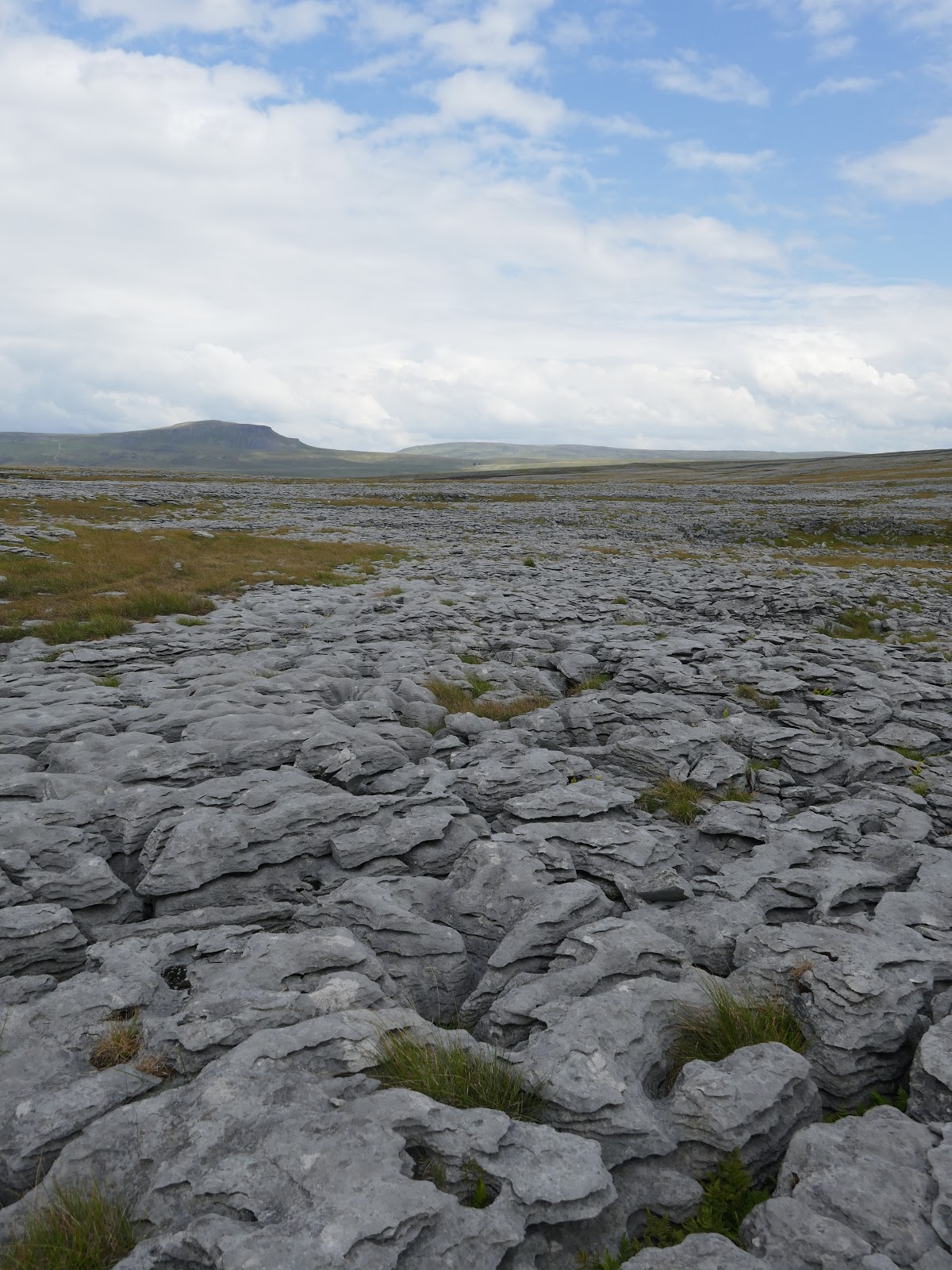
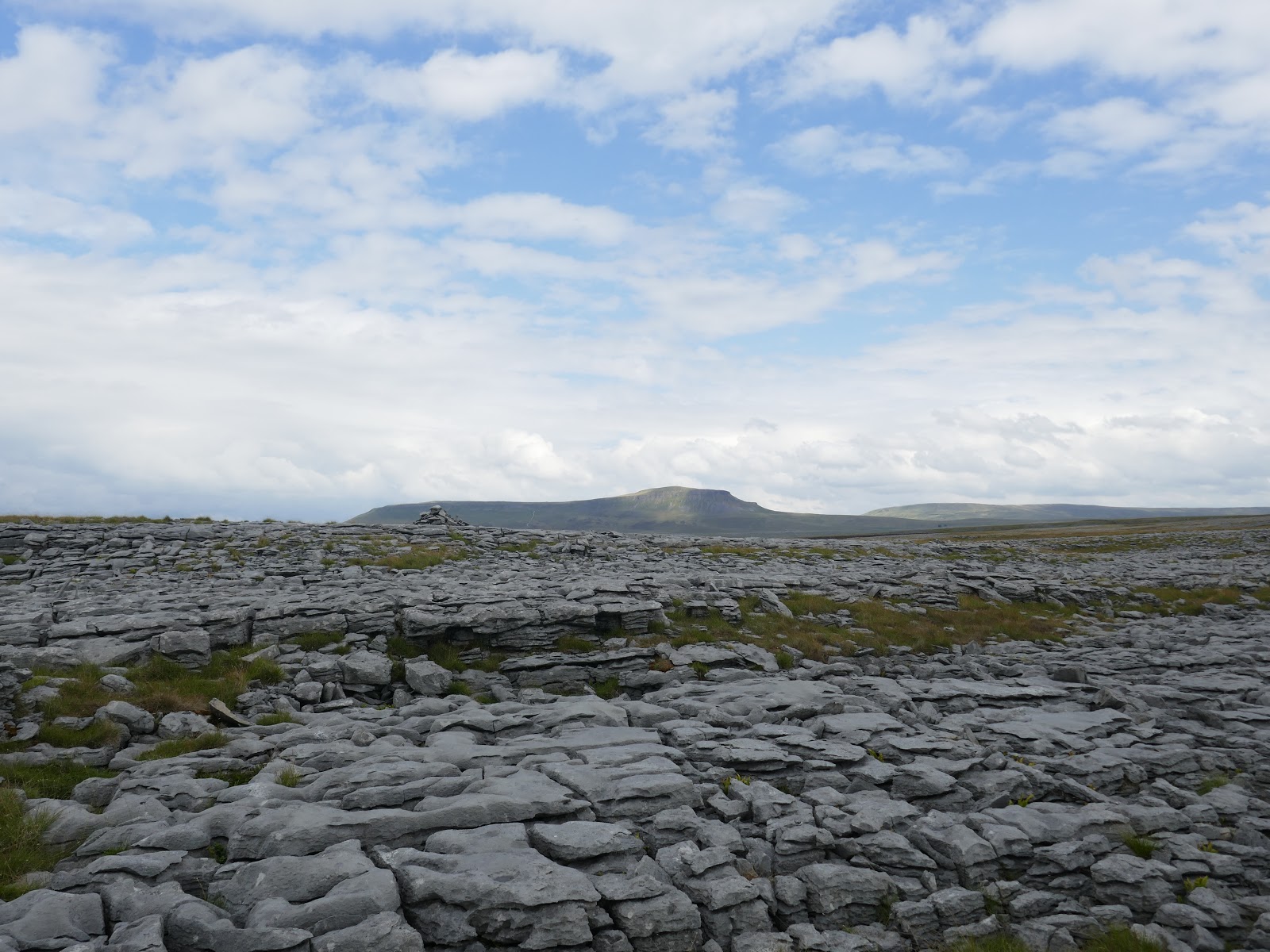
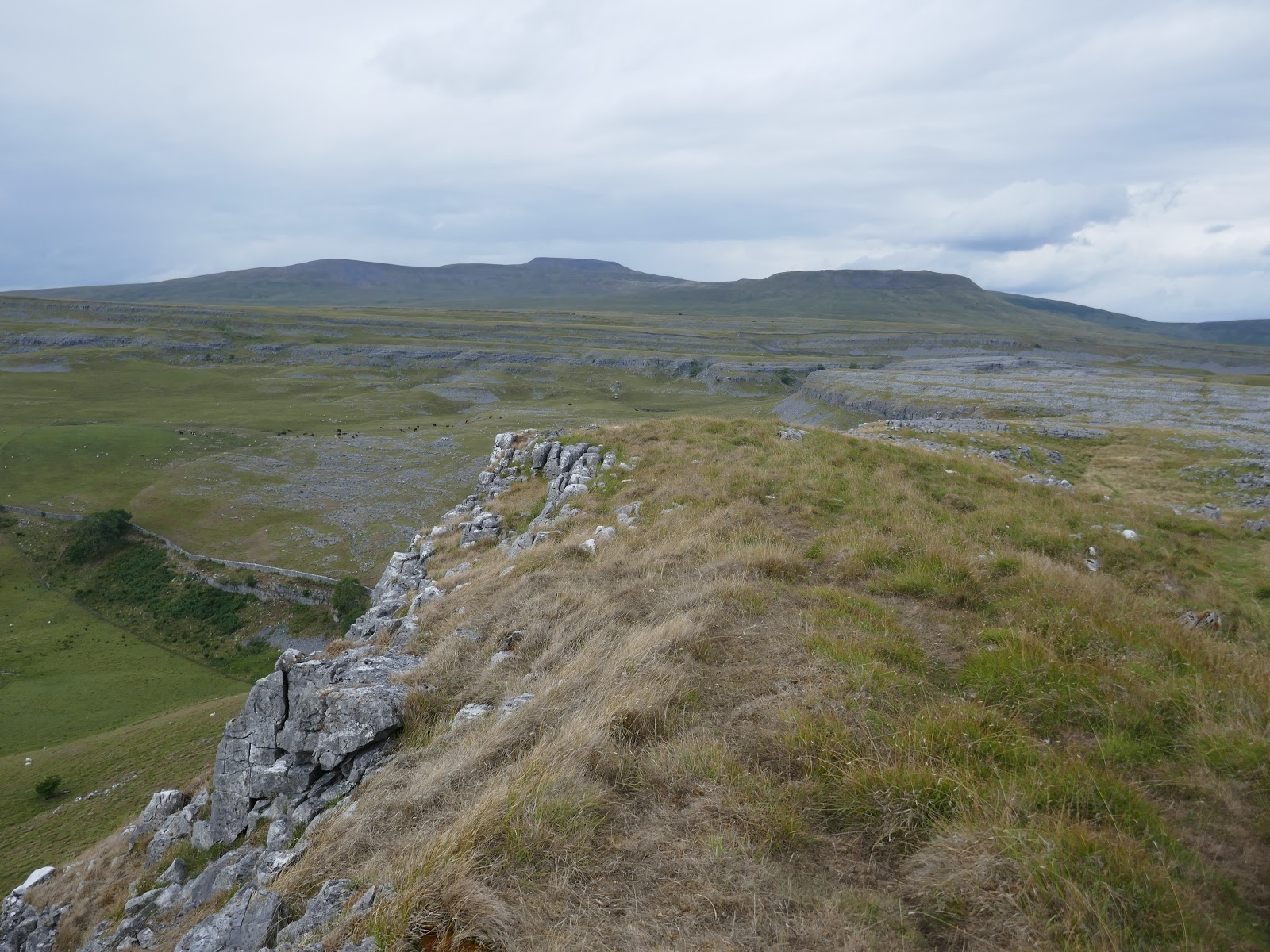
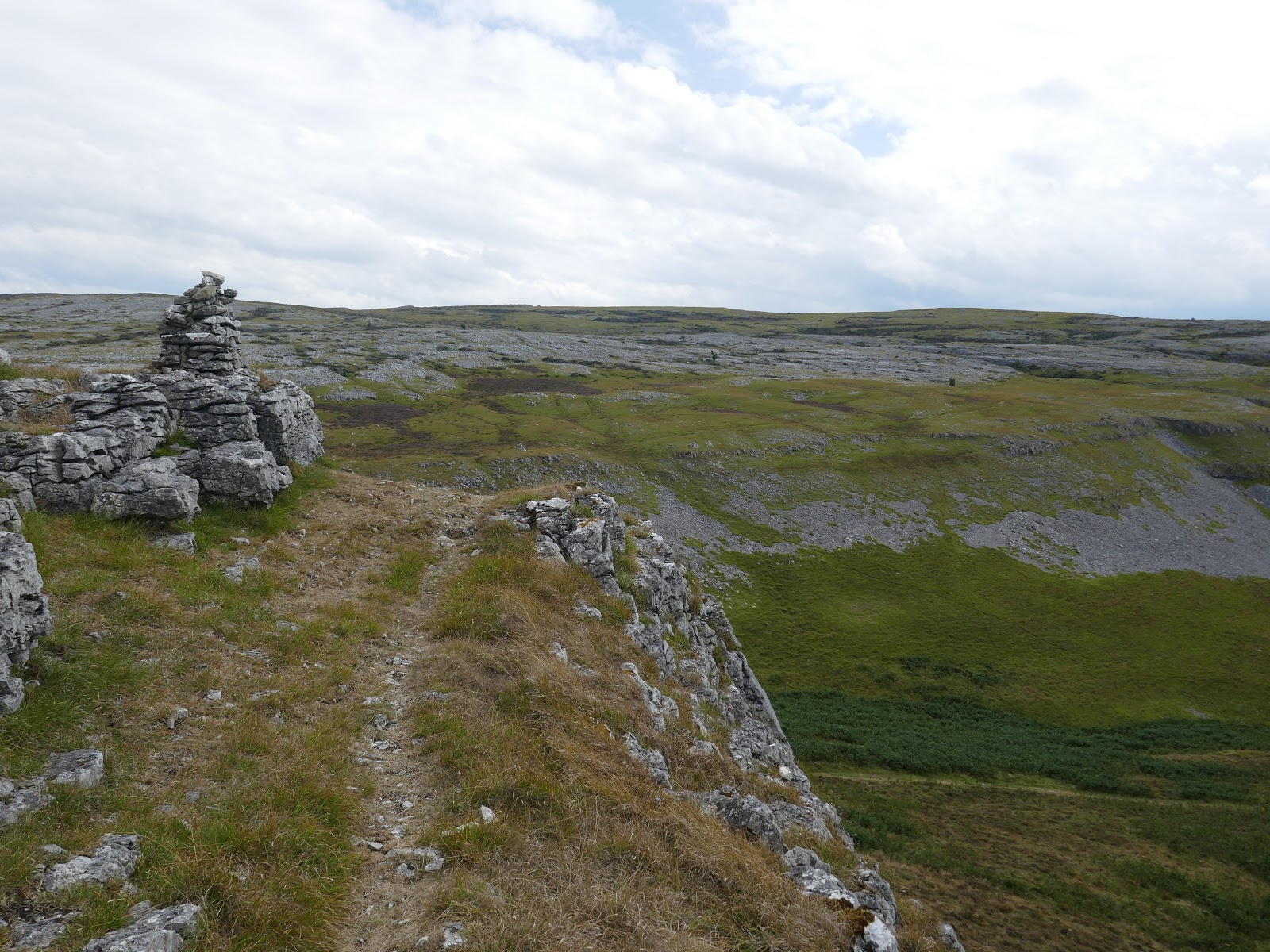
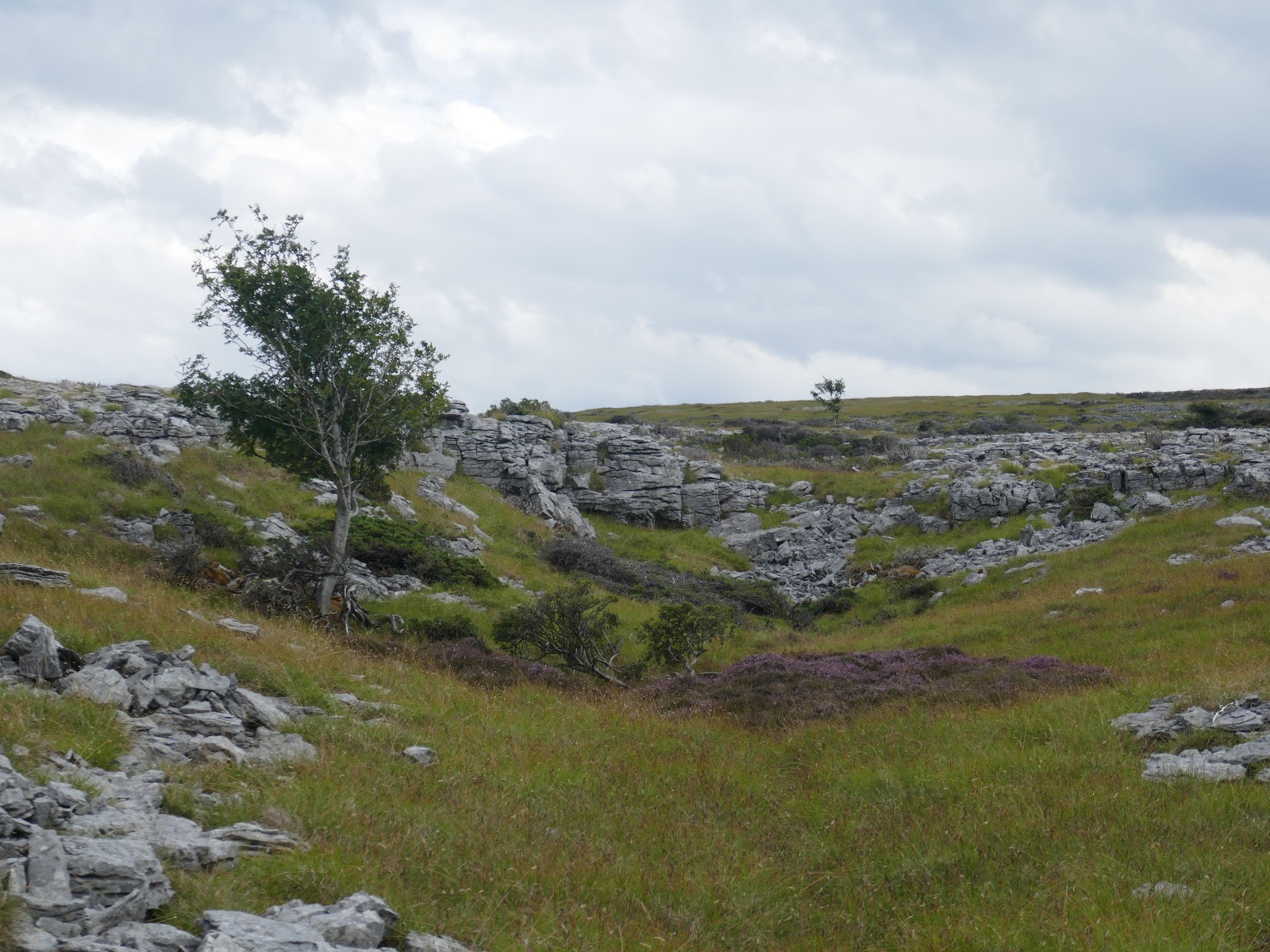
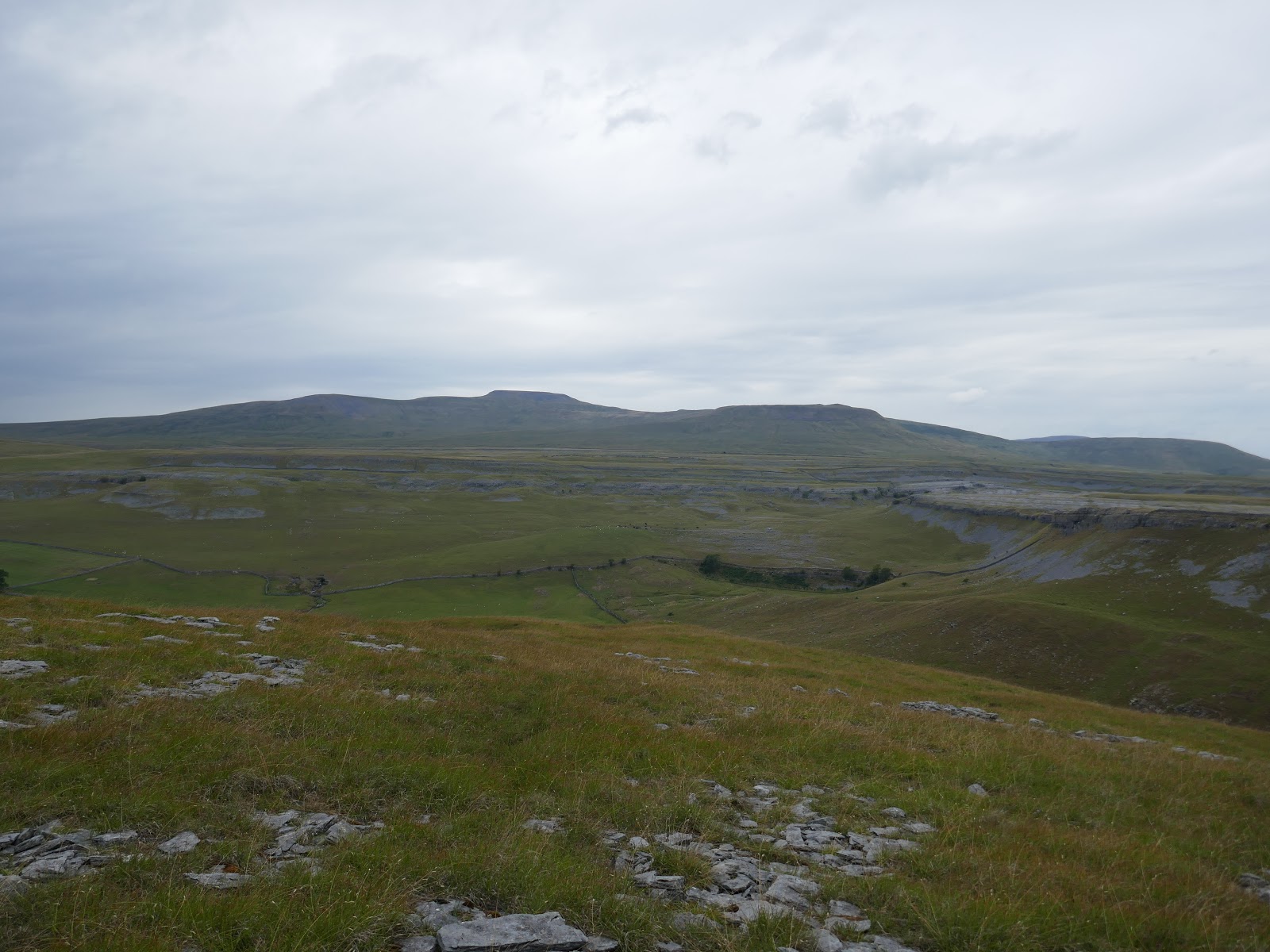
Last time I was here everything was shrouded in a thick mist, not so today. The limestone amphitheatre around Thieves Moss is magnificent. Moughton and specifically Moughton Scars is a vast and impressive area of limestone pavement. Perhaps not as perfect as the pavement found at Malham Cove but certainly more expansive. The limestone pavement in the Yorkshire Dales, again the result of past glaciation, is amongst the best in the world.
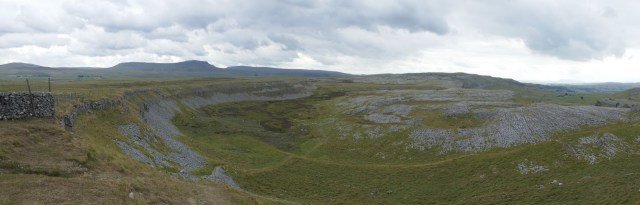 |
| Moughton Scars |
 |
| Moughton Scars |
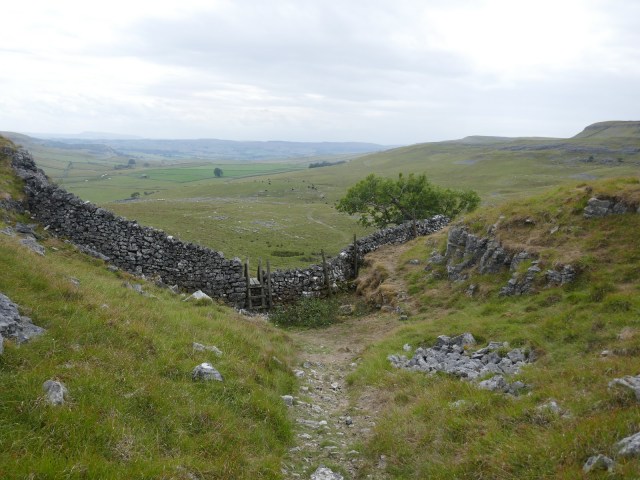 |
| Beggar’s Stile |
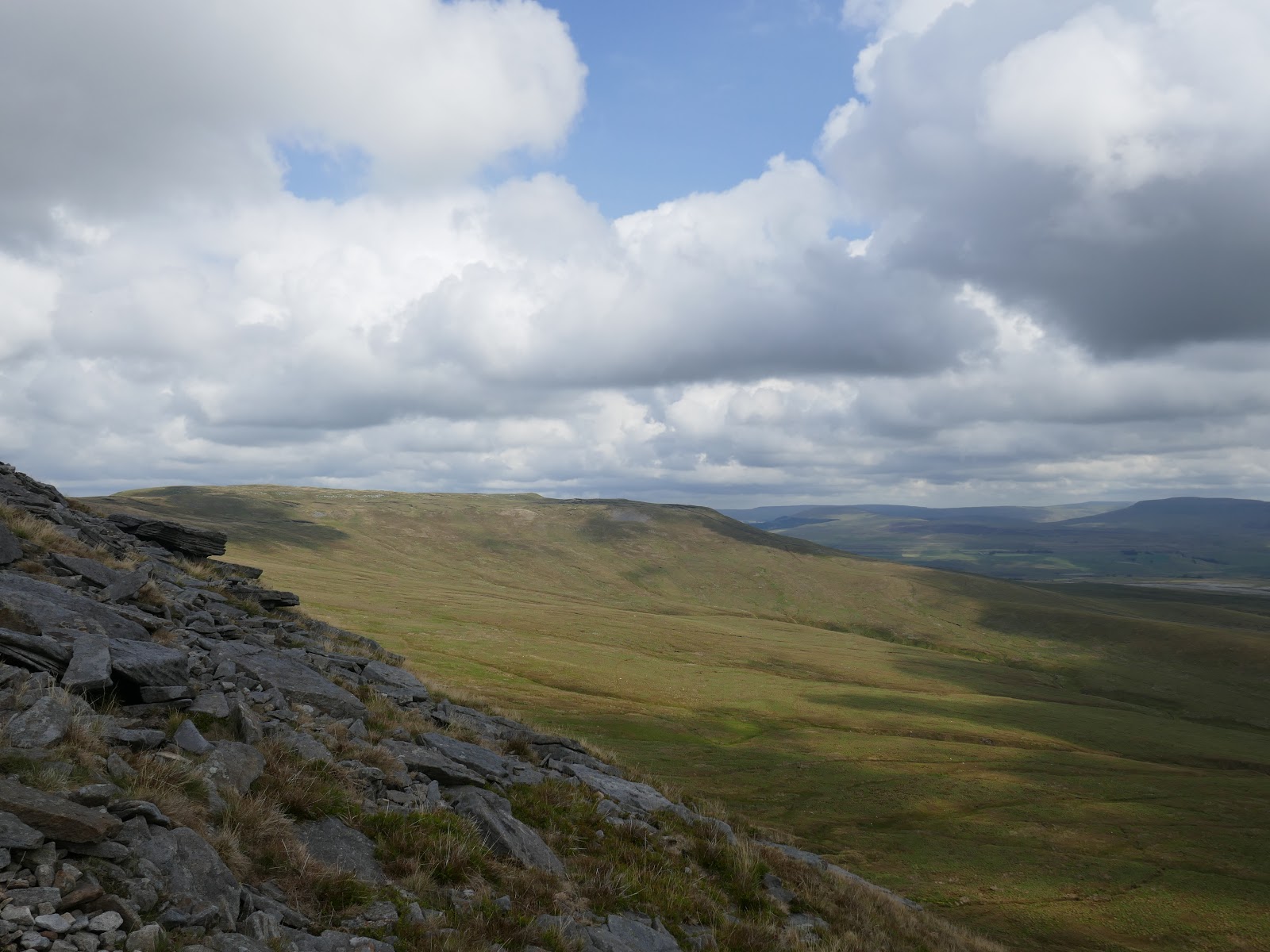
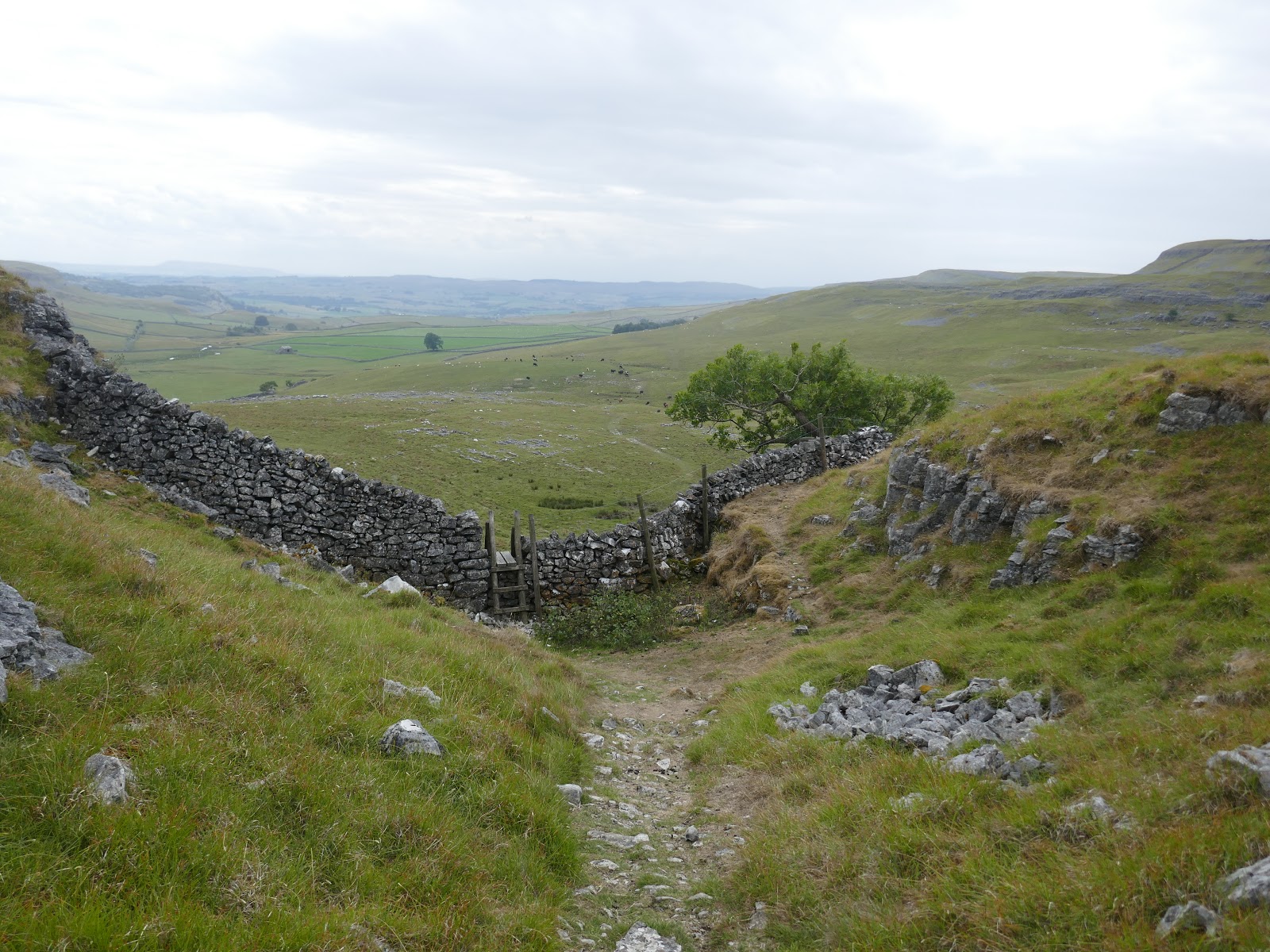
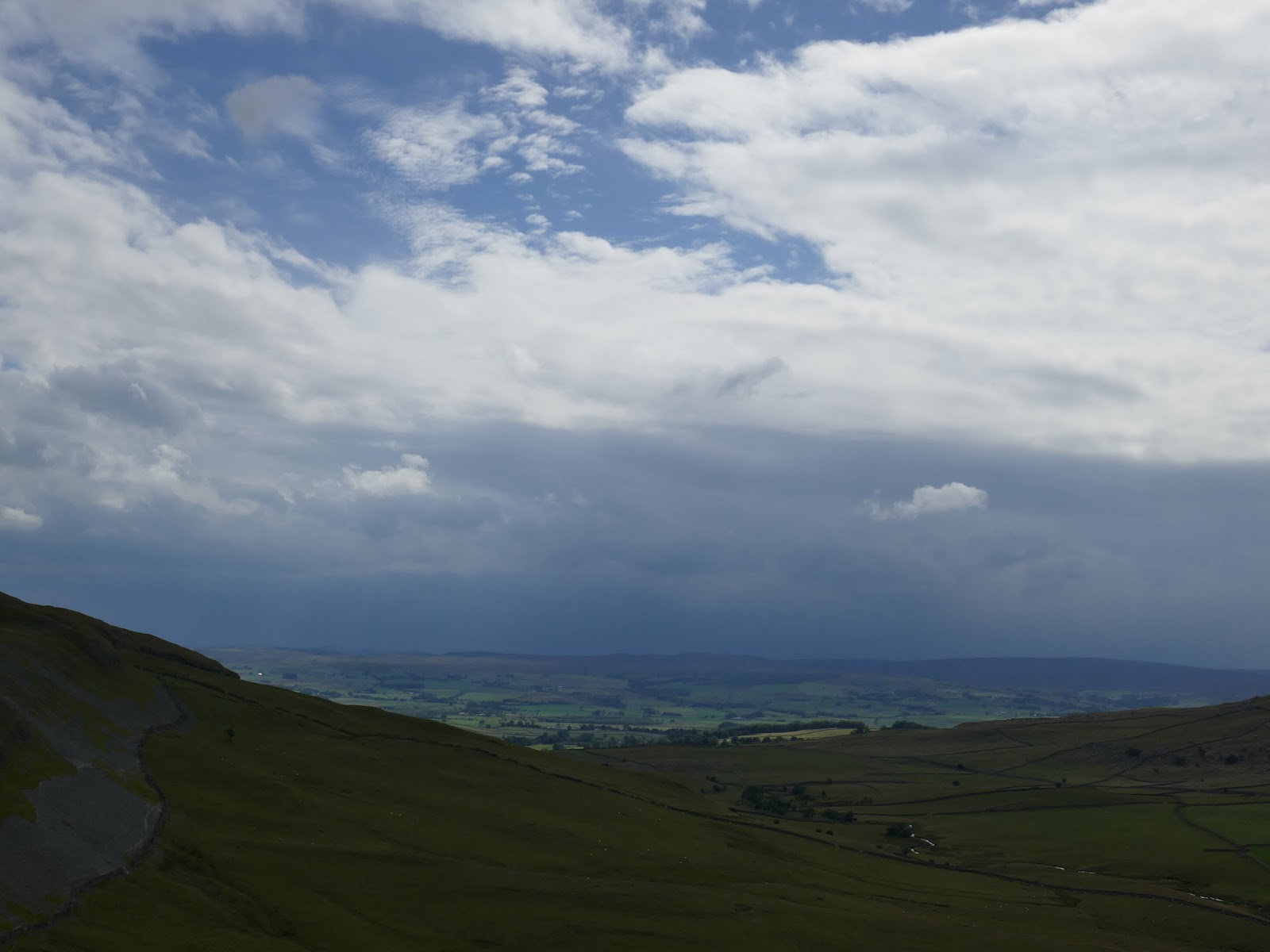
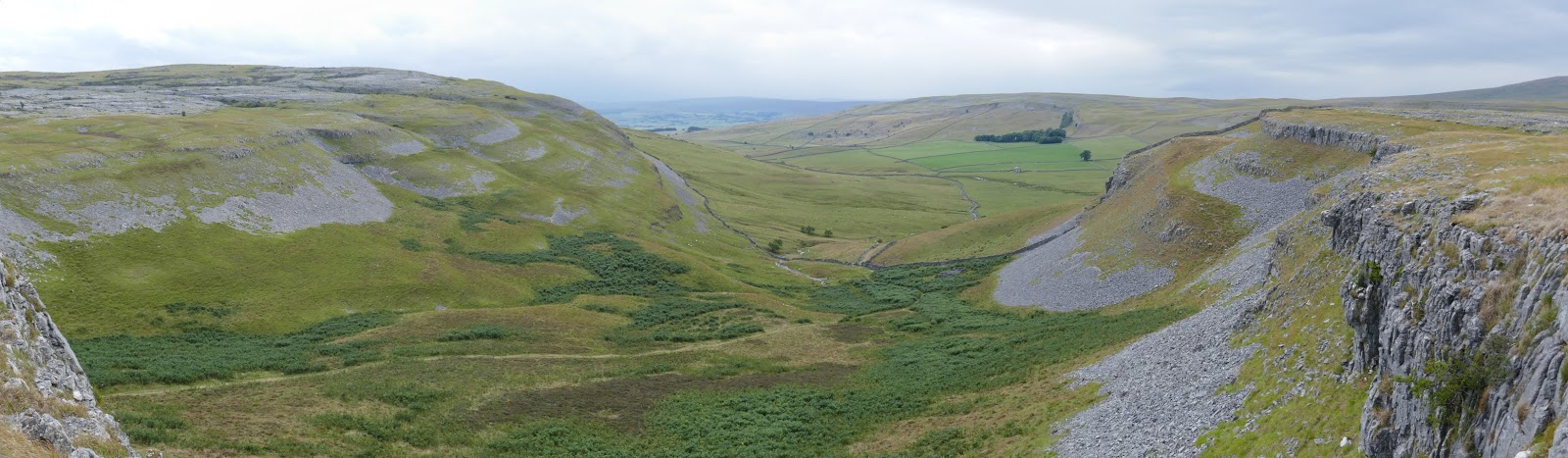
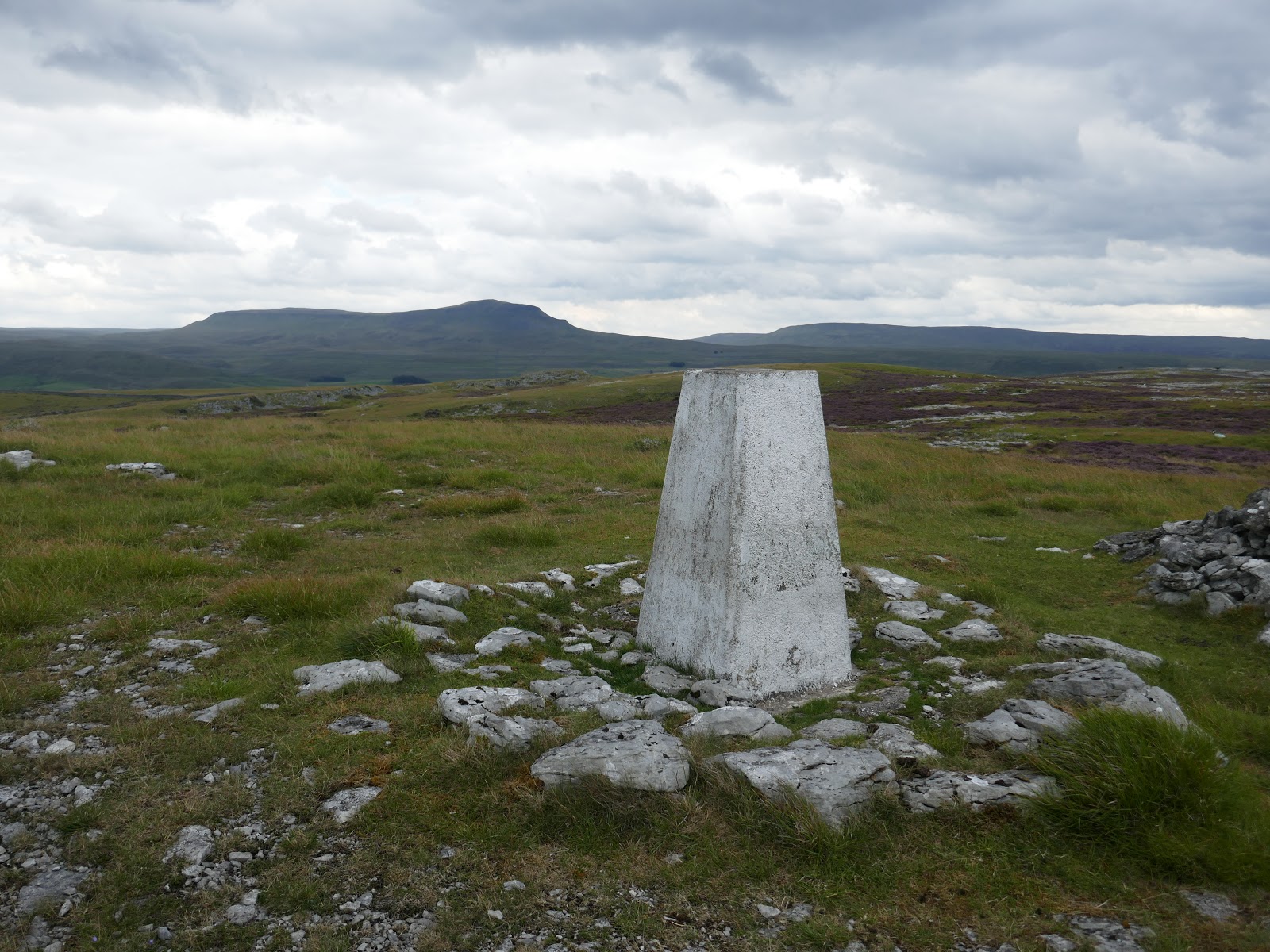
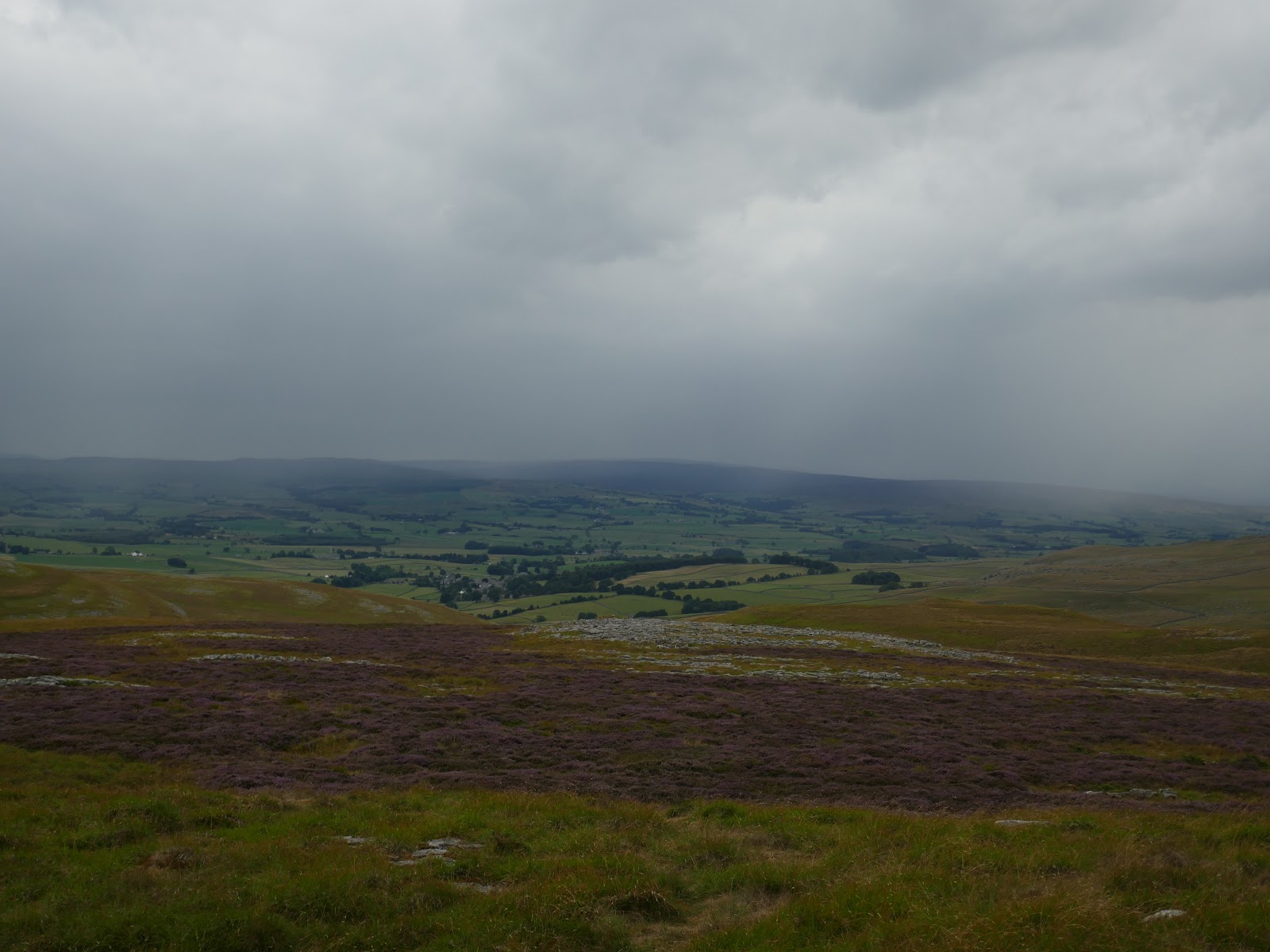
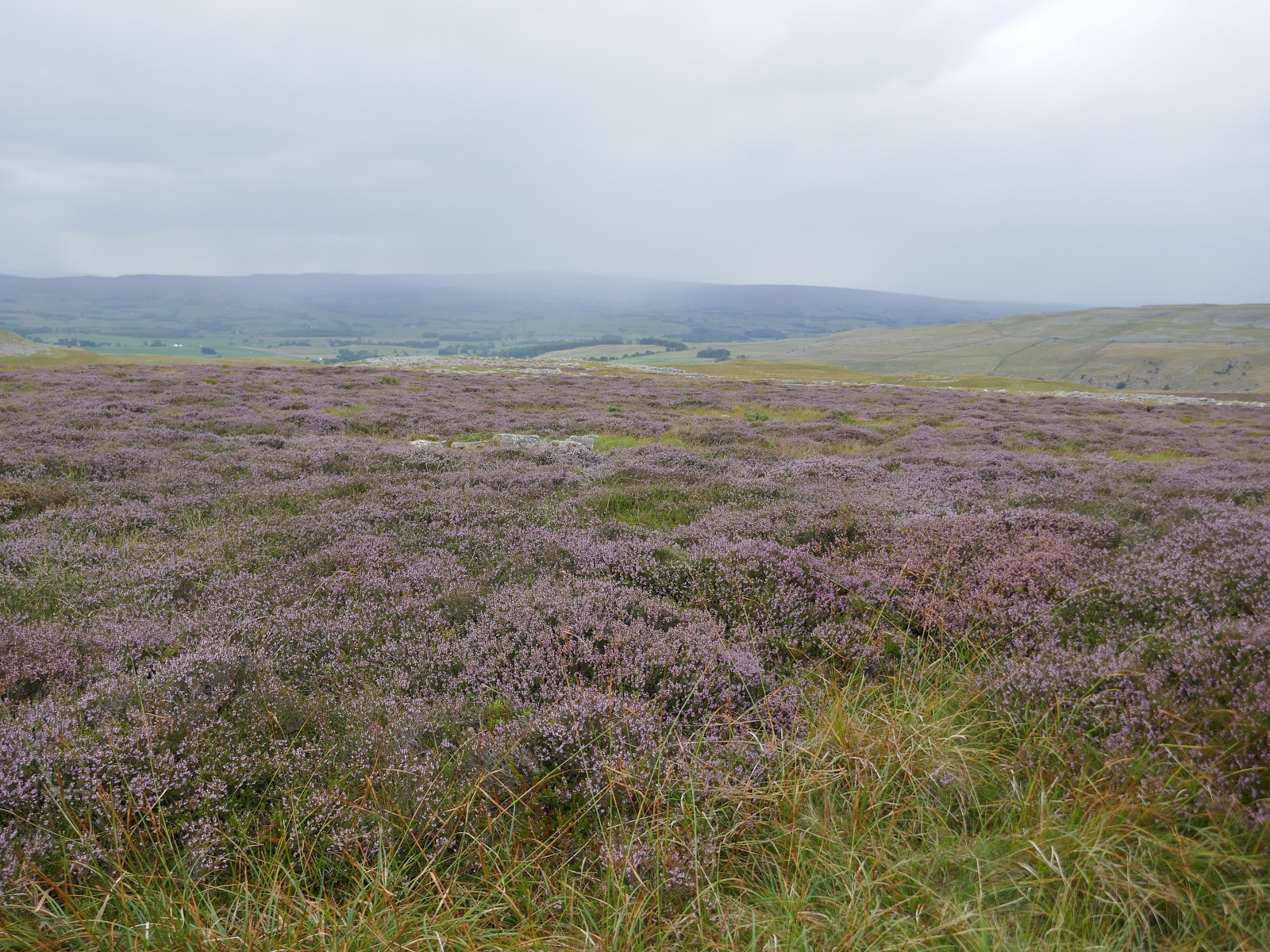
Ignoring Beggar’s Stile, a path, at times indistinct, follows the edge of Moughton Scars, sometimes passing between the limestone blocks, other times heading straight across. After a while, the path reaches a breach in the ramparts of Moughton Scars at Capple Bank, which offers an easy way down into Crummack Dale. Instead of following the path down, I remained up on the escarpment, finding my way to the Moughton trig pillar, just before the arrival of threatening looking showers.
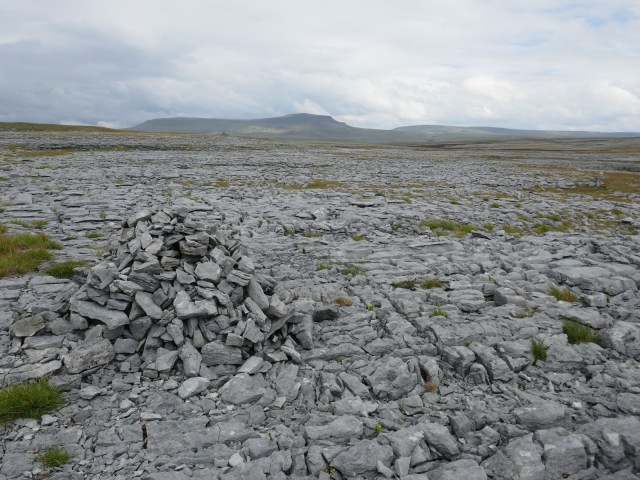 |
| Moughton Scars |
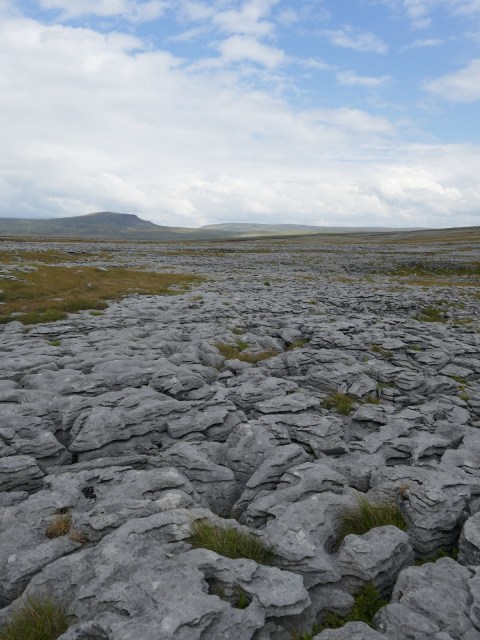 |
| Moughton Scars |
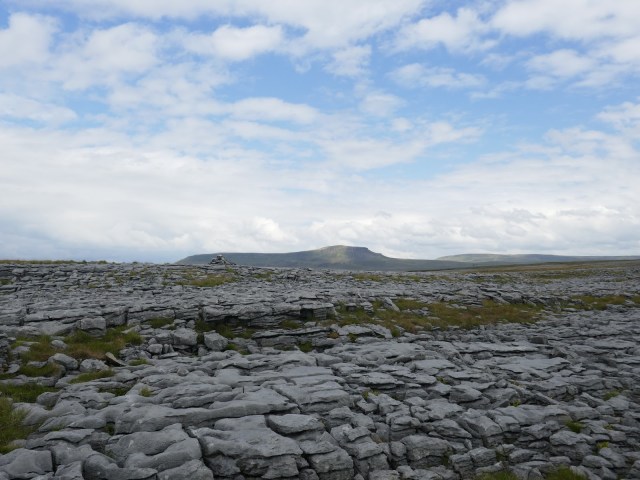 |
| Moughton Scars |
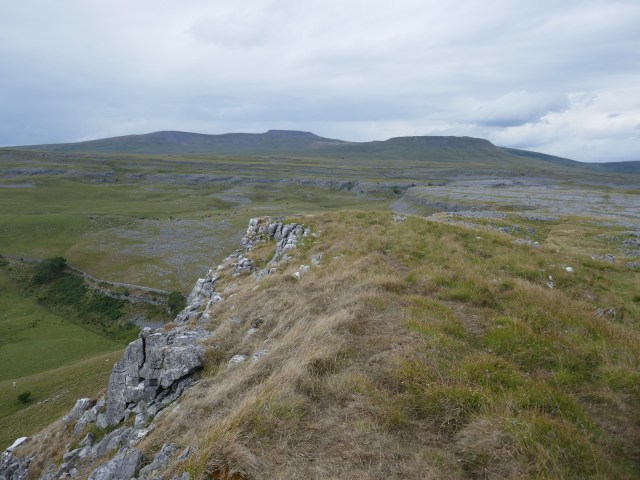 |
| Ingleborough |
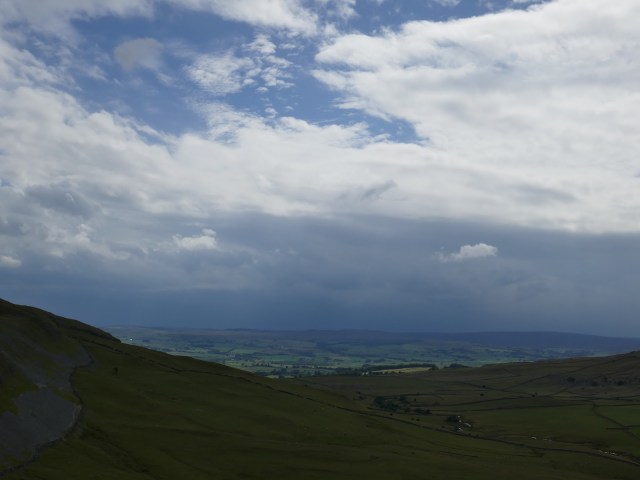 |
| Showers over the Forest of Bowland |
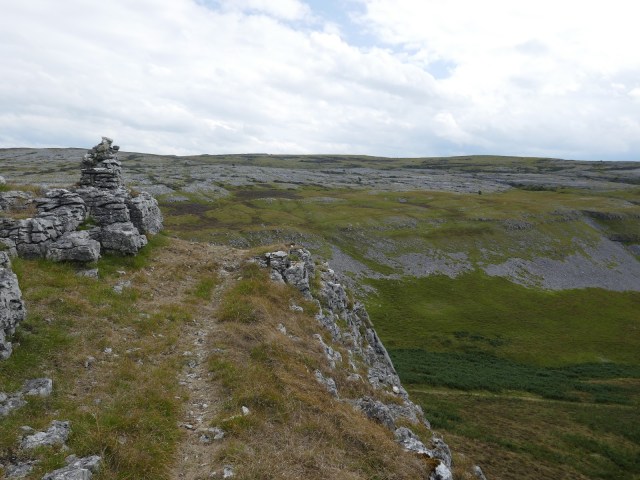 |
| Cairn at Capple Bank |
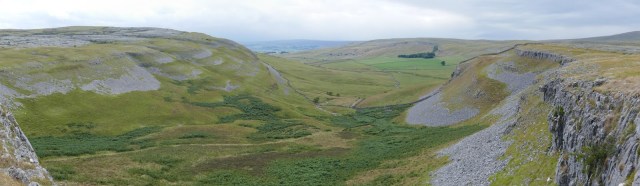 |
| Austwick Beck Head and Capple Bank |
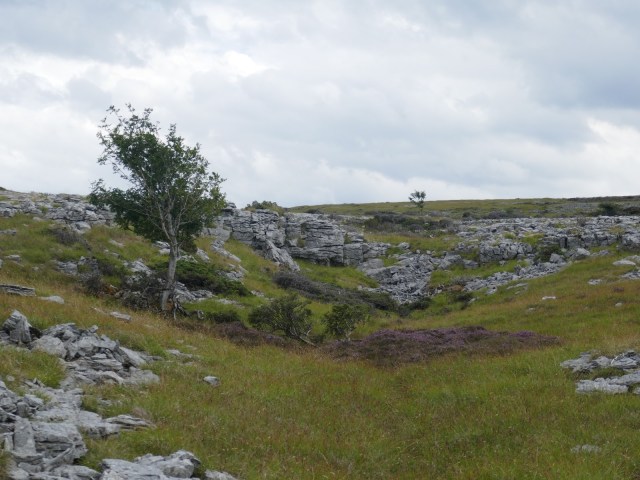 |
| A slight change in scenery |
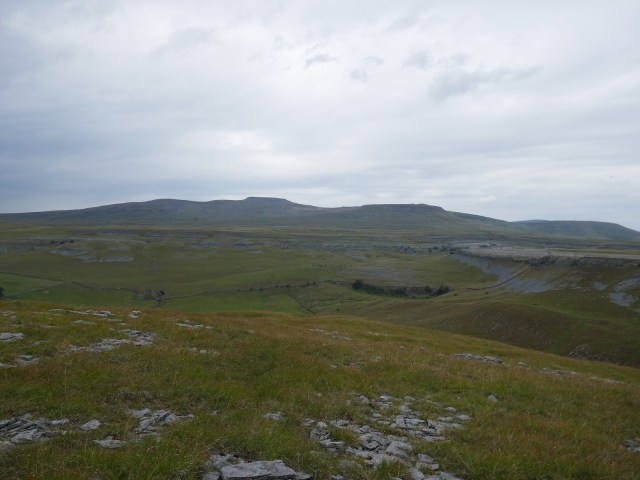 |
| Ingleborough over Crummack Dale |
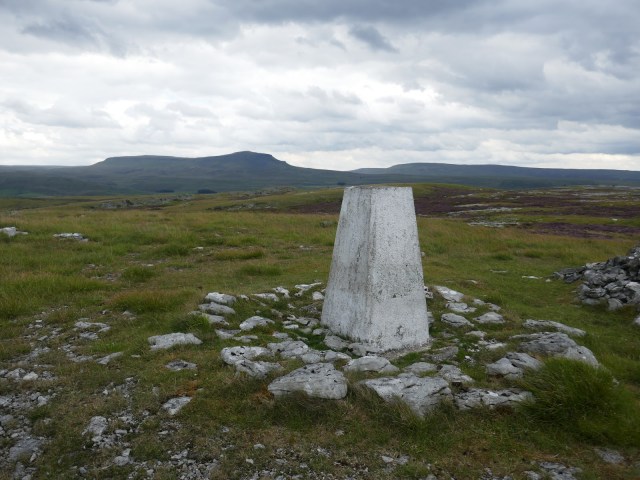 |
| Moughton trig pillar |
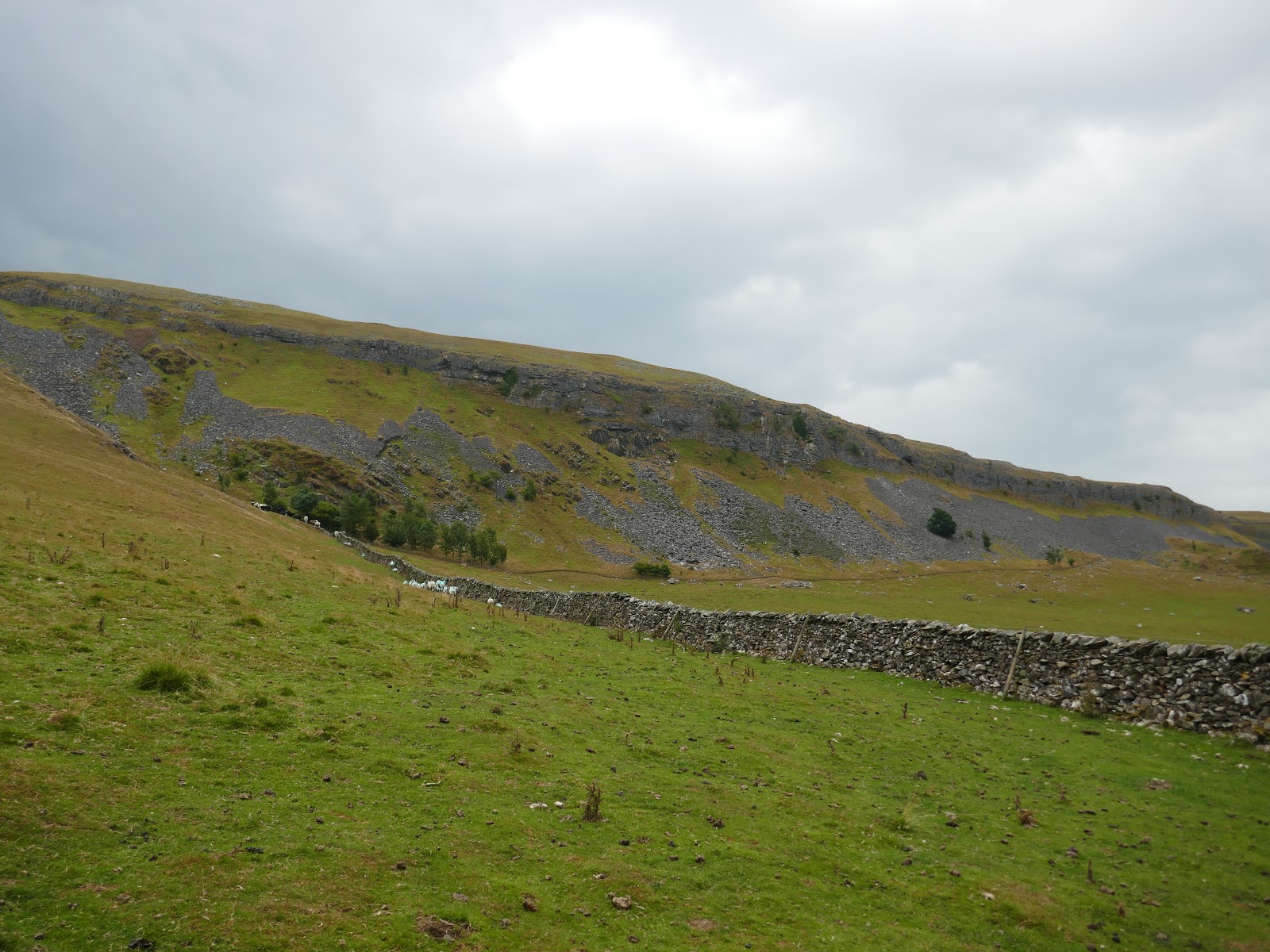
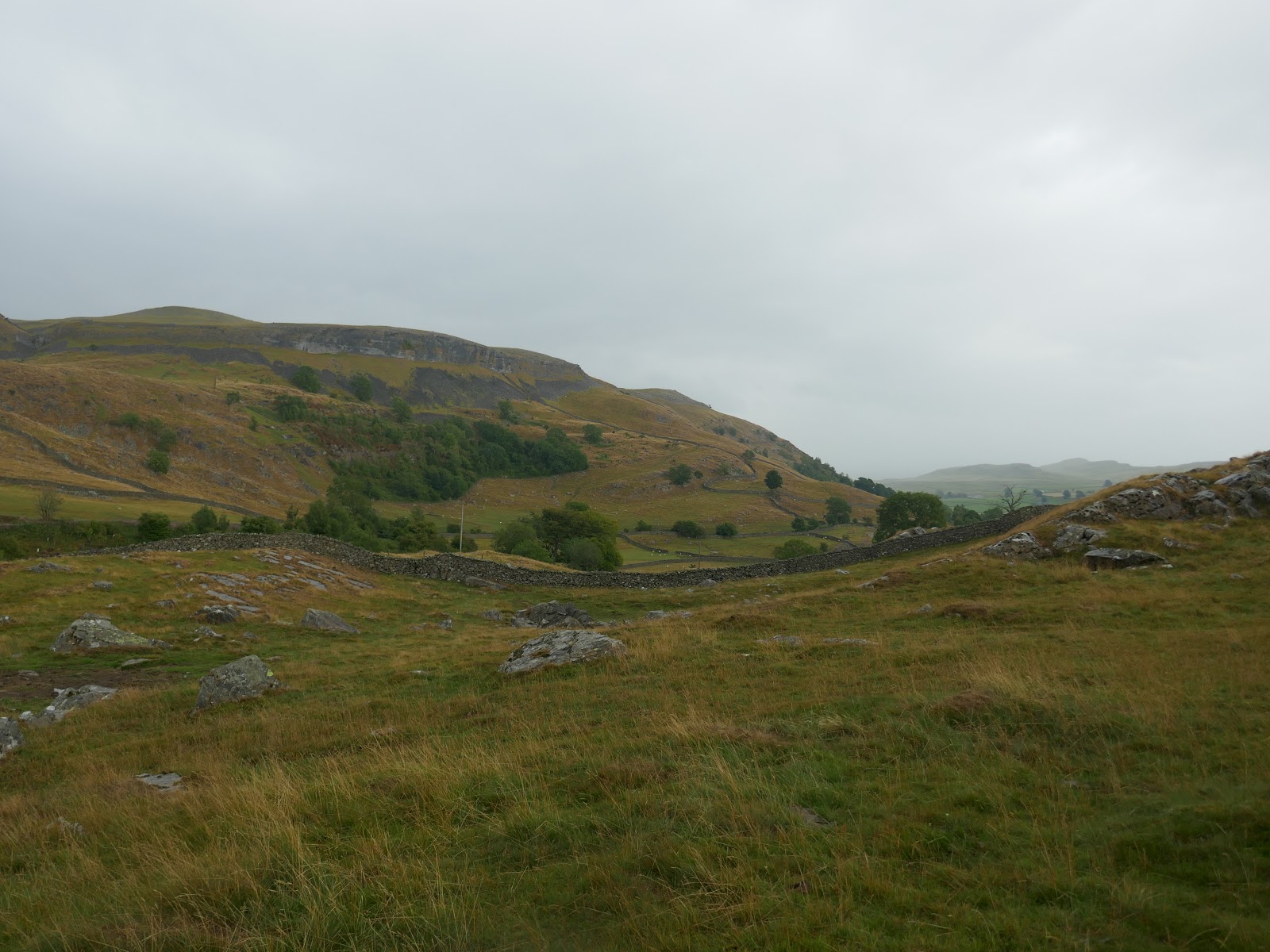
I’m sure it’s possible to carry on south-east along the ridge and find a way down, though there is nothing marked on the map and a moat of private land, crags and quarries bounds the Access Land of the fells. Instead of wandering aimlessly around, I retraced my steps west, following a tongue of Access Land down to a walled lane at Hunterstye. Looking back, I could see routes down through the crags of Studrigg Scar would have been tricky.
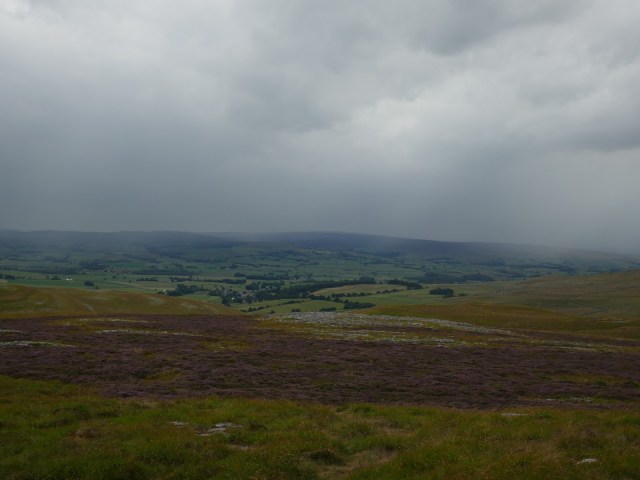 |
| Approaching showers |
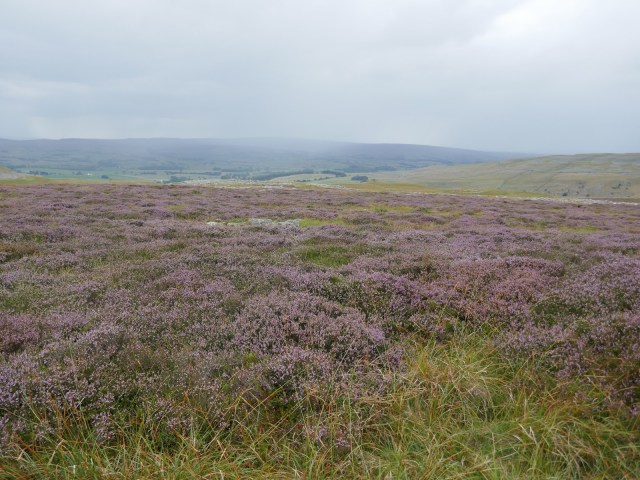 |
| Heather at Moughton |
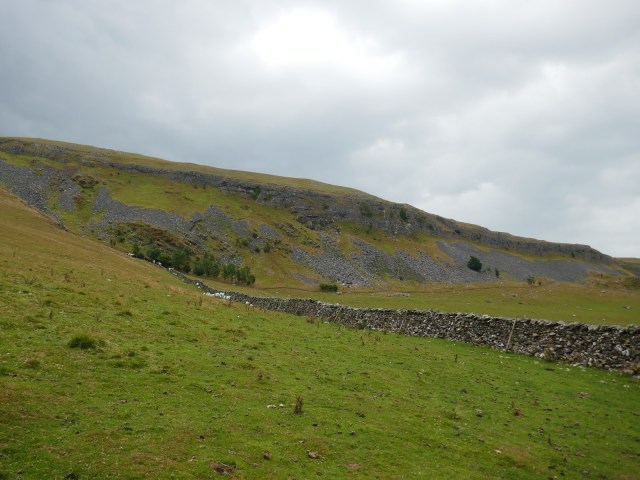 |
| Studrigg Scar |
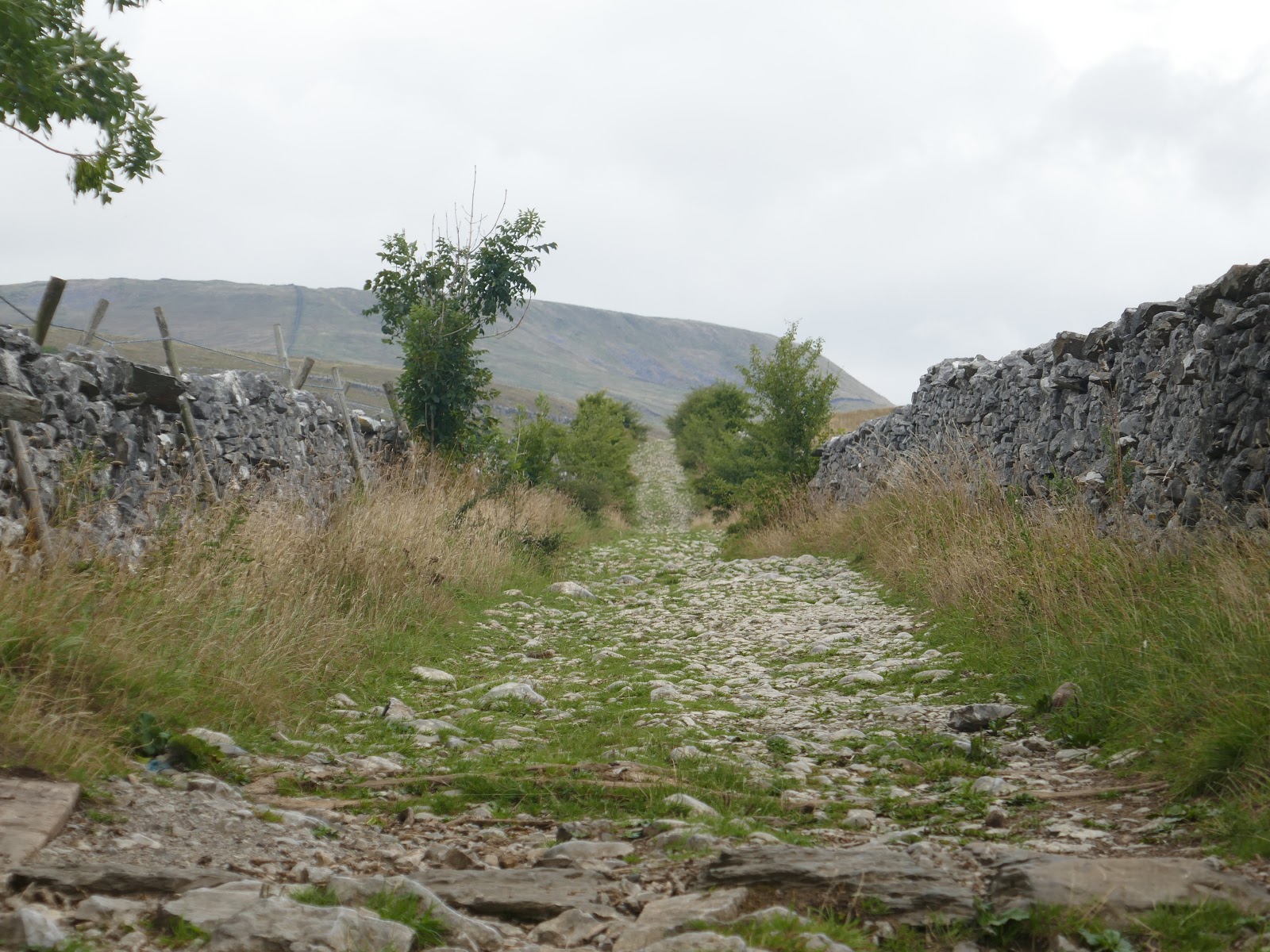
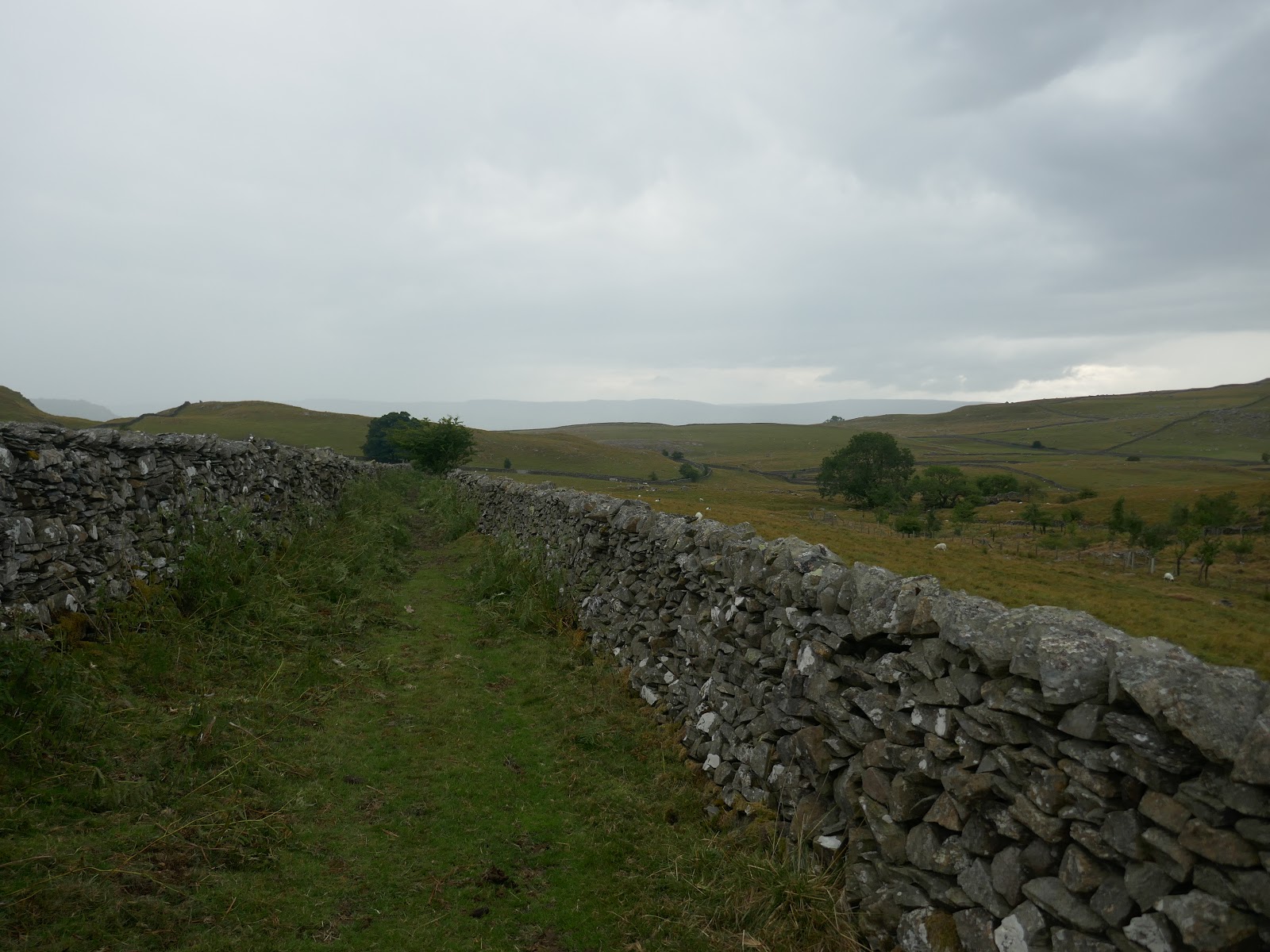
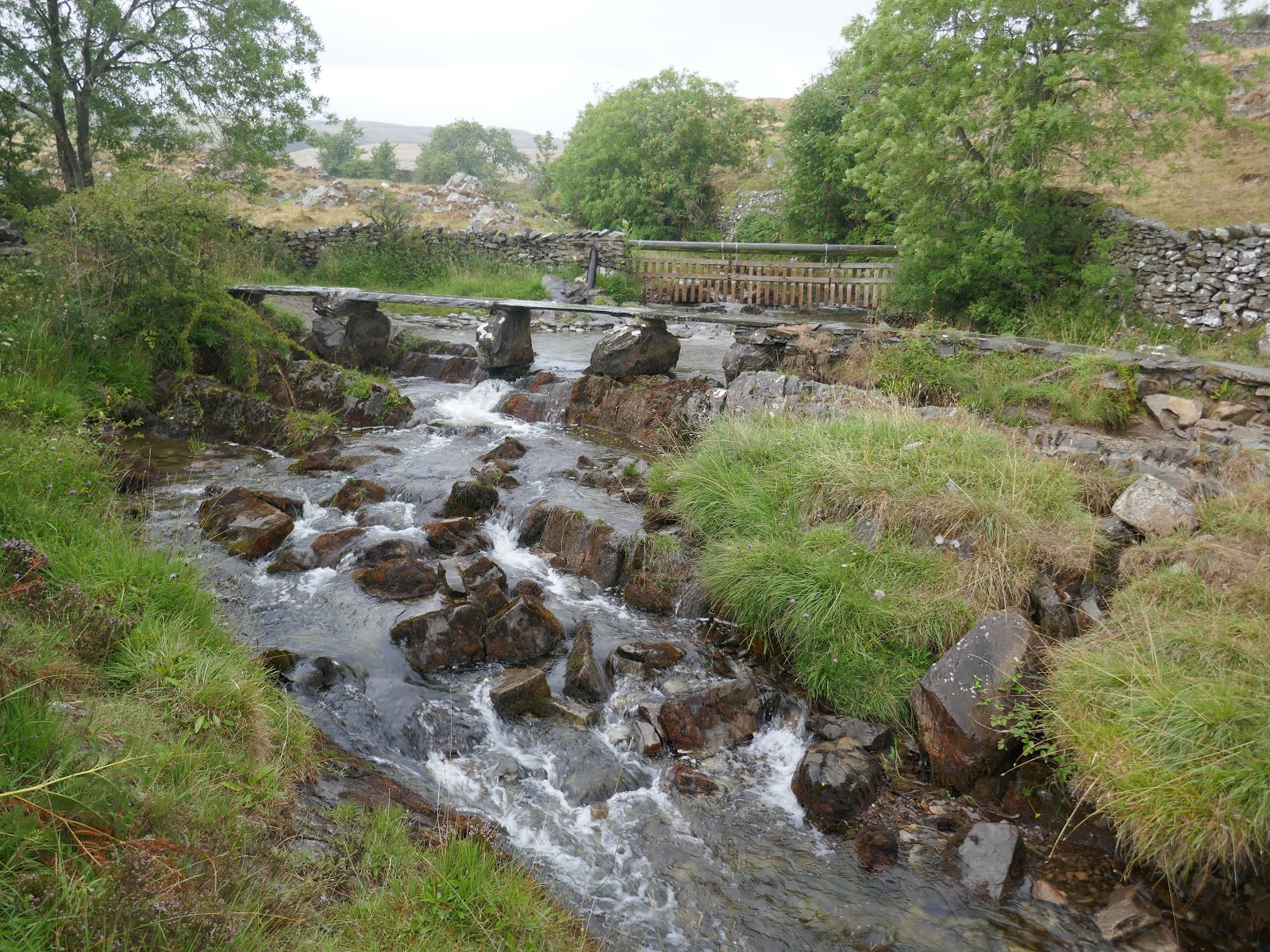
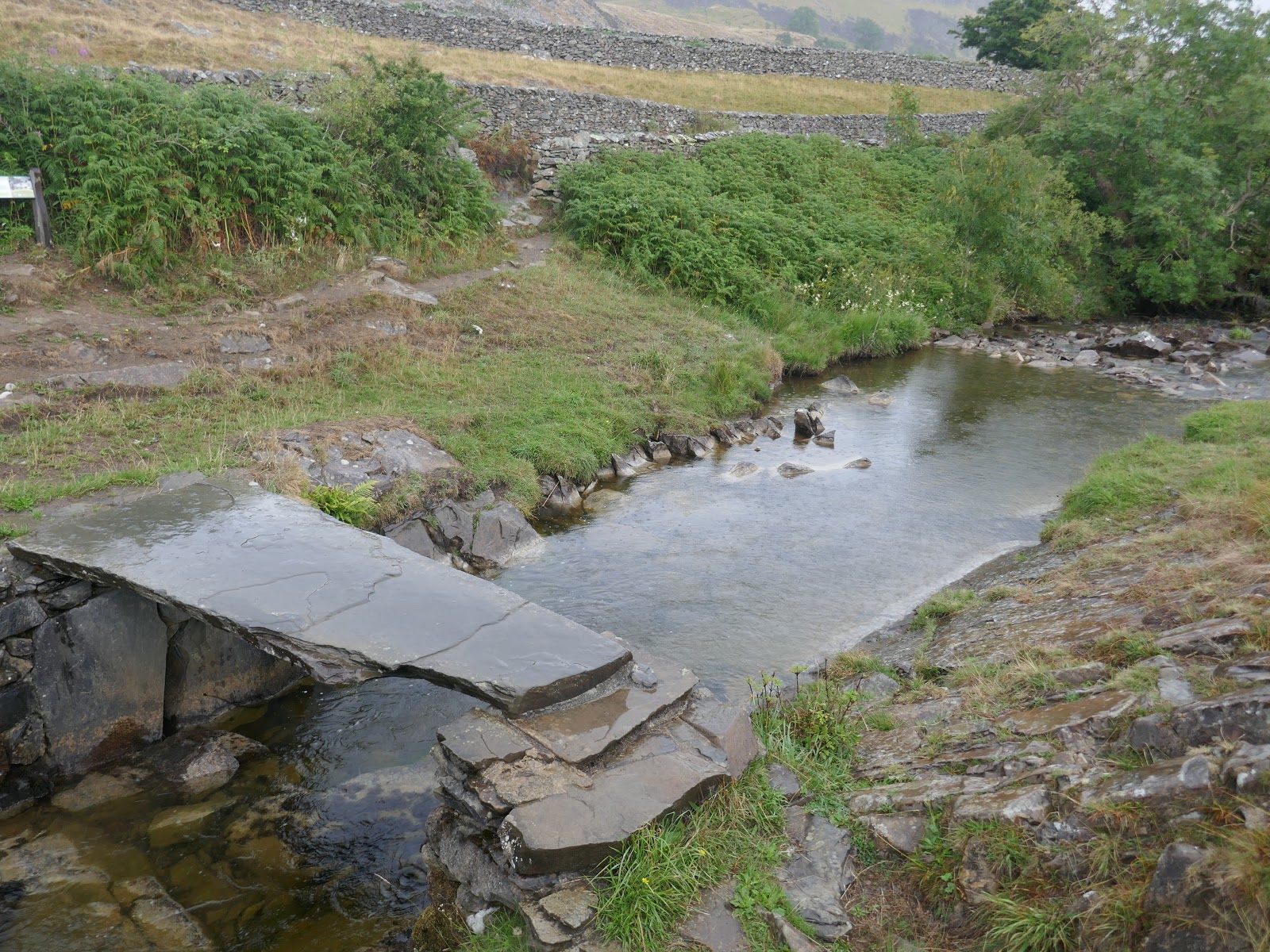
By the time I reached the walled lanes of Crummack Dale, it was raining heavily. The path led me to Austwick Beck and Wash Dub. Shepherds used to dam Austwick Beck in at spring and autumn to create a pool, within which sheep were washed to remove parasites. This went on until the 1930s. The clapper bridge was restored by the Yorkshire Dales Millennium Trust.
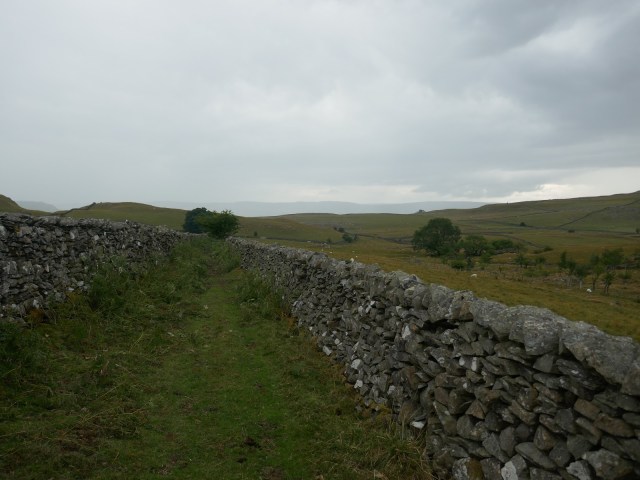 |
| Walled lane in Crummack Dale |
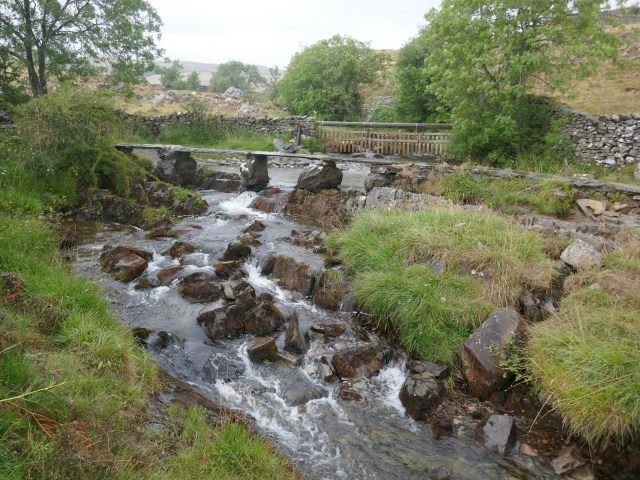 |
| Austwick Beck |
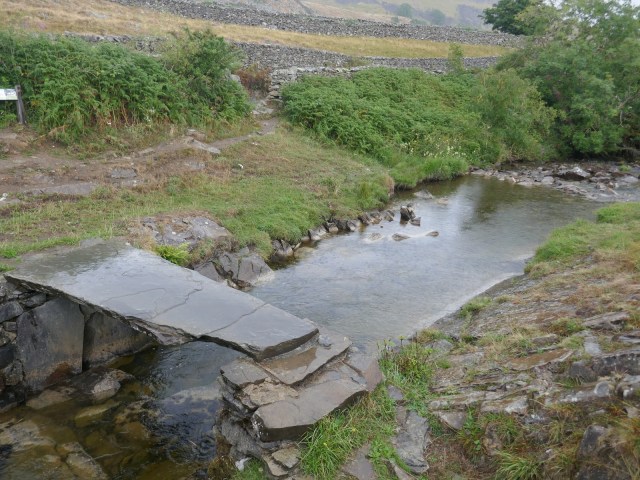 |
| Wash Dub |
Crossing the bridge led me out into the open fields of Sowerthwaite Farm (including one occupied by a large bull) and onto Crummack Lane. The lane leads around Norber Brow and back down into Austwick village bringing a very satisfying walk to a close.
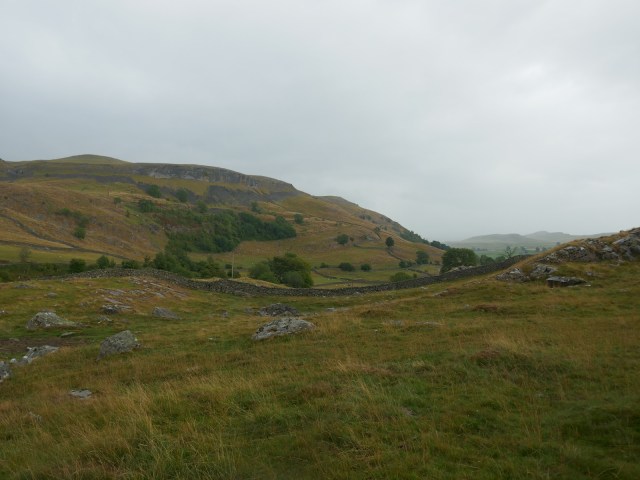 |
| More rain incoming |

 All the Gear, No Idea
